

Move Over Landscape Fabric: This Mulch Material Is Cheaper
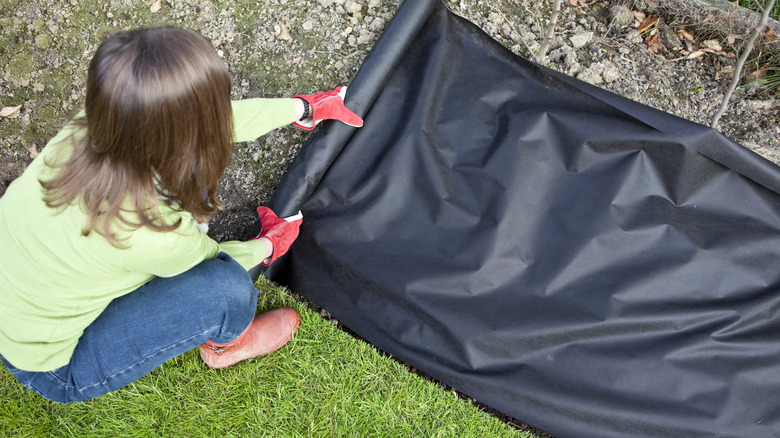
While gardeners have been buying landscape fabric for years to keep weeds at bay, its underlying drawbacks make a strong case for switching to natural, DIY weed barrier alternatives. The reality is that fabric is far from a permanent solution, often degrading and failing to suppress weeds after just a couple of years. More concerningly, it chokes the underground ecosystem by restricting your plants' access to vital air and water. This lack of circulation ultimately creates a hostile environment that can wipe out the beneficial soil microorganisms your garden relies on to thrive. The downsides to using landscape fabric make its cost hard to swallow. Why not instead spend your money on a natural alternative — bark mulch — that also suppresses weeds but allows much more access to water, air, and nutrients than landscape fabric does? Bark mulch is less expensive than landscape fabric, to boot. Harbor Soils, in a head-to-head comparison of cost over five years, found that mulches like bark mulch came in at $200 to $300 per 100 square feet, compared to $300 to $500 for landscape fabric.
Bark mulch is typically made from trees like spruce, cedar, and hemlock. The mulch suppresses weeds by blocking sunlight so seeds don't germinate, but more than many natural weed suppressing mulches, also creates a physical barrier that's difficult for weeds to break through. It offers the advantage of slow decomposition, meaning it will last longer, gradually providing nutrients as it decomposes. Bark mulch also helps soil regulate its temperature, keeping your plants healthy during fluctuations.
Consider bark mulch, a better and cheaper option for suppressing weeds
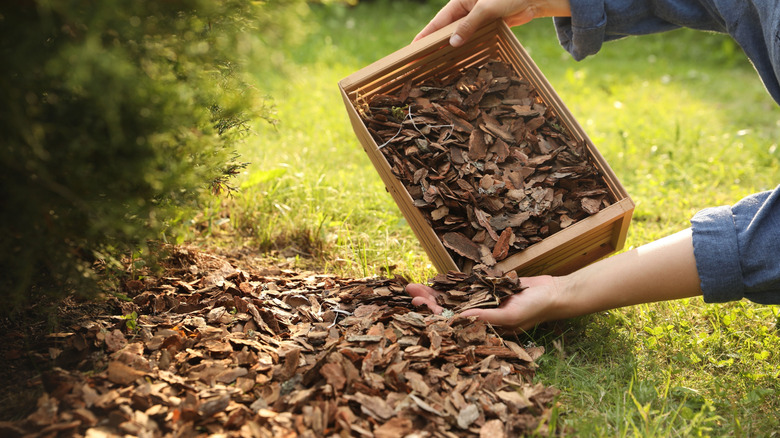
The organic matter that bark mulch adds enriches the soil, improving its structure and helping to aerate it. It doesn't hurt that dark brown bark mulch is one of the more attractive mulches available. Pine bark is another bark mulch option that is considered durable and lasts a long time, but it sometimes blows or floats away because it is lightweight.
Apply bark mulch as a weed suppressor in the moderate temperatures of late spring or fall, but first, clear the area to be mulched of all debris and weeds, and then give it a good watering. Bark mulch comes in nuggets, chunks, and shredded; if using nuggets or chunks, apply 3 to 4 inches deep. A layer 2 inches deep is best for shredded bark mulch, the least expensive bark mulch option. Water again after applying the mulch. You'll want to refresh the bark mulch annually as it breaks down.
Among the few cons of using wood bark as a mulch alternative in the garden is a caveat about irrigation. You may want to consider using drip irrigation under bark mulch because the bark's water-retention capacity is a bit of a double-edged sword. Bark mulch, especially when shredded, is great at keeping moisture from evaporating from the soil, but not so great at allowing rain water to flow in.