

What Is The White Light In A Flashlight Used For?
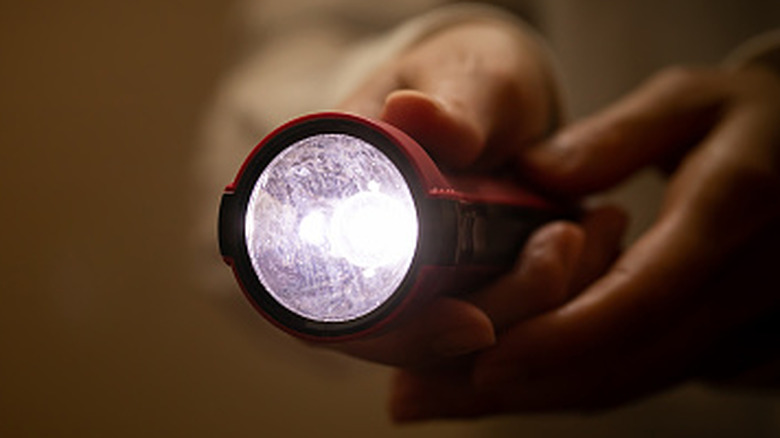
If you're still depending on that old super-retro Maglite that lives at the back of your junk drawer — the one that singes your skin when you invariably have to slap it twice to keep the light going — it's time for an upgrade. Thanks to dramatic improvements in LED technology over the past couple of decades, those often dodgy incandescent or halogen flashlight bulbs that once haunted kitchens the world over have been replaced with high-powered LEDs available in a wide range of colors and color temperatures. Unlike other flashlight hues such as blue, green, or night-vision red, white light flashlights are designed to provide maximum illumination for everything from flipping a breaker to reading a book.
The white lights in LED flashlights come in warm, cool, and neutral shades. Since each color temperature has its own advantages, choosing between soft and warm light shades can be fairly simple if you know where you'll most likely be using your flashlight. Even better, many higher-end white light flashlights like the Olight ArkPro Flashlight offer a spectrum of color temperatures to choose from.
One useful tool for describing light color temperature is Kelvin (K) units. Warm white light falls in the 2700 to 3000 K range, neutral white light falls between about 3100 to 4500 K, and cool white light falls around the 5000 to 6500 K range. With their softer glow, warm to neutral white flashlights tend to work best for indoor household uses, while brighter, cool white flashlights are a better fit for professional or industrial applications.
Uses for warm, cool, and neutral white flashlights
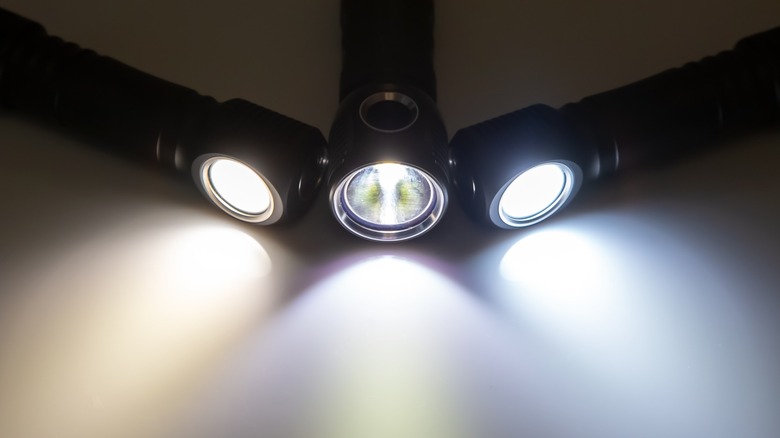
As the description suggests, a warm white flashlight falls closer to the end of the color temperature spectrum where sunsets, candlelight, and fireplace light lie, lightly emanating hues of yellow, orange, or red in its undertones. Warm white light can feel cozy, flattering, relaxing, even romantic. This light also tends to feel a bit gentler on the eyes, making it a go-to lighting hue for evening reading as you wind down the evening's vibe. It's also helpful for softly illuminating rooms during power outages.
On the opposite end of the white light spectrum is cool or cold white light with its frosty blue undertones. Cool white light flashlights appear brightest to the human eye, providing a crisp, clinical-looking appearance with lots of detail. While this light can feel a bit on the harsh side for many applications, it's ideal for industrial or outdoor tasks, like roadside tire changes or after-hours work on your latest construction project. For the same reason, cold white light is your best bet for checking out home security concerns when something goes bump in the night.
The middle ground between colder and warmer white light, neutral white feels the most like natural sunlight. Balanced and practical, these flashlights are perfect for tasks that require high visibility and tend to offer clear illumination with vivid color rendering. It is this practicality that makes neutral white light the ideal light for doctors' offices, schools, and other public spaces. It also makes neutral white flashlights a great go-to for anytime you need to see clearly, whether you're poking around your attic to retrieve boxes of well-organized seasonal decor or heading out to set up your backyard family campout under the stars.