

This Strange Flower That Hummingbirds Can't Resist Never Truly Opens
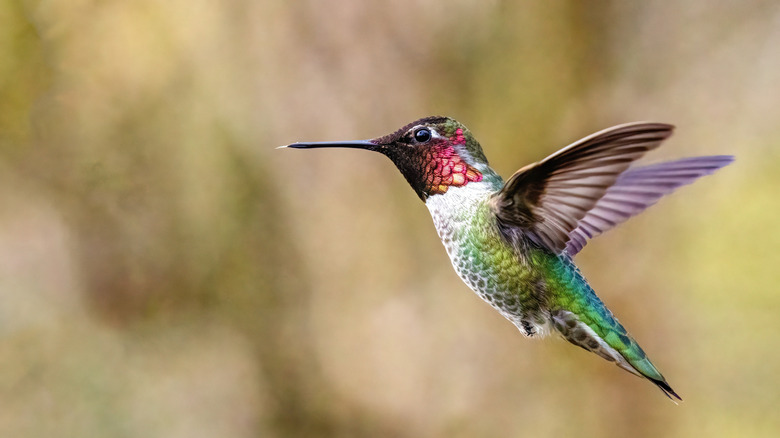
One of the smart ways to draw more hummingbirds to your garden is to seek out flowers that you know they love. You can double the impact of hummingbird-friendly gardening by choosing native plants like bottle gentian (Gentiana andrewsii), which also attracts other pollinators. Bottle gentian is a strange type of wildflower that has a distinct bottle shape with a closed tip. You might not expect hummingbirds to be successful at getting nectar from such a strange-looking flower, but their long beaks work well to get to the precious sweet center. Other pollinators who noticeably enjoy bottle gentian include bumblebees, who force the blooms open to get to the nectar.
Bottle gentian is one of 400 species of perennial flowers named after a king in what is now the Balkan Peninsula. A perennial, bottle gentian goes by several other names including closed gentian and cloistered heart, referencing its unique closed bloom. Typically, this late summer- to fall-blooming wildflower could be found growing across open woods and meadows in the northeast and north central U.S. As a threatened species in some states, you can help conserve this native flower by growing it in your hummingbird garden.
How to grow bottle gentian in your home garden
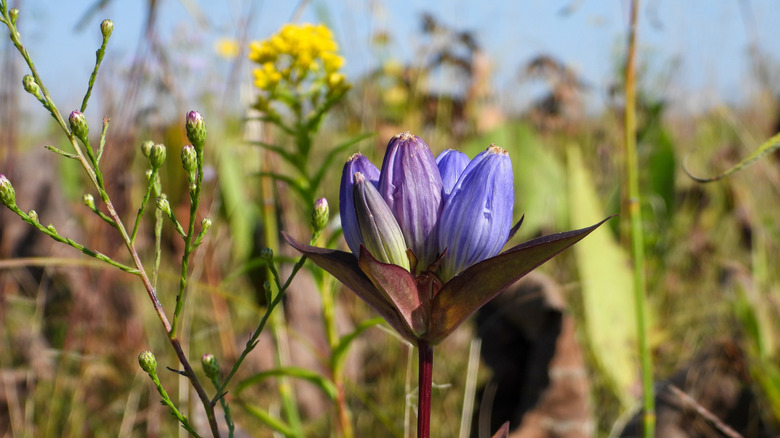
This may be one of the best purple plants for your flower garden if you are struggling to find something that will thrive in a moist, shady environment. Bottle gentian enjoys partial shade or full shade, but will also grow in areas receiving full sun. It is an example of a wildflower that grows perfectly in a shady yard or garden, but for the best results, ensure moist to wet soil to match its native habitat. It's a low-maintenance type of flower once established in your yard, and it will tolerate deer browsing and clay soils. It does best in USDA Hardiness Zones 3 through 7.
Shade gardens or woodland areas would be perfect places to plant bottle gentian, although with its 1 to 2 feet of height, it can also thrive in a shady margin behind other flowers at the edge of your garden. Grow alongside other natives that it would normally meet in the wild, like yellow star grass and prairie dock. Or pair it with downy phlox (Phlox pilosa), which makes a good companion and also attracts hummingbirds. Although this is one of the best species of gentian to grow at home, keep in mind that it may take a few years before you see yours bloom. Instead of growing from seeds, which can take more time, buy seedlings or separate clumps out from other established plants.