

Why This Popular Kitchen Countertop Is At Risk Of Getting Banned In California
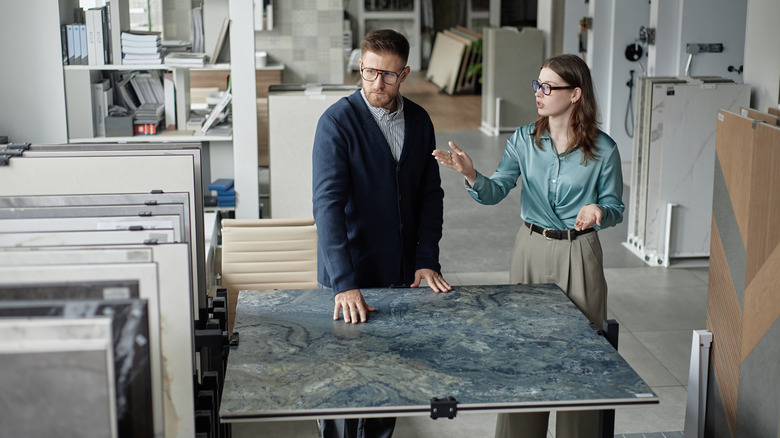
For over 60 years, engineered stone (also known as quartz or artificial stone) countertops have been favored for their durability and stain resistance. They were first used in hospitals, labs, and industrial areas before being adopted into bathrooms, kitchens, and other household spaces. In this new era, the material was prized not only for its practicality, but also for its similarity to natural stone and its vast variety of designs.
However, this once-favored kitchen countertop has not only become outdated, artificial stone is on its way to being banned in California, where, per the state Department of Industrial Relations, the state Occupational Safety and Health Standards Board has begun the process of outlawing "artificial stone products containing more than 1% crystalline silica" — a first for the U.S.
Grinding, drilling, cutting, polishing, and installing engineered stone releases harmful crystalline silica dust into the air, posing serious health risks for people who work closely with it. With prolonged exposure to silica, construction workers can develop a lung disease called silicosis, which can cause respiratory issues, autoimmune diseases, lung cancer, and other serious illnesses. As of mid-July 2026, per the California Department of Public Health, over 600 cases and 31 deaths linked to engineered stone have been reported in the state since 2019.
Through California's Silicosis Training, Outreach, and Prevention Act, signed into law in October 2025 by Gov. Gavin Newsom, the state has already banned dry-cutting and is enforcing stricter fabrication and training measures when working with artificial and natural stone composed of more than 0.1% or 10% silica, respectively. New guidelines include using water to contain dust, enforcing respiratory protection, and routinely monitoring workers for silica exposure. Elsewhere in the world, Australia banned the material in 2024 after approximately 1,000 workers died of silicosis.
Alternatives to engineered stone countertops
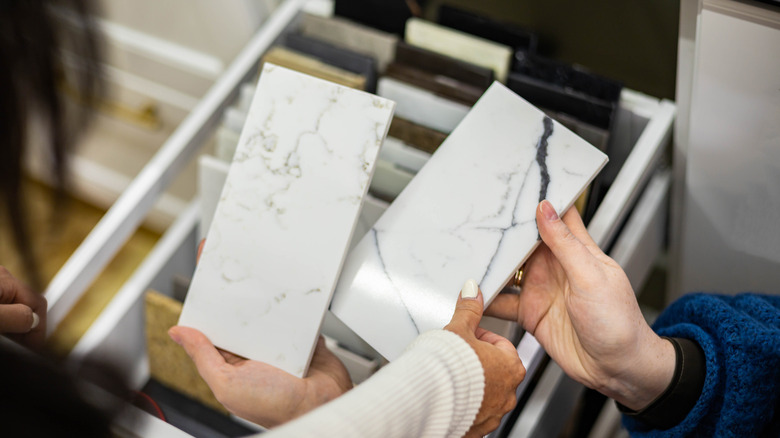
If you live in California, the outcome of the proposed artificial-quartz ban will affect future decisions around countertops. If you live elsewhere, there are still some considerations before installing quartz countertops, such as its maintenance, installation cost, and purpose. And of course, there are many types of countertops to consider as an alternative to engineered stone.
When Australia banned engineered stone, silica-free options emerged, giving customers comparable solutions to the banned material. Similarly, the implications around California's potential ban have sparked movement in the industry away from high-silica products for safety and liability. If you already own a quartz countertop, you can rest easy — there's no indication that it poses a health risk to homeowners. General use of it will not release any hazardous dust, since the silica is bound inside the countertop once it's installed.
Stone manufacturers understand the longstanding appeal of quartz, so they are working to find alternatives. They're swapping out crushed quartz for safer materials, including recycled glass, soapstone, feldspar, porcelain clays, and a blend of recycled paper and resin, to offer customers other options. These materials are safe for people working with them, but manufacturers say they have the same visual appeal, durability, and easy care as engineered stone. Other readily available materials include porcelain and stainless steel, the industrial-chic kitchen countertop trend for 2026.