

Skip Gravel Driveways: The Recycled Material That's Easier To Maintain And Looks Good
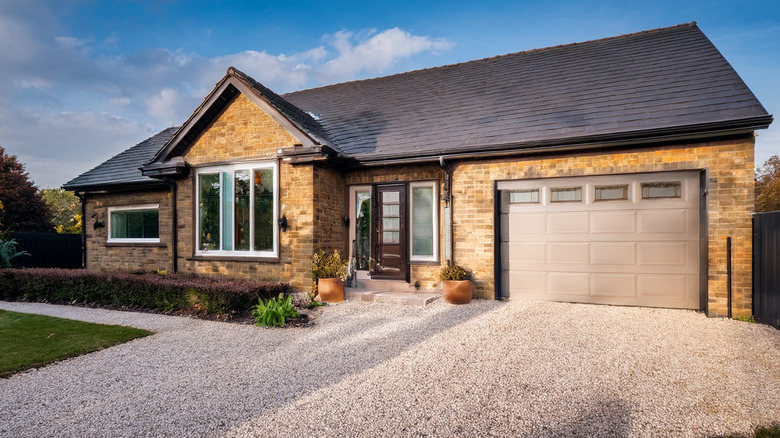
Gravel is usually seen as one of the most cost-effective driveway options, but it is not without its drawbacks. Weed growth can spoil the appearance, regular traffic creates ruts, and trying to clear snow off it can be a nightmare. Unfortunately, most of the alternatives that solve these problems are considerably more expensive. Not all of them, though. A driveway made with asphalt millings can be as cheap as gravel, is easier to maintain, and for those who don't like the rustic appearance of gravel, is a better-looking option too.
Asphalt millings are also called reclaimed asphalt pavement (RAP), so it's easy to guess where the material comes from. Roadways that have been torn up are recycled by grinding the material down. This produces small pieces that are much like gravel in size, but behave differently when reused as a driveway. Some of the original bitumen from the asphalt is left on the particles, helping them bind together. When installed correctly, this results in a more stable surface than gravel that is usually unaffected by traffic. It is also a much better option for slightly sloping driveways because there's no need to keep raking it back into place.
What to know before choosing asphalt millings for your driveway
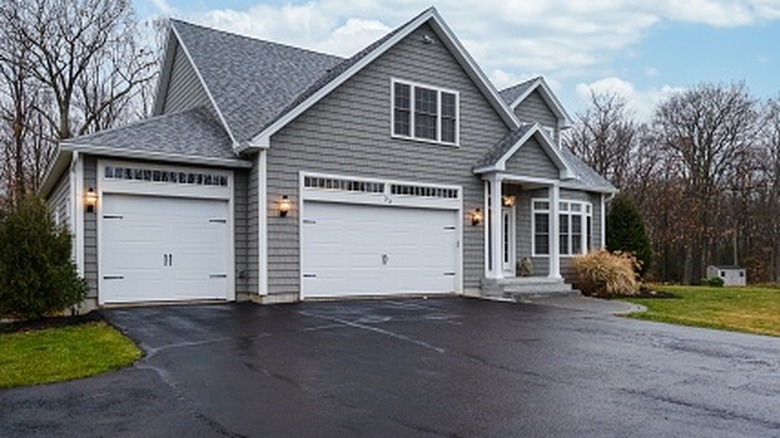
Although it's possible to DIY a driveway with asphalt millings, it isn't just a question of spreading the material around and stamping it down. The ground needs to be prepared and compacted to provide a firm foundation. The millings are then laid several inches thick and, in order to create a level and stable surface, they also need to be compacted. A large roller or a powered compaction plate is required to do this. They are available to rent, but given the cost and work involved, it might be worth getting a couple of estimates from professional installers.
The finished driveway is unlikely to be as smooth as new asphalt or concrete. It will likely have some granular texture. Nevertheless, since it's not as permeable as gravel, heavy rain could still result in puddles or runoff. So you'll want an effective solution to help prevent driveway flooding. In addition, in areas where winters are harsh, frequent freezing can cause shifting. Some experts recommend that the surface be sealed to help prevent this, although remedial work may occasionally be required.
When it comes to how much it costs to upgrade your driveway, the two least expensive options are gravel and asphalt millings. The latter has a lot going for it. It is an eco-friendly choice since it's made from a recycled material. It gives your driveway a more modern, more uniform appearance than gravel, and it is easier to look after.