

What Is The Worst Time Of Day For Ticks?
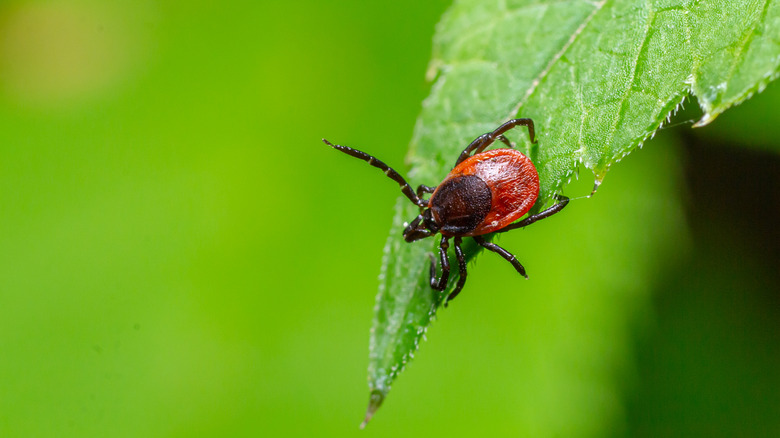
Ticks are an inevitable part of the outdoors. Whether you're weeding an overgrown garden patch or venturing on a hiking trail — let's face it, they're probably there, just waiting to pounce.
If you've found yourself pondering whether tick season is actually worse this year or if you're just going out at the wrong times, you're not alone. In fact, timing could be the missing ingredient for tick protection. This is because they're more or less active depending on temperature and humidity throughout the day. Research suggests that these disease-harboring pests are more likely to be active from dawn until around noon and then at dusk (per Michigan State University). What do these times have in common? They're cooler, yet more humid. Yes, sadly, ticks have the same feeling about the blazing afternoon sun as humans do. Except instead of sunburns and heat exhaustion, they have to contend with literally drying up in the heat.
So, what does this mean? Rather than continuously trying to keep ticks out of your yard, work around their schedule. Plan activities outside of the windows of time where they're the most active, in combination with protective measures like bug spray and long sleeves. However, take this advice with a massive grain of salt. A 2019 study published in the Journal of Medical Entomology acknowledged that there's no real way to predict exactly when ticks will be out and about since it all depends on their needs and very specific temperature factors. For example, in wooded areas with more filtered sunlight and moist leaf litter or in cooler northern climates, they could still thrive in the heat of the day as long as there's moderate to high humidity.
Why morning and evening may be the most active time for ticks
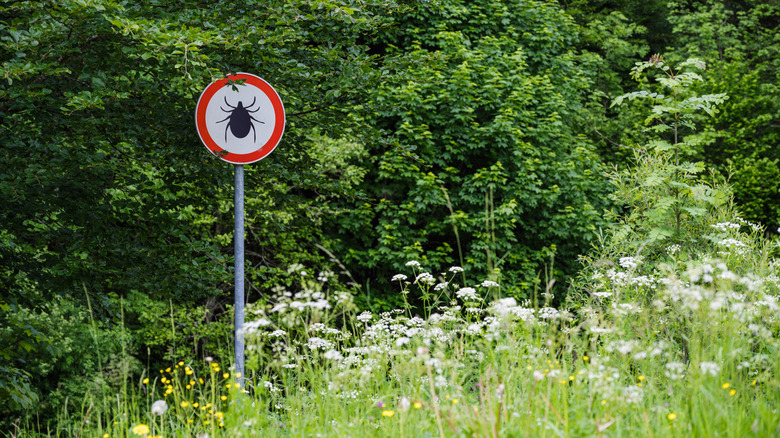
Since ticks thrive in humid conditions, mornings and evenings are likely when they're most active. This may be because dawn and dusk have limited sunlight, lower temperatures, and higher humidity, making them the ideal times for ticks to look for hosts without worrying about drying up like raisins. Essentially, the cooler the air, the less capacity it has to hold water vapor, thus making the moisture in the air more prominent and reducing desiccation (dryness) risk for ticks. Ironically, the warmer the air is, the more water vapor molecules it can accommodate, contributing to a lighter, less muggy feeling — the more you know!
Their adverse relationship with low humidity could also point to the time of day they're least likely to be out. This is usually in the afternoon when the temperature reaches its peak for the day and humidity levels decrease (due to the water vapor phenomenon explained above). A research article published in 2017 in PLOS One concluded that in both northern and southern environments, ticks had the best survival rate in high humidity conditions. They noted that low relative humidity levels, especially when paired with the heat of southern climates, could impact their mortality or cause them to hide away until temperatures cooled and humidity increased. However, you should still arm yourself with ways to protect yourself from ticks since you could encounter them in areas with lots of vegetation and hiding spots.