

Skip Gravel Driveways: The New Material That's Stronger And Carbon-Negative
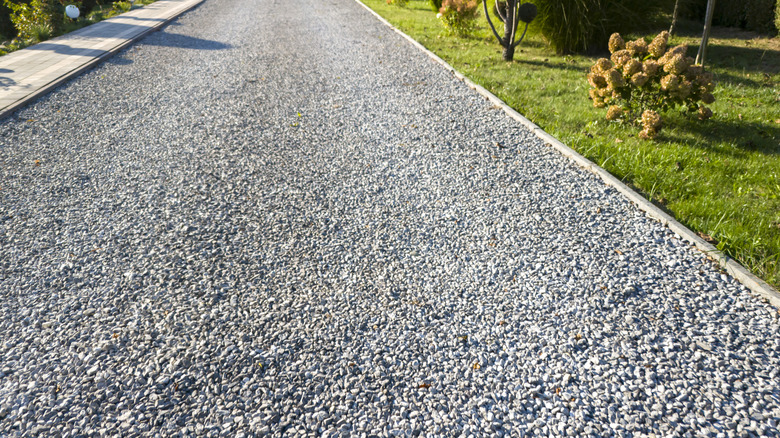
When edged in by crisp borders and beautiful flowers, gravel can create a reasonably attractive and affordable driveway. But while gravel driveways are cost-effective, you need to know about their drawbacks too. For instance, gravel driveways are often quite dusty and can be very uncomfortable for anyone walking barefoot or in high heels. They are also difficult to maintain, and heavy rains can lead to washouts that turn your driveway into a muddy, mucky mess. Beyond that, gravel is not the most eco-friendly material to use. Because gravel is extracted from natural habitats, its sourcing can wreak havoc on local flora and fauna while scarring landscapes. Thankfully, there are other materials that offer both environmental benefits and aesthetic appeal.
Ferrock is an alternative that's stronger, greener, and easier to maintain than gravel. The name is a portmanteau of "ferrum" (Latin for "iron") and "rock," and unlike gravel extraction, which strips habitats, ferrock production simply turns pre-existing waste into something useful. At least 95% of its composition is recycled waste — a blend of steel dust and silica-rich materials like ground-up glass. What makes ferrock carbon-negative, however, is that unlike other, less porous construction materials, whose production releases carbon dioxide to the atmosphere, ferrock actually absorbs carbon.
How ferrock is made and why it's and considered carbon-negative
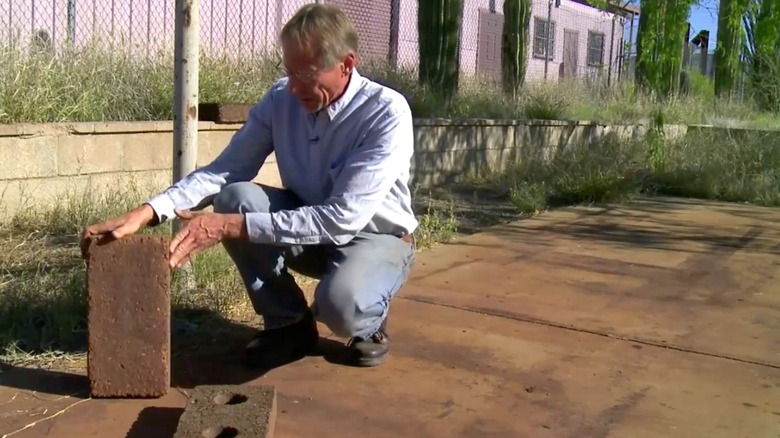
The production of ferrock is a pretty straightforward process. Steel dust is mixed with silica particles from glass, along with other waste products, like recycled ash, to enhance the binding of the raw materials — no cement, sand, or gravel required. After that, the mix is blended with water to form a paste. Next, the ferrock mixture goes into molds (like paver molds), just as concrete would, but instead of drying out in the open, the molds go to a carbon-rich environment for curing. That's where the magic happens. In there, the iron-rich steel dust reacts with carbon dioxide to produce iron carbonate, an odorless gas. In doing so, the carbon dioxide is bound to the hardening ferrock.
The ferrock production process reduces carbon dioxide from the environment, which is what helps make it carbon-neutral. Besides sequestering carbon, the ferrock production process also requires minimal energy and recycles otherwise wasted materials, further reducing its carbon footprint. This process not only makes ferrock a greener building material, but also stronger.
Ferrock is a much stronger driveway material than gravel (or even concrete)
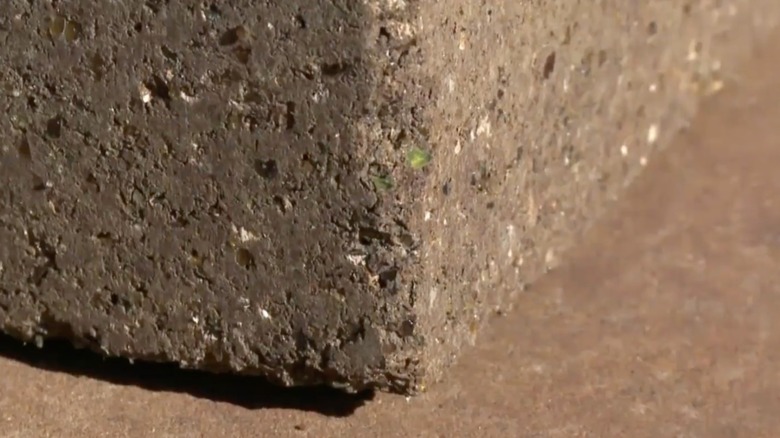
The other benefit of ferrock over gravel is its strength. This recycled material is considered to have up to five times the tensile strength of concrete, making ferrock one of several excellent materials to use on your driveway instead of concrete. With its ability to withstand high compression pressure, ferrock pavers won't sink or shift the way gravel does — an important quality in earthquake-prone regions. Ferrock's enhanced tensile strength and flexibility also help it to withstand wear better than gravel in domestic driveways. Ferrock also has the rare quality of being anti-corrosive, making it more resistant to rust and chemical degradation. The material actually hardens further when exposed to chlorides in salt water, potentially giving it a longer lifespan on driveways in coastal areas.
On the downside, ferrock isn't exactly a mainstream building material, and it's not as cheap or as easily available as gravel because its production is tied to the availability of steel dust. That said, despite higher initial costs of installation, a ferrock driveway is easier and cheaper to maintain over time. Gravel driveways generally need refilling every year, and if you neglect to do so, repair costs down the line can be pricey. Ferrock, on the other hand, doesn't require that level of maintenance, so even with its disadvantages, it's a great material for non-structural uses, like carbon-negative driveways that are more sustainable than traditional gravel. It's just one more of several eco-friendly building material alternatives that could revolutionize construction.