

Consumer Reports Names The Right Time To Fertilize Your Lawn
We may receive a commission on purchases made from links.
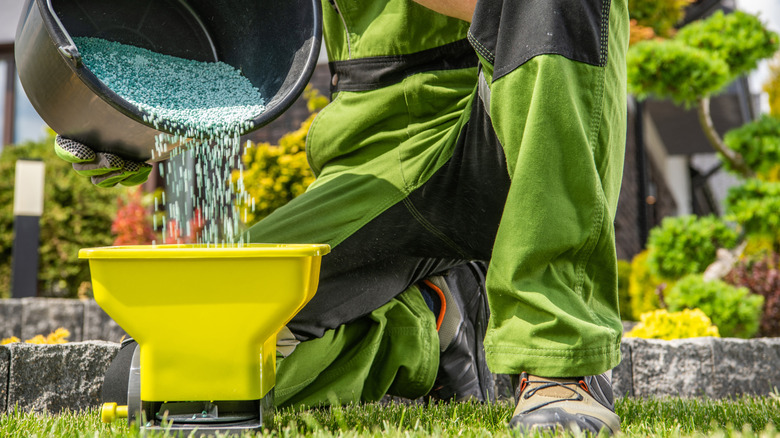
You dropped $50 on fertilizer and then spent an hour outside in the hot sun. Maybe you even watched a YouTube tutorial on how to fertilize your lawn so you get it right, but your grass still looks like a sad mess. If this sounds all too familiar, it is time you start thinking about whether you are fertilizing your grass at the right time. This is more important than you think. Don't feed your grass only because you finally have a free weekend. Fertilize it when it can make the most out of this nourishment. According to Consumer Reports, that is when the grass is putting more energy into growing roots than blades.
If you feed your grass when it is growing blades, a lot of the nutrients will go into making leaves instead of strengthening the roots. Sure, you might get a quick boost of green, but that's it. That quick, green top growth will become weak soon enough, as it won't be supported by a healthy root system beneath, so it won't have access to sufficient water and nutrients. To add insult to injury, it will be prone to weeds,and it will require more mowing, too.
What you want to do instead is fertilize your lawn when it is pushing its energy into growing roots. This helps the grass develop a more robust root system. A robust root system means your grass will become more resistant to drought, stress, weeds, and disease. Just make sure that, when feeding your grass, you follow all the label instructions and don't overuse the product. This is one of those things you should never do when fertilizing your lawn.
Feed the lawn based on your grass type and soil temperature
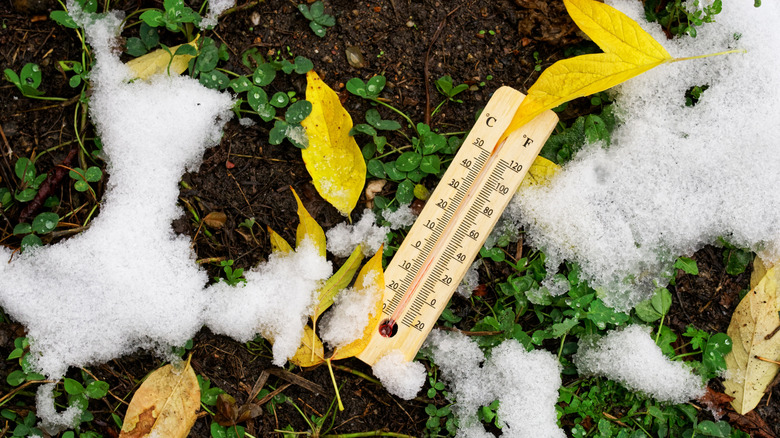
Lawn grasses are divided mainly into two types: cool-season grasses vs warm-season grasses. Identifying what type of grass you have is important, as the answer to when it is the best time to fertilize your lawn changes quite a bit depending on the grass type you have. Cool-season grasses, for example, experience their greatest root growth during spring and autumn, with growth peaking during the middle of spring. Once summer arrives, root growth slows down, and it stops altogether when the soil temperatures hit 70 degrees Fahrenheit. Two famous examples of cool-season grasses are Kentucky bluegrass (Poa pratensis) and tall fescue (Lolium arundinaceum).
Warm-season grasses, on the other hand, show maximum root growth when the soil temperature is around 75 to 85 degrees Fahrenheit. Their root growth starts accelerating when the temperature and light increase, and reaches the peak near mid- and late-summer. Some popular warm-season grasses include Bermuda grass (Cynodon dactylon) and St. Augustine grass (Stenotaphrum secundatum). You need to fertilize these and other warm-season grasses from late summer through spring. This will give their roots the nutrient boost they need for robust growth. As for cool-season grasses, feed them in spring and fall.
If you can, use a soil thermometer like the Luster Leaf 1625 Digital Soil Thermometer. It is not necessary, but it can definitely help you figure out if the roots have entered their peak growth time. Lastly, fertilize early in the day, as during this time, the temperatures are relatively low, which helps reduce the risk of fertilizer burn. Plus, the morning dew helps the fertilizer granules dissolve and absorb quickly into the soil.