

How To Repel Aphids Using Herbs They Can't Stand
We may receive a commission on purchases made from links.
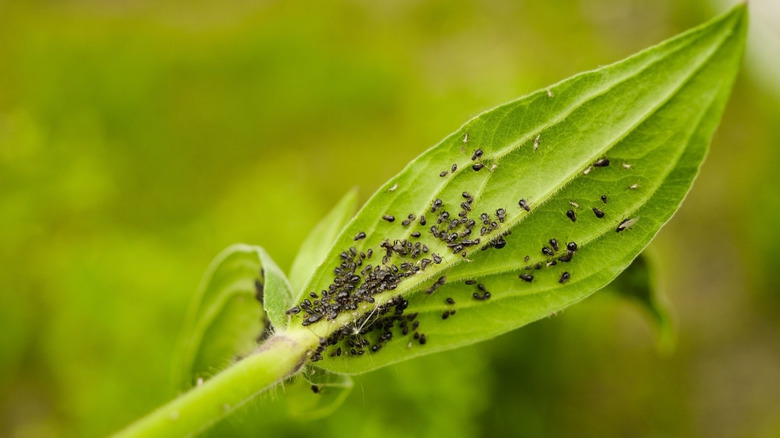
You just finished fertilizing and watering your ornamental flower beds. You've done what it takes to maintain your garden, right? If you think that now is the time to sit back, relax, and watch the flowers bloom, you're mistaken. A sudden infestation may be just around the corner — they tend to appear just when everything is growing well. Whether you've overdone it on nitrogen fertilizer or the weather is particularly mild, aphid populations can multiply faster than their predators can eat them. Aphids can, after all, reproduce very quickly; they can skip mating entirely and clone themselves. All is not lost. You may be able to repel aphids with homegrown herbs they can't stand, such as ginger (Zingiber officinale) and lemongrass (Cymbopogon citratus).
The plants that work as natural pest control in your yard and garden contain highly aromatic essential oils or repellent compounds. Ginger and lemongrass are two of the best herbs for aphid control because of how the aromatic compounds affect the way these insects find host plants. In a Horticulturae (2025) paper, researchers found the terpenoids, alkanes, aromatics, esters, and phenols in ginger root extract repelled cotton aphids. Similarly, a study published in Ciência e Agrotecnologia (2013) noted that lemongrass essential oil — which contains citral, citronellal, and geraniol, among other compounds — is toxic to green peach aphids. While you likely can't recreate laboratory extractions in a home setting, you can grow lemongrass and ginger to protect your garden beds from aphids or create simple homemade repellent sprays.
Plant ginger and lemongrass in your garden to repel aphids
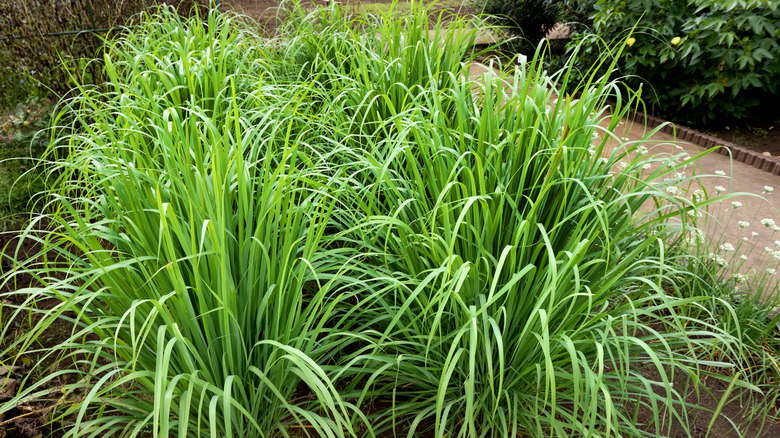
If you're at war with aphids, don't be surprised if your flower garden suffers. To help your failing greenery — everything from roses and hibiscus to squash and tomatoes — plant some lemongrass or ginger nearby. Ginger (Zingiber officinale) grows in partial shade in Zones 9 to 12. If you live in colder climes, cultivate this heat-loving plant as an annual or in a container that you can overwinter indoors. You can buy 10 Mall~Kerala Live Ginger Rhizomes for around $18. Lemongrass thrives in Zones 8 to 11, so like ginger, grow it in a container if you live somewhere cooler. This hardy grass is heat- and humidity-tolerant and requires little maintenance outside of dividing it in spring. It does need a full-sun spot, though. To release the aromatic compounds that repel aphids, lightly bruise the leaves when you walk past.
Aphids aren't the only pests that are repelled by lemongrass. The best way to use it against everything from ants and mealybugs to fruit flies and ticks is, arguably, to make a spray. Mix 10 drops of lemongrass essential oil with 2 teaspoons of Castile soap in a 16-ounce spray bottle filled with distilled water. Alternatively, dry some ginger shoots and grind them into a powder. Add the powder to a pot of water and simmer the mixture for six hours until concentrated. You could also mix around 2 ounces of grated fresh ginger or 3 ounces of HqO Express Organic Ground Ginger with 1 gallon of water and, optionally, a little dish soap. Dispense the concoction into a 1⅓-gallon SideKing Battery-Powered Garden Sprayer and apply it to your plants.