

No Need For Toxic Pesticides: The More Natural Way To Deter Slugs & Snails From Hostas
We may receive a commission on purchases made from links.
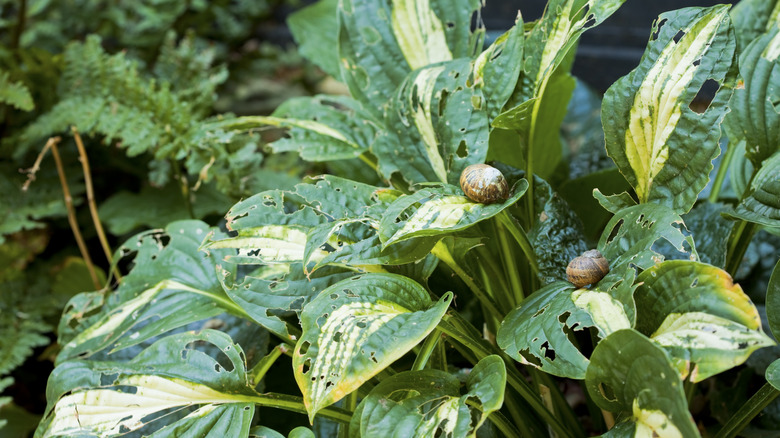
When pests make themselves at home in your your hostas, adding slime trails to the big green leaves and peppering them with holes, it can be tempting to turn to high-powered, toxic pesticides. These chemicals are certainly effective in deterring hungry animals, fungi, or in this case, slugs and snails, from disturbing your plants. But using them can also damage the long term health of your soil, as well as your own health. That's right — when pesticides get into our food, they've been connected to things like high blood pressure, cancer, and diabetes, not to mention the environmental consequences. That's why non-toxic pest deterrents, like iron phosphate pellets, are a great alternative to dangerous chemicals.
Iron phosphate is particularly helpful when it comes to fighting off slugs and snails, pests that thrive in damp, dark environments — much like hostas. In fact, one the major mistake people make when growing garden favorite hostas is underestimating the power of these slimy, slow-moving pests. Armed with iron phosphate pellets, however, you should be able to eradicate slugs and snails in just a few days. Best of all, this non-toxic alternative won't disturb other local wildlife.
Why iron phosphate pellets work and how to use them
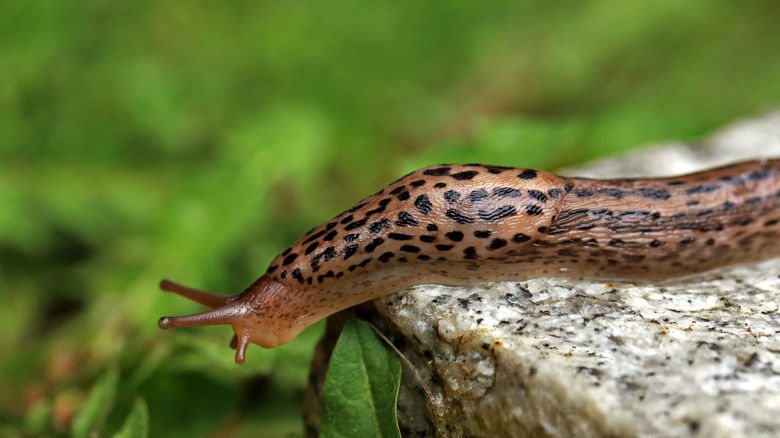
Iron phosphate pellets are a condensed combination of phosphorous, iron, and oxygen. When consumed by slugs and snails, they degrade the digestive tract, meaning that the mollusks can no longer eat and eventually die. Because the pellets target the digestive systems of snails and slugs, in particular, they aren't harmful to other animals or humans. The downside is you'll likely still spot other invasive species in your garden, like beetles, stink bugs, and lanternflies.
If you're looking for a convenient way to get your hands on this pest control solution, Monterey Sluggo Maxx iron phosphate pellets are available on Amazon for around $20. When the weather in the spring starts to stay consistently warm — a low of 50 degrees at night — it's time to start applying these tiny pellets to the base of your hostas. Wait until nightfall, then sprinkle a small handful in the dirt; you don't need much, just enough to lure over the pests. Monterey recommends about 1 teaspoon per 2 square yards, but instructions could vary per brand. Spread as evenly as you can. If you have multiple hosta plants, a hand spreader will help you with the process.
Keep in mind that iron phosphate also requires a small amount of water in order to properly activate, so make sure the dirt around your hostas is damp before applying. If all goes according to plan, those pesky slugs and snails should be gone in about a week.
Noticing signs of slug or snail damage and other ways to prevent it
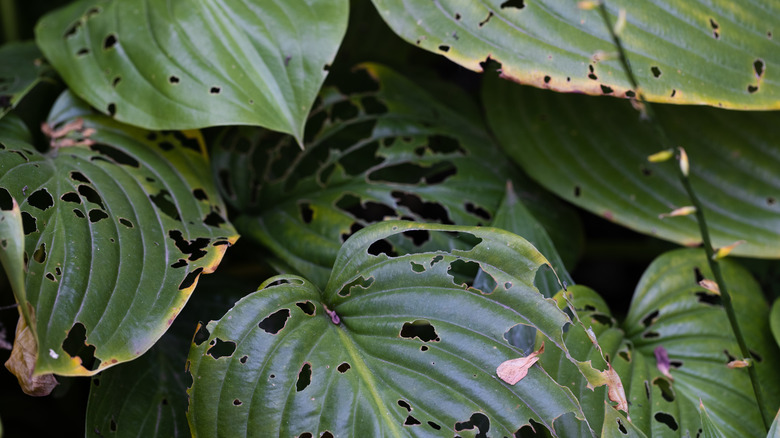
So, how can you tell you're dealing with slugs or snails and not something else entirely? During daylight hours, you likely won't see these pests mulling about, but you might spot shiny mucus trails on the leaves or around the base of these shade plants. You'll also find holes — lots of them — dispersed unevenly around the greenery. If you want to catch a glimpse of these unwanted visitors, make sure to head down to your garden at night or in the early hours of the morning when they're at their most active.
If you're hoping for a quick fix before your iron phosphate pellets arrive, you can always turn to one of these other organic methods of getting rid of slugs, which include beer traps, changing your watering schedule, or creating a welcoming habitat for natural slug-eaters like frogs. These methods can also be used in conjunction with the pellets, helping to provide an extra boost of non-toxic effectiveness.
Alternatively, if you've waited too long and you plants are almost entirely eaten, not too worry. Trim off all the slug-eaten leaves, and leave the rest. Hostas are famously durable and will likely grow back next year no matter the damage, especially if you're able to use this method to eradicate still-lingering pests.