

Forget Florida: Why Gardeners Are Choosing The Pacific Northwest For Year-Round Color
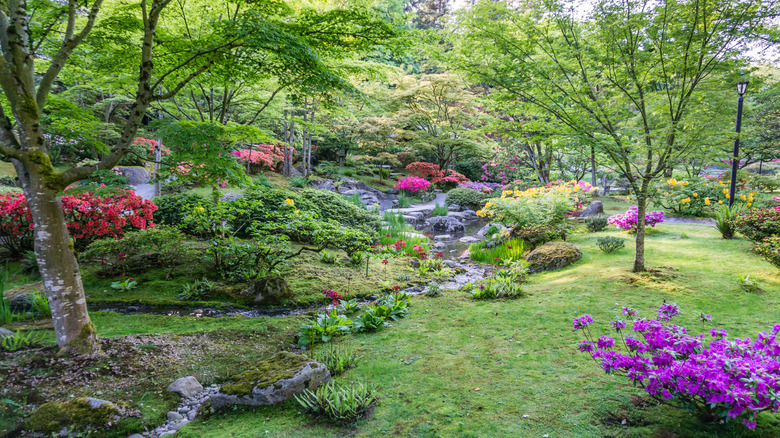
For gardeners contemplating relocating to a new part of the country, outdoor conditions are a big consideration when choosing a place to live. While some folks look at housing costs, schools, local culture, and walkability, gardeners are also thinking about USDA Hardiness Zones, weather, and soil. Some folks might be lured in by the high humidity and hot summers of Florida because one can garden there all year long, but if you prefer a more temperate, mild climate, the Pacific Northwest is known for both its rainy weather and its year-round color, making it an attractive destination for gardeners.
Technically, according to the University of Idaho, the Pacific Northwest includes the states of Washington, Oregon, Montana, and Idaho, as well as the Canadian province of British Columbia. It is geographically diverse, encompassing mountain ranges, forests, temperate rainforests, and the Columbia Plateau, and includes several different mountain ranges, including the Coast Mountains, the Rocky Mountains, and the Cascade Range. This geographical variety includes regions with agreeable year-round climates.
What makes this especially appealing to gardeners is the potential for a beautiful garden full of color all year long. The coastal regions of Washington and Oregon, in particular, are known for being very green even in winter, with many evergreen forests and mild temperatures that permit a long gardening season. The USDA growing zone range for the state of Washington is from 6a to 9b, and it's the same for Oregon, with the warmer zones toward the Western coast.
Gardening in the Pacific Northwest
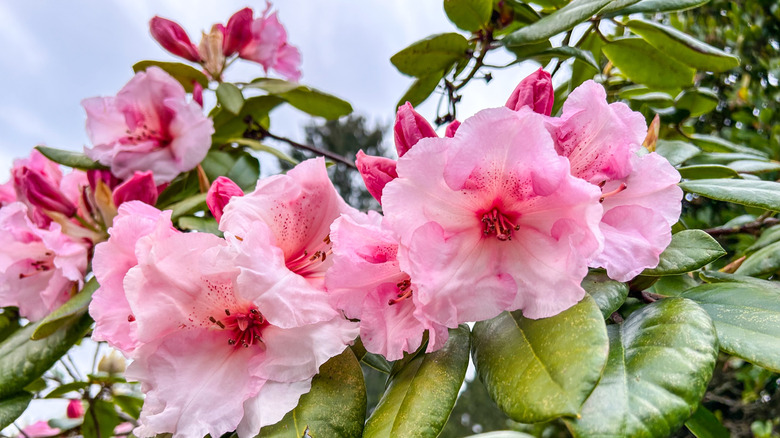
The number one factor making the Pacific Northwest excellent for gardening is the weather. Some regions, like Seattle or Tacoma, Washington (both on Puget Sound), and coastal Oregon, have short, dry, warm summers and cloudy, cold, wet winters. Planting for year-round beauty should include landscaping with various evergreen shrubs, both conifers (which include an array of green huess from teal to chartreuse) and flowering shrubs (like the Pacific rhododendron (Rhododendron macrophyllum), the state flower of Washington).
The soils found throughout the Pacific Northwest vary based on location. The book "Gardening in the Pacific Northwest (The Complete Homeowner's Guide)" by Paul Bonine and Amy Campion covers the regional specificity of soils, including glacial soild, loess, loam, woodland soils, and clay. The Puget Sound region has three types of glacial soil: glacial til, glacial outwash, and glacial lacustrine, all of which can cause trees and shrubs to grow shallow roots. Native plants have adapted well to these soils. Gravelly, sandy loam is prominent in western Washington and throughout the agronomic (farmland) growing regions of eastern Washington, eastern Oregon, and Idaho, and can be good for gardening year round if adequate moisture is present.
The gardening conditions in the Pacific Northwest are considered somewhat unique and excellent for gardening all year around, especially in those areas with USDA Zones above 8. The combination of abundant rainy weather, temperate growing zones, damp, mild winters in most areas, a wide variety of hardy native plants, and good soil conditions all coalesce into a wonderful region for gardeners who desire vibrant color across four seasons.
Gardening culture in the Pacific Northwest
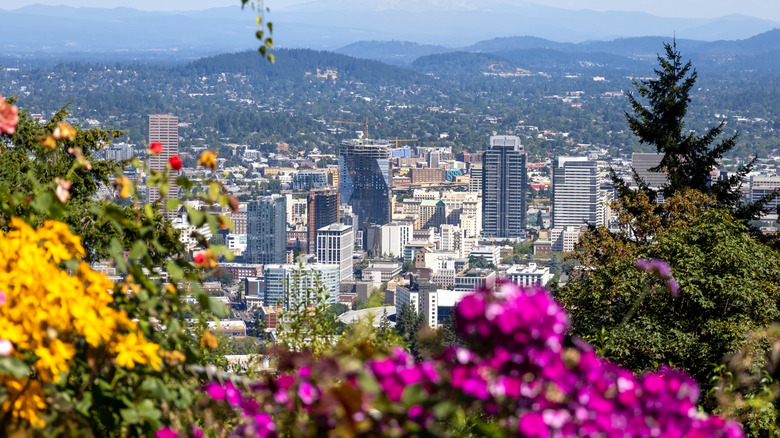
Where there are gardeners, there are gardening communities. In addition to being a region suitable for gardening because of its climate, weather, and soil, the Pacific Northwest also has a vibrant gardening culture. There are many state parks with gorgeous sites and vistas for nature lovers and gardeners to draw inspiration from. The Northwest Flower and Garden Festival is one of the biggest events of its kind in the country, and is held every February in Seattle. Community gardens are also popular: the Conserve Washington website has resources to help people start local community gardens in their cities.
There are many excellent botanical gardens throughout the area. Seattle has the Washington Park Arboretum and the Dunn Gardens (designed by Frederick Law Olmsted). Washington and Oregon have many more botanical gardens and arboretums throughout both states. Portland's Japanese Garden is highly regarded and a popular tourist attraction. In Montana, there's Tizer Botanic Gardens and Arboretum in Jefferson City, while Milner Gardens and Woodland near Vancouver, British Columbia features an old-growth forest. These gardens are open to the public year-round and offer acres of glorious greenery designed to celebrate the beauty of the Pacific Northwest in every season.
Perhaps not surprisingly, there are also many garden and plant societies in the region. There's the Northwest Horticultural Society, the Washington Native Plant Society, and the Native Plant Society of Oregon, among others. The Pacific Northwest is a haven for gardeners who want to eat, sleep, and breathe gardening all year round.