

The Underrated Ingredient You Should Add To Your Compost Pile
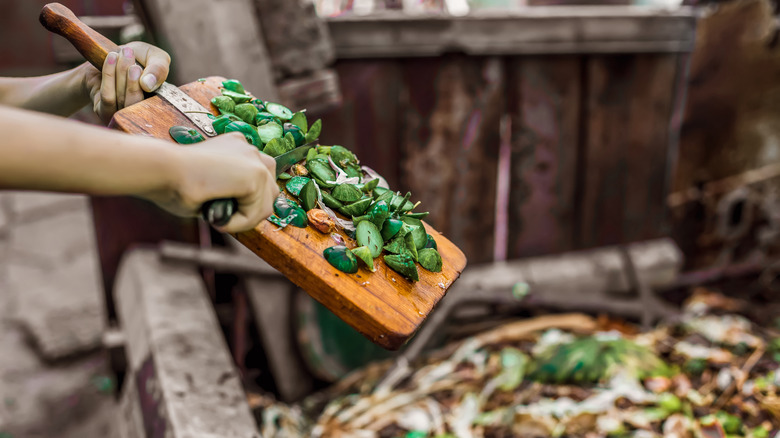
What connection does your garden have with beer, other than the desire to throw back a cold one after a rigorous day of yardwork? It turns out that your garden might appreciation a little refreshment too. One of the benefits of using beer in your garden is that it can enrich your compost. It's similarly beneficial to add spent hops — arguably the most significant ingredient in beer — to your compost. The American Homebrewers Association estimates 1.2 million Americans home-brew a batch of beer at least once per year, and if you or someone you know is one of those brewers, perhaps you might like to compost your used grains. Some small and local breweries might also be willing to trade with neighbors or give away their spent hops for the purpose of compost.
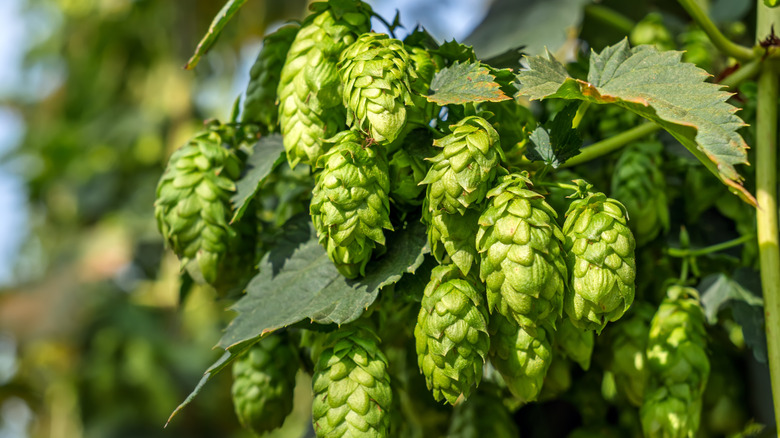
Why should you treat your garden to this boozy base ingredient? Hops (Humulus lupulus) are loaded with nitrogen, and for those who use hot composting, hops can serve as one of the green materials that give your compost pile a serious nitrogen boost. A hops plant can actually offer two compostable materials: the spent hop flowers left over from brewing beer (also known as cones), and the fresh leaves of the hops plant. According to a study published in the Journal of Environmental Management, the leaves have been found to accelerate the decomposition rate when composted with straw and cow manure.
Try adding hops to your compost, with care
When using spent hops in compost, you need to balance two aspects of this addition, but you can tackle both in the same way. The nitrogen in hops can knock your carbon to nitrogen balance out of whack pretty quickly, so be sure to add enough carbon-rich "brown" materials like leaves, straw, paper, and sawdust as you're adding hops. Adding these brown materials will also address the other possible imbalance from adding hops: moisture. Spent hops are typically wet when composted, so once you've added both hops and brown materials, conduct the "sponge test" on your compost. Squeeze a handful of compost in your hand. The result should feel like a damp sponge, not a dripping one, so add a bit more brown material if the sponge test shows the compost to be too wet.
It's also useful to know the difference between hot versus cold composting. If you're cool composting, you don't have to worry about the nitrogen to carbon ratio as much, but you should correct issues with too much moisture. After adding hops, you'll also want to make sure you're turning your compost pile for aeration. You can enhance aeration by sticking a PVC pipe with holes in it or rolled up hardware cloth into your compost as a conduit for air.
An important caveat about hops is needed for dog owners. Hops are highly toxic to dogs, causing temperature spikes to life-threatening levels. Consider avoiding hops in your compost if you have a dog, or ensuring your composting is not accessible to your dog.