

The Overlooked Reason Your Cutting Boards Are Growing Mold
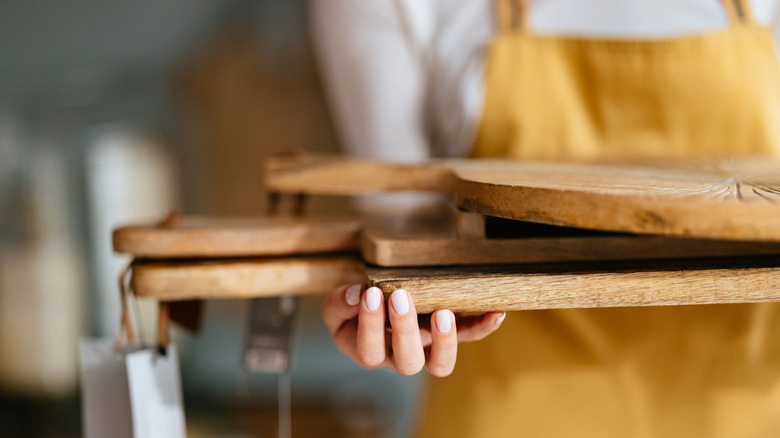
We love a gorgeous wood cutting board. The aesthetics alone are incredible. If you're also team wood cutting board, you probably already know how to style them in the kitchen by setting it on its edge and leaning it against the backsplash. It's a simple decor tip to elevate kitchen countertops. But did you know that same tip can help prevent your wood cutting boards from getting mildew and mold? It turns out, the way you're drying your cutting boards might be the biggest culprit when it comes to that sneaky mold creeping in. If you've been laying them flat to dry, perhaps in an effort to prevent them from warping, you might be inadvertently creating the perfect conditions for mold to form. When it comes to wood cutting board care, this is one common mistake everyone seems to make.
Have you ever noticed that when you lay the board flat on the counter, the top dries way faster than the bottom? That's because you're trapping the moisture between the countertop and the cutting board when you set it down like that, and there's no way for air to circulate under there. Wood has naturally absorbent properties, which means the longer moisture stays on the surface, the more time it has to soak deeper into the wood. And just like that, your beautiful cutting board has dark streaks of mold forming. But there is a better way. All you need is a nice clean dish towel and a bit of open space on the countertop to create a more effective drying routine that'll save your wood cutting boards.
How to properly dry your wood cutting board to avoid mold
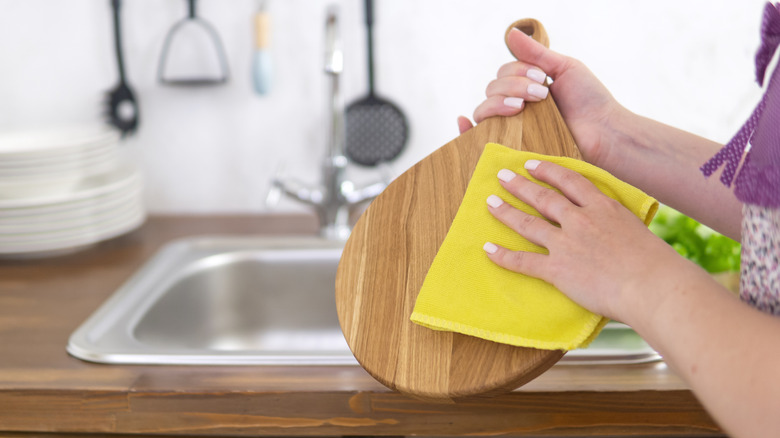
It's clean-up time in the kitchen, and you're ready to plow through the sink full of pots and pans. You know the drill — wash, rinse, and place on the drying rack. But if your pile of post-dinner cookware includes a wood cutting board, we're going to add a step that will save you from a surprise mold appearance at your next meal prep session. Once you've cleaned it thoroughly, grab a clean dish towel and dry off as much water as you can by hand. This might seem like overkill, but your future chopping experiences will thank you. After drying the front and back, don't forget to wipe down the edges, too. You want to get as much of the excess water cleared off as quickly as you can.
Next, let the cutting board continue to air-dry until every last bit of moisture is gone. It's best to let it sit out overnight, but at very least, allow for eight hours of drying time. But exactly how you set the board down to dry is key. Don't lay it flat on the countertop, but stand it upright on an edge, allowing equal airflow all the way around the board. You can even store your wood cutting boards vertically this way instead of stashing them in a cupboard where they get stacked on top of each other. One quick hack is to grab an old D-ring napkin holder. It's a surprising way to organize all your cutting boards with a classic thrift find that keeps them all standing upright.