

Skip Gravel Driveways: The Durable Rustic Alternative Looks Just As Good
If you're trying to cultivate a rustic vibe with good curb appeal in your front yard, you likely know that even the smallest detail requires attention. You want a cohesive look across the entire area, from the exterior paint colors and decorative accents on your home to the landscaping, including the driveway. Gravel driveways have long been a favorite of homeowners looking to add a touch of texture to their yard, but the downsides — constant maintenance, weeding, and gravel that shifts over time — may have folks quickly searching for an alternative. If you're thinking about skipping gravel, there's a semi-permeable driveway material that's low-maintenance and weed-resistant: tar and chip. It might just be the perfect match for your property.
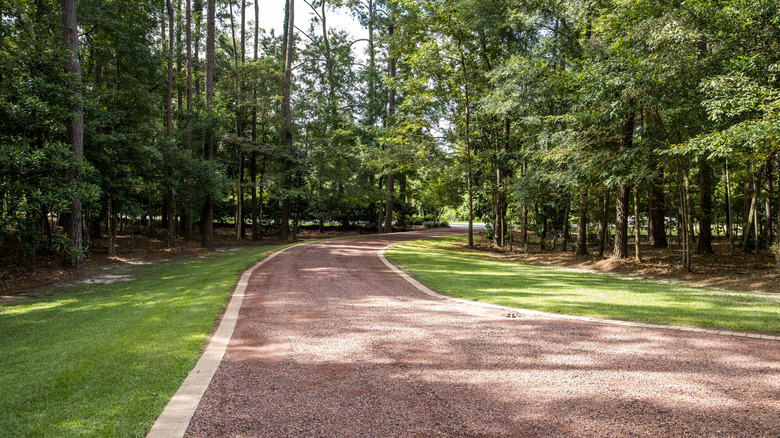
There are lots of names for tar and chip driveways — chip seal (or chip and seal), oil and stone, macadam driveway, even asphalt's country cousin, to name a few. You may have even heard this method referred to by its technical name: double bituminous surface treatment (DBST). Whichever moniker you use, the process of laying this driveway material is the same. After the driveway surface is leveled and prepped, liquid asphalt is heated to about 350 degrees Fahrenheit and spread over the surface. Gravel or other stones (the chips) are spread across the asphalt and compacted into the surface using a roller. The driveway is left to cure. Tar and chip driveways look astonishingly similar to gravel, with the same rustic vibe and many stone color options. However, they don't have that annoying loose layer of stones.
The pros and cons of a tar and chip driveway explained
What's so great about tar and chip driveways that you'd consider installing one on your property? One of the top benefits is durability. The gravel is embedded into the asphalt, so you can use this material on your driveway to go beyond concrete and get higher traction without the need for constant repair. A tar and chip driveway will hold up well to the wear and tear of daily vehicle use and provide a more slip-resistant surface for people. This tough driveway material is also relatively low maintenance. All you need to do is sweep off any debris that falls on it and patch occasional cracks or potholes as required. If you live in an area that experiences heavy rainfall, you'll likely love having a tar and chip driveway. Water drains away quickly instead of pooling in dips.
There are, however, some big downsides to budget-friendly chip and seal driveways, too. First, harsh weather can damage a tar and chip driveway by loosening stones. Likewise, used incorrectly, a snowplow can scratch the embedded gravel surface. Opinions differ on how well tar and chip driveways handle summer heat. Some professionals claim the material can withstand high temperatures as long as the driveway is lightly resealed every 7 to 10 years. Others say the tar becomes pliable in hot weather, releasing gravel and sticking to shoes. Another con is that installation isn't a DIY job; you'll need to hire a licensed contractor. All in all, a tar and chip driveway might be the perfect choice for anyone looking for a relatively trouble-free driveway with the rustic charm of loose gravel.