

Can Vinegar Help Repel Ticks? Here's What We Know
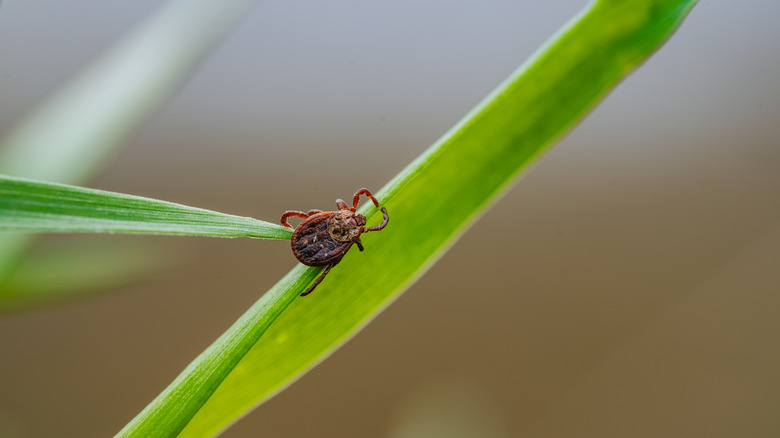
There can't be many parasites that are more unpleasant than ticks. They hide in long grass and undergrowth and attach themselves to you when you walk past. They look nasty, and they suck your blood. Although the bite itself may not hurt, some ticks transmit bacteria that can cause Lyme disease, Rocky Mountain spotted fever, and other illnesses. While treatments are available, tick bites can cause severe reactions in both dogs and cats. There are those who say vinegar is one of the simple ingredients you can use to repel ticks, but is that true? Our research suggests it only works for short periods at best. Let's take a closer look at what we know.
Vinegar is remarkably versatile stuff and can be used to fix all kinds of issues around the house. We found a couple of recipes that say white vinegar can be mixed with water and oils to create a tick deterrent spray, but it will only last a few hours, so it needs to be reapplied throughout the day. The oils are suggested to mask the vinegar smell, but then you would wonder how much that impacts its effectiveness. According to the Centers for Disease Control and Prevention, the only essential oil that actually repels ticks is oil of lemon eucalyptus (OLE).
Vinegar won't do your pets any favors either

Both cats and dogs really dislike the smell of vinegar. In fact, it is sometimes cited as a way to keep stray dogs out of your yard. Apple cider vinegar, which may be suggested as an alternative tick spray instead of white vinegar, is claimed to be safe when diluted 1-1 with water. However, others argue it can cause uncomfortable skin irritation and, if they lick themselves (as animals often do), it will upset their stomach. If applied to cats, it can result in diarrhea and vomiting.
While there are a number of ways to protect yourself, your home, and your pets from ticks, vinegar is only a short-term fix and not one that you should use on animals. If you are concerned about them and regularly find ticks in your garden, or you enjoy long walks in the open air, talk to your veterinarian about preventative options. Although ticks may still attach themselves initially, they should die soon after.
If you do get bitten and find a tick on your skin or on your pet, experts recommend immediate removal. Fine-tipped tweezers should be placed as close to the skin as possible and used to carefully pull the tick out. Researchers also found that commercially available tick removal tools, which are easy to carry in a pack or pocket, can also be very effective.