

The Mistake Everyone Makes When Cleaning Rubber Mats
Rubber mats are a handy addition to a variety of different areas in the home, from garages to mudrooms, patios, and decks. However, they can often become covered in dirt and loose debris, particularly if they're kept in an outdoor location or a spot that gets lots of foot traffic. As such, regularly cleaning these mats is a great way to ensure that they maintain their non-slip surface and don't become a home interior eyesore that you have to look at every day.
However, if you're tempted to finish off cleaning your rubber mats by making use of polishing products to give them extra shine, don't do it! Many products used for polishing can make the surfaces they're applied to extra slippery. So, by using it on your rubber mats, you could actually be making them less stable than they were before. Not only that, the polishing substance can also be transferred to other surfaces such as the bottom of your shoes, meaning you could be at risk of slipping and falling even when you're no longer standing on the mat. Therefore, any oil-based polishing agent or cleanser should be avoided in order to ensure the safety of anyone who steps on the rubber mats. If you're wondering how you can make your mats look neat and tidy without these slippery materials, a few simple cleaning tips can help ensure that they look their best while still helping you make your home safer with less risk of falling.
How to clean rubber mats to prevent accidents
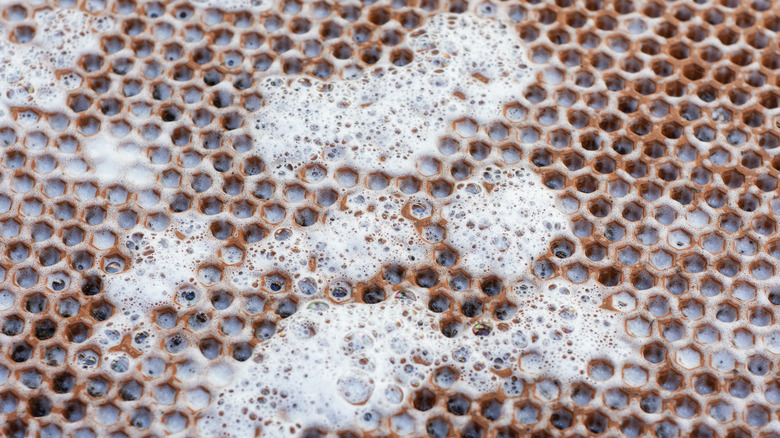
To clean your rubber mats, start by getting rid of all the loose debris that has piled up on the surface. You can shake the mat outdoors to loosen bits of grass, dirt, or leaves. Then, use a hose to pre-rinse your mat, using its water pressure to blast away more stubborn dirt. Don't worry if you can't get it all off, though, because the next step will help to loosen the remaining dirt and grime. Grab some simple dish soap or a specialized rubber mat cleaner, steering clear of oil-based products like silicone sprays.
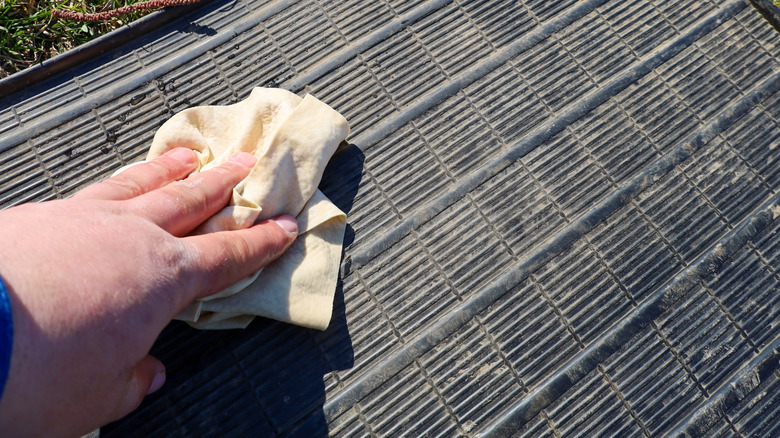
Spray or pour the cleaner over the rubber mat according to product instructions and use a firm brush to work the cleaner into the crevices. Many rubber mats are relatively sturdy, so don't be afraid to use some gentle pressure to get under that caked-on dirt. You can then rinse the cleaner off, and for sturdier mats, you can even use a pressure washer on a low setting to get rid of stubborn grime — just don't hold the nozzle too close to the mat since this can risk damaging it. These steps can be repeated until the mat looks sufficiently clean. Finally, either dry the mats off with a cloth or leave them flat to dry. Leaving the mats to dry in the sun is a great way to prevent the growth of mildew while also helping to dissipate any strong rubber smells that can often come with newer mats. Once fully dry, you can replace your mats to prevent damage to your hardwood, make standing more comfortable, or make your home's surfaces safer and less slippery as a whole.