

Should You Put Hydrogen Peroxide In Your Dehumidifier?
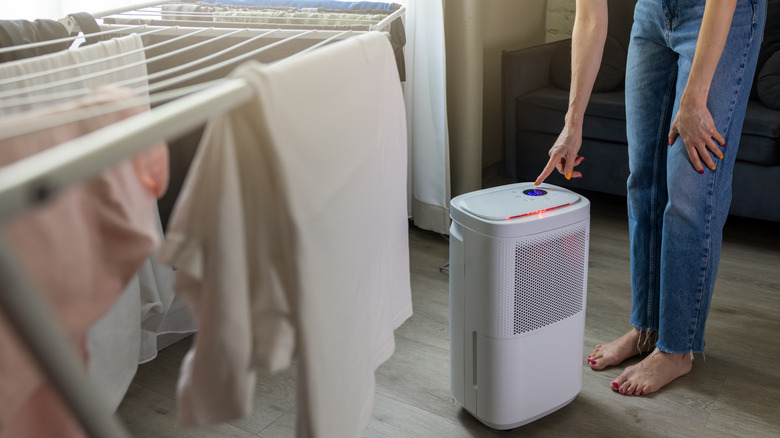
If you're finding yourself constantly sweating at home, it may be a sign you should run a dehumidifier in your house. The appliance works by removing excess water vapor from the air, so that your space can remain in the EPA-recommended 30% to 50% humidity range. Not only can high humidity levels make for an uncomfortably sticky living environment, they can also cause mildew or mold to grow and worsen allergies. But while dehumidifiers are doing all that dirty work, they can get pretty messy. The standing water inside the reservoir could lead to mold growth while the filter can get dusty and become less effective.
That's why some recommend upping the ante on the standard scrubbing by pouring hydrogen peroxide into the machine and running a cycle. The idea is that the powerful chemical compound can disinfect the interior, eliminating any potential mold, mildew, or bacteria. However, running your dehumidifier with anything other than water in the tank can damage the machine and even void the warranty. Hydrogen peroxide can corrode certain materials like the metal coils and plastic parts inside the machine, causing the appliance to wear out quicker. And turning the dehumidifier on with the chemical inside will aerosolize it, which can lead to respiratory irritation.
How can you best disinfect your dehumidifier
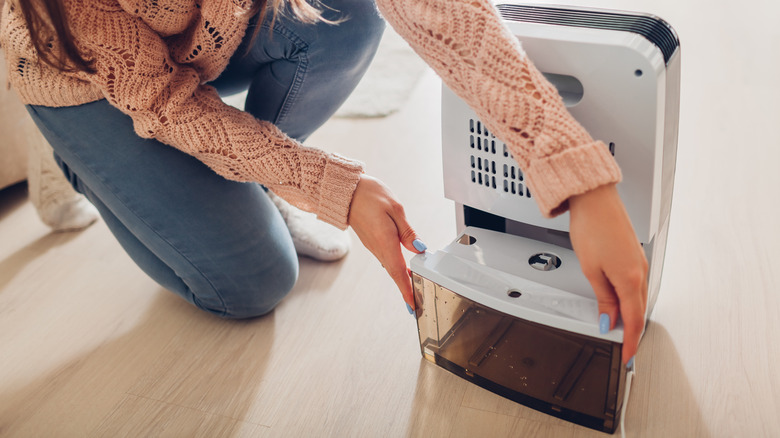
One of the common mistakes you want to avoid when dehumidifying your home is not keeping things clean. While running hydrogen peroxide through your humidifier can be irritating in more ways than one, the workhorse is still a valuable tool in your sanitation arsenal when it comes to cleaning the appliance's exterior and water tank. For the tank, you can reach for 3% hydrogen peroxide, the type you find at a drugstore. Give the container a scrub with warm water and mild soap, then fill it up using a mix of two parts water and one part hydrogen peroxide. Let it soak for a half hour, swirling it around so it disinfects every corner — but don't run the machine! Then, rinse the tank thoroughly and allow it to air dry before placing it back inside the appliance.
Vinegar can be a versatile cleaning tool that also gives your dehumidifier a clean of a lifetime. Start by giving the reservoir the same soap-and-water treatment. Then, spray inside using a one-to-one mix of water and vinegar. Wipe it down and make sure it dries completely before you plug everything back in. Further, experts recommend dusting the filters every two to three weeks. Once you've vacuumed the filters using a brush attachment, rinse them under warm water, using a bit of soap or baking soda if they're particularly grimy. Then your dehumidifier can keep eliminating excess moisture without the risk of spreading germs or corroding inside.