

Ditch Concrete: Build Your Retaining Wall With This Natural Material That's So Durable
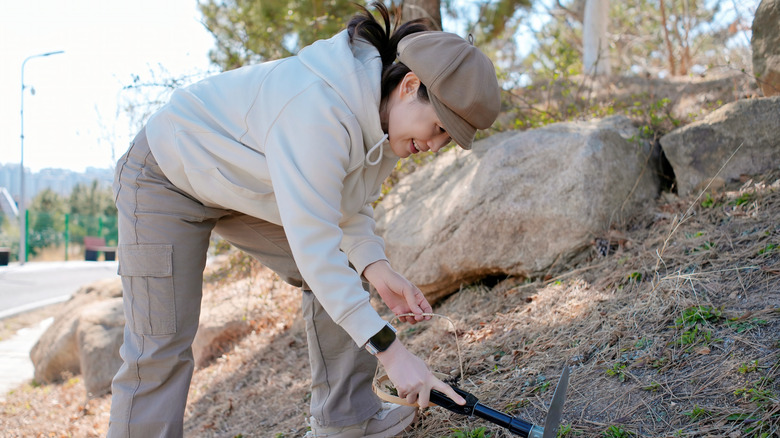
Take a walk through your neighborhood, and see what stands out to you. Usually, it's the color or texture of plants, a calming water feature, or a cozy porch setup. Rarely will we walk by a house and marvel at the retaining wall. This feature is usually bland in color and tends to be hidden or blended into the yard. We consider it part of the ensemble cast to the more eye-catching, dazzling stars of the garden. But retaining walls are really more like the stage, supporting the ground that the rest of the garden stands on. Retaining walls can be constructed with a number of materials, depending on your preference and needs. Besides timber and poured concrete, there are many natural stones used to build retaining walls. One of these options is fieldstone, defined as any rock that is naturally occurring and is gathered from or near the surface of the soil.
Available in a range of geologic makeups, colors, shapes, and textures, fieldstone is often used to build walls, as well as pathways and borders. If you've clued into the invisible retaining wall trend in 2026, you may prefer a more natural, organic look over a uniform wall of bricks or concrete. Fieldstone is sold by companies selling landscaping materials, but you may also find local farmers or landowners who are clearing their land and looking to give away or sell the rocks they find.
Fieldstone is natural, durable, and easily sourced
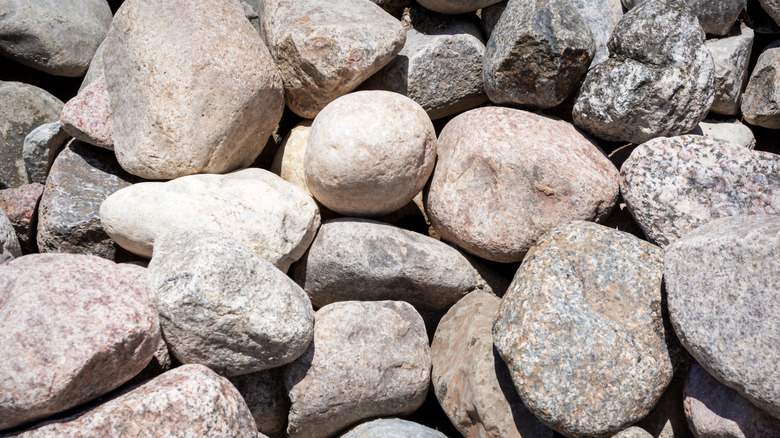
Aside from its unique character, there are benefits to fieldstone that aren't readily visible. Fieldstone offers a more sustainably sourced and eco-friendly alternative to concrete, the production of which generates massive amounts of carbon dioxide. Since the material is naturally occurring and doesn't need modifications to be usable, manufacturing costs are minimal — or even free if you find a farmer who is eager enough to give them away. Another benefit of using fieldstone over other types of stone is that it's readily available near the surface of the earth. Because quarrying isn't necessary, this avoids significantly disrupting the environment.
Fieldstone's durability is another advantage, proven by its endurance in the soil over time and in all kinds of weather. However, it's essential to know what type of fieldstone you're working with, since its characteristics will determine its use. Fieldstone can encompass a number of different types of rocks. Some of the most common include granite, limestone, sandstone, and basalt. Why is this important to understand? Granite has a Mohs Hardness Scale rating between 6 and 7, making it a top choice for wet climates and heavy-duty construction. On the other hand, limestone has a hardness between 3 and 4, making it more ideal for dry weather and decorative purposes, although it can support a small retaining wall. The makeup of the rock reflects the history and geology of the area, adding to the distinctiveness of the material and, ultimately, your retaining wall.
Considerations for building a retaining wall with fieldstone
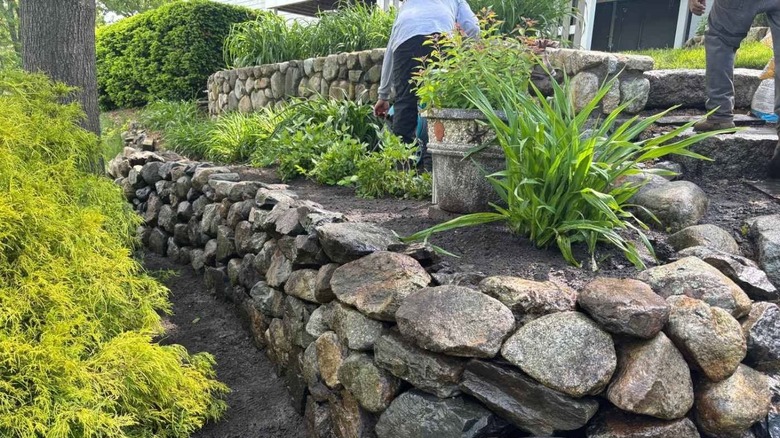
Fieldstones have been out in nature, exposed to the elements for years, without any care, so they don't need much maintenance in a wall. Over time, you may see signs of natural weathering, like moss or lichen, on a fieldstone wall. Some might find that it adds to the wall's organic appeal, but growth can be easily cleaned off with water and a stiff brush. Otherwise, each year, inspect the retaining wall for cracks, shifting stones, or pooling water that could lead to future problems.
Keep in mind that building a substantial fieldstone wall will likely require skilled expertise. Although the stones can be stacked to easily DIY a low barrier in your yard, a taller wall will require more careful construction because of the stones' uneven and asymmetrical shapes. The placement of the retaining wall and whether or not you need a binding material, such as mortar, for extra support will influence the DIY-ability and cost of the project.
While a DIY fieldstone wall can be cost-effective if you can source the rocks locally, construction materials and installation from a landscaping company will cost between $20 to $80 per square foot. Despite the initial costs, a retaining wall made of natural stone, like fieldstone, can last 50 to 200 years, depending on the material and construction method. If a fieldstone wall is what you want, the investment will likely pay off as you enjoy it for the duration of your home ownership.