

Don't Confuse It For Poison Ivy: The Fast-Growing Tree That Creates Privacy & Erosion Control
Being with Mother Nature is supposed to be calming and meditative, with sunshine being a balm to the soul. Yet among the beauty are the beasts — bugs, critters, and noxious weeds — that keep us from being as relaxed as we'd like. One of the most well-known offenders is one that even children are familiar with, thanks to the catchy rhyme that many of us learned at a young age: "Leaves of three, let it be." In other words, if you see a cluster of three leaves, don't touch it, because it's likely poison ivy (Toxicodendron radicans). However, what's confusing is that poison ivy isn't the only plant that sprouts "leaves of three."
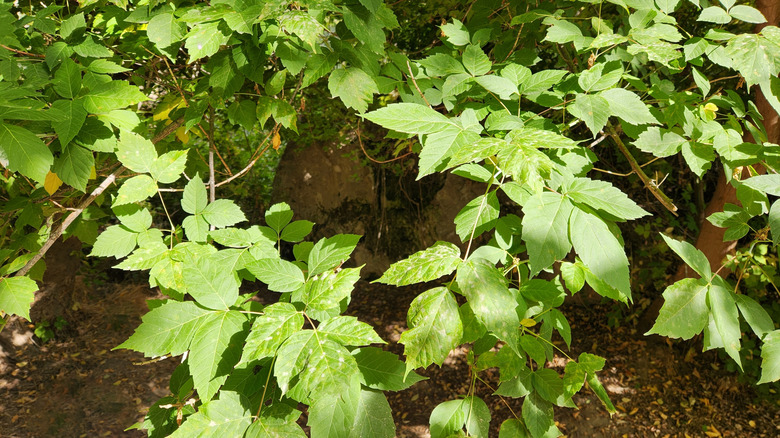
One plant that often gets mistaken for poison ivy is boxelder (Acer negundo), a widely distributed type of North American maple. It's non-poisonous and incredibly hardy, sending out a sinewy root system that helps stabilize soil and reduce erosion. Boxelder also is fast-growing, with a height of 40 to 50 feet and a crown spanning 30 to 40 feet, providing privacy and summer shade.
While a mature boxelder doesn't resemble poison ivy, as a sapling, the two can look very similar. One way to know if you're dealing with poison ivy is that its leaves are slightly tinged with red, contrasting with the yellowish-green leaves of a young boxelder. Also, poison ivy leaves alternate along the stem of a fuzzy vine, while boxelder leaves sit directly opposite one another along the twig.
Growing a boxelder in your yard
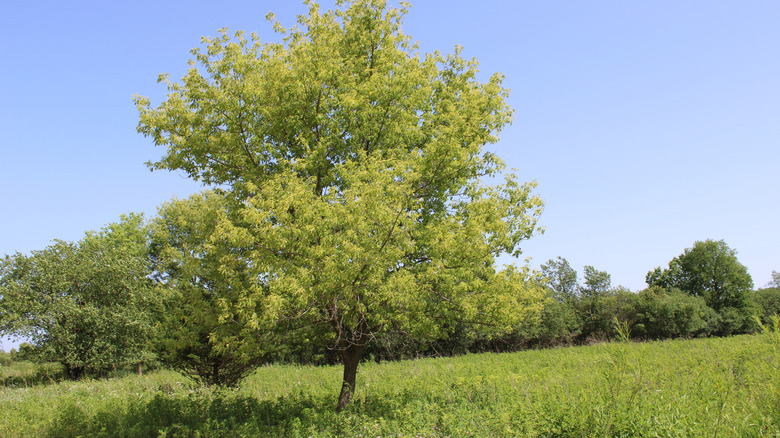
Since the boxelder is adaptable to many climates and soil types, and it's tolerant of drought and cold, this tree has been used in windbreaks – rows of trees that protect crops and livestock from wind and dust and to control wind erosion. Native American communities have also used boxelder to make syrup, candy, and tea. Even the animal world, like squirrels and birds, prize these trees, seeking their seeds for sustenance.
In yards, boxelders are among the best trees to plant for privacy, serving as visual borders or screens. Because of their tolerance for wet soil, boxelders are a good choice for areas that stay too moist for many other tree species. One thing to note is that the boxelder's unruly growth habit has given the tree a reputation for being unattractive — but beauty is in the eye of the beholder, right? The wood is weak, causing heavier branches to droop, which could require more frequent pruning for aesthetic appeal.
When growing these trees, watch out for boxelder bugs, which have black bodies adorned with red-orange lines. They suck sap from the tree and eat its seeds, which, thankfully, doesn't cause severe damage. The greater nuisance, however, is that the bugs tend to migrate indoors during cold weather. One of the best natural ways to keep boxelder bugs away is to weatherproof your windows and doors, sealing any cracks they could crawl through. If you spot them indoors, vacuum them up and dispose of the contents in a sealed bag.