

What To Do When You Receive Someone Else's Mail

There's almost nothing as exciting as the day your online order is scheduled to arrive in your mailbox. Once it arrives, you probably have one thing on your mind — opening your latest purchase and tossing everything else, like bills, catalogs, and junk mail, into your cute Dollar Tree DIY mail organizer. What you don't expect is to find mail addressed to someone you've never heard of before. Maybe it's a previous homeowner, a neighbor a few streets over, or a mail carrier sorting too fast on a rainy day. Whatever the reason, all you know is it's not meant for you. So, what the heck are you supposed to do?
The most important thing is not to open mail addressed to someone else or throw it in the trash, no matter how tempting. Although this is the easiest way to get rid of it, this could be considered tampering with another person's mail, even if you think it's junk or not important. An honest mistake technically violates the United States Code (USC) Section 1702 if you open mail that wasn't addressed to you or anyone in your home. The penalty ranges from prison time to fines, according to the USC. However, intent matters. If you're trying to steal a person's or business' financial information, then you could be in trouble. A mere accident likely won't result in punishment, but why chance it?
We have a few options to help you get rid of mail that doesn't belong to you, keeping you out of trouble with the federal government.
How to get rid of mail that belongs to someone else the right way
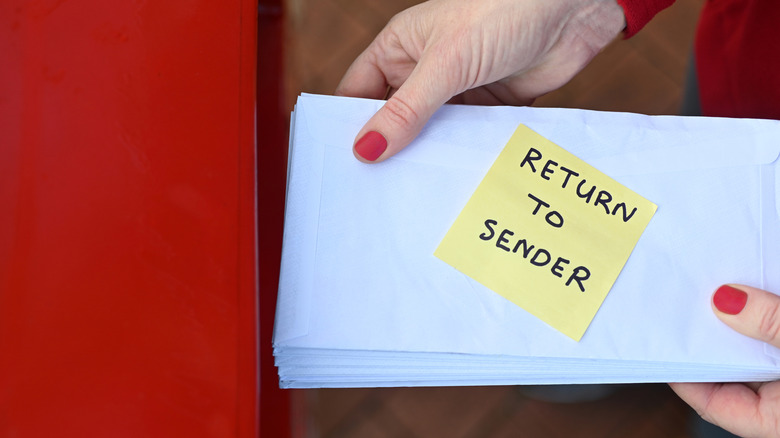
Whether you have a pretty classic white mailbox right outside your house or a row of community cluster mailboxes you check every afternoon, getting your mail — and only your mail — matters. So when something shows up addressed to a name you don't recognize, it throws a small wrench into that system. Most misdelivered mail is completely harmless and easy to fix. However, you should pay attention to what kind of mail it is.
Bank statements, checks, tax documents, medical bills, or anything that looks like it contains personal financial information means you need to deal with it faster than, say, a catalog or flyer. When you accidentally open mail that isn't yours, just reseal it as best you can, write a short note, such as "return to sender — opened in error" or "not at this address" and stick it back in your mailbox. If a piece of mail landed on the wrong doorstep, write "Delivered to wrong address" on it instead of the more generic "not at this address." That small distinction tells USPS this was a delivery slip-up, not a sign the recipient moved — which matters, because they are routed differently.
When misdelivered mail looks like it's been tampered with, or if you're getting a plethora of someone else's mail at your address, report it to the USPS Postal Inspection Service, which investigates mail theft and fraud. If you discover your mailbox is being tampered with, there are precautions you can take.