

12 Discontinued Pyrex Patterns You Can Only Buy Secondhand
We may receive a commission on purchases made from links.
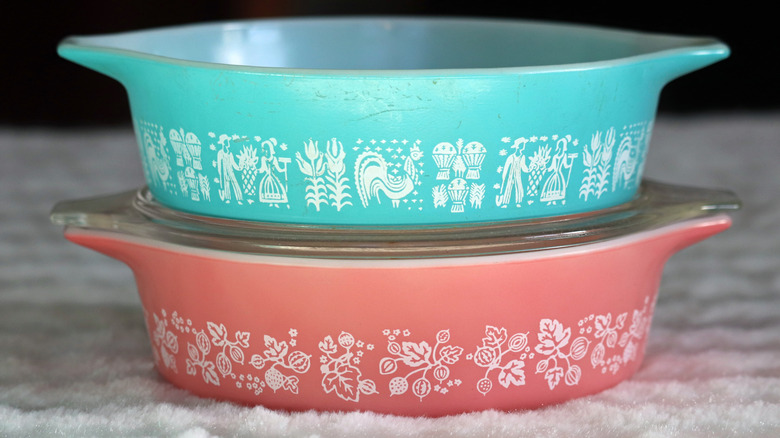
Whether you're looking for a cute pink bowl or a traditional-looking brown casserole dish, there are so many discontinued vintage Pyrex patterns that you can only buy secondhand. These highly collectible pieces of cookware were produced between the '40s and '80s, with old patterns discontinued as new ones were released. Each Pyrex pattern had a limited production run before being discontinued, and some were shorter than others. Those manufactured for only a year or less are fairly rare, and thus more expensive today than those with longer runs.
However, before it was known as "Pyrex," the brand originally made transparent glassware under the name Corning Glass Works. The shift happened when the company started producing break-resistant dishware with white bases and colorful overlays in 1945. This was the beginning of Pyrex opalware manufacturing, which would later give rise to the beautiful patterns collectors seek out today. Many of these vintage Pyrex patterns are so well loved that collectors might find themselves wondering why the brand doesn't reissue some of the vintage designs. The company that owns Pyrex today, Corelle Brands, has actually reissued patterns in the past, but fans of the vintage cookware claim that these newer items are lower quality than the decades-old dishware. For both vintage charm and durable cookware, keep your eye out for the following discontinued patterns when perusing secondhand shops and resellers.
Barcode
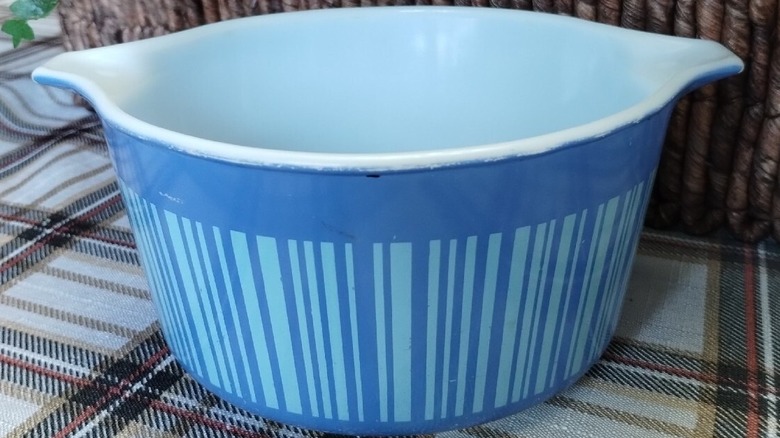
If you find a blue Pyrex dish with light blue vertical stripes at your secondhand shop — congratulations, you have come face to face with a pattern known as Barcode. Produced only in 1966, this discontinued pattern with a clean, mid-century modern (MCM) design was released on casserole dishes ranging from a petite 1-pint size to a much larger 2 1/2-quart dish. If you're lucky enough to buy one of these in a different color combination, you've hit the jackpot – rare Barcode color combos such as white and orange currently sell for thousands of dollars.
Butterprint
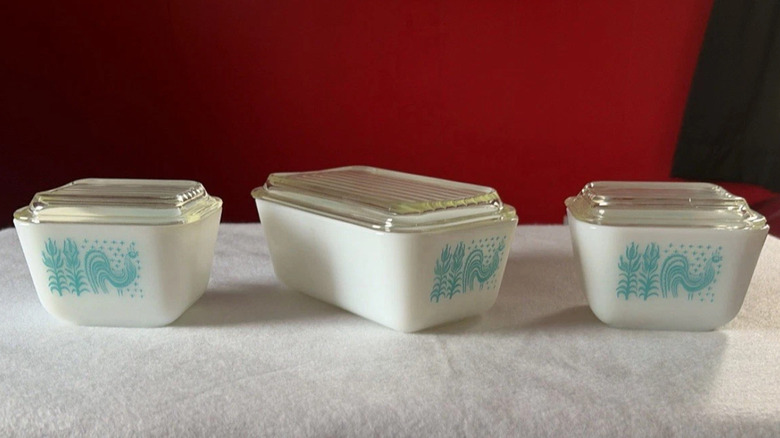
Butterprint is a farm-themed print that adorned Pyrex nesting bowls, casserole dishes, and refrigerator sets. Farmers are pictured along with gardening tools, sheaves of wheat, roosters, and corn. The original Butterprint pattern appeared in 1957 in white on turquoise and turquoise on white, but was later expanded to pink on white and pumpkin on white. It was one of the first Pyrex patterns to be released on Corning Glass Works' distinctive white cookware. By 1968, all four color combinations in this pattern had been discontinued. Secondhand shoppers can buy Butterprint dishes for surprisingly affordable prices, with some selling for as little as $10, depending on their condition.
Early American
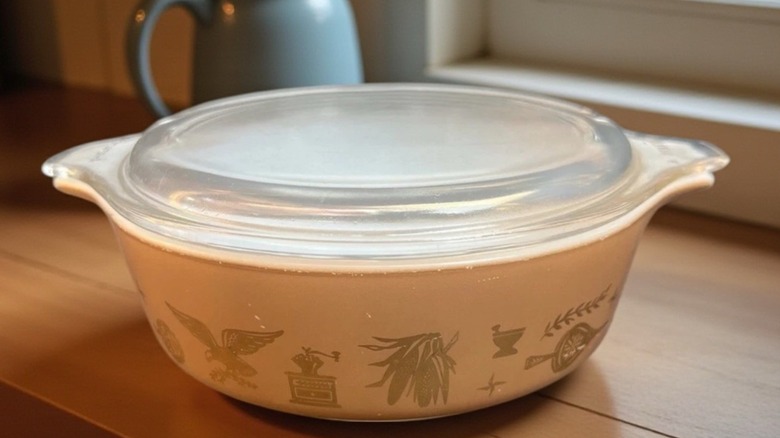
If you have brown on white or gold on brown Pyrex bowls, casserole dishes, or divided serving dishes, chances are they bear the Early American pattern, a colonial-themed design that includes eagles, coffee grinders, and oil lamps. This discontinued design was produced between 1962 and 1971, giving it a long run and making it one of the least expensive vintage Pyrex patterns to buy secondhand, with options currently under $10. However, there's a white on brown variation that is fairly rare, making it one you'd be lucky to find at thrift stores or estate sales.
Fruit Salad
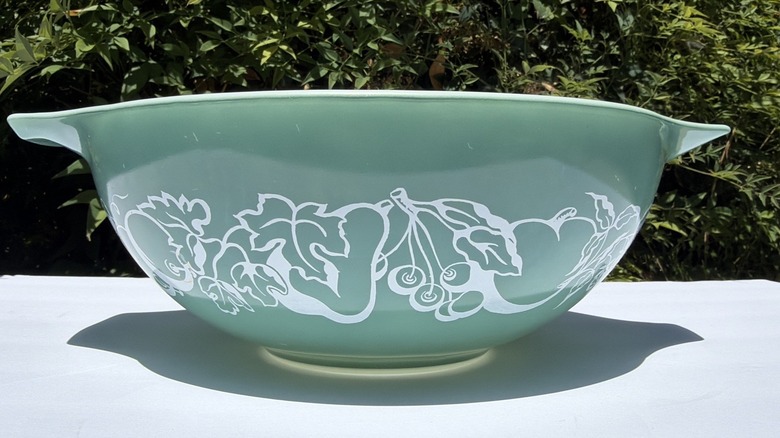
One of the Pyrex patterns that's no longer produced is a mixing bowl in green with a white pattern that is known as either Fruit Salad or Salad Bowl. This promotional pattern is made up of ornately depicted fruits such as cherries, pears, and strawberries. Fruit Salad is a discontinued dish that was produced only in the 60s, but enough of them were manufactured that you can buy one secondhand for less than $30.
Golden Poinsettia
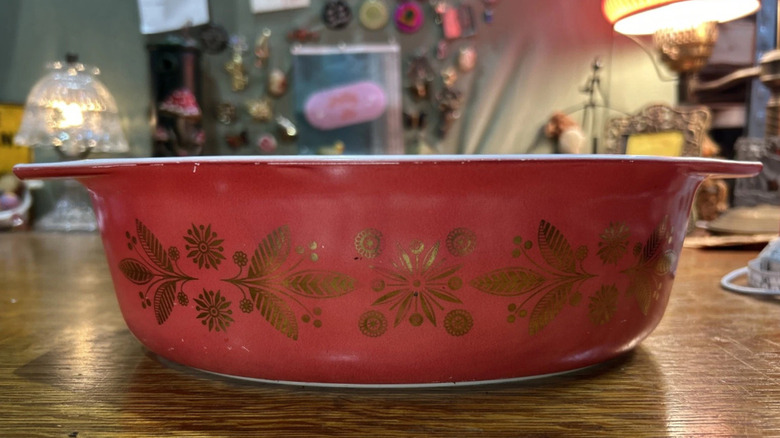
Golden Poinsettias, a holiday-themed Pyrex dish, is a red, oval casserole dish that debuted in 1961 and was christened with the uninspired name "Deluxe Buffet Server." You may not recognize poinsettias in the gold design, but you will enjoy the dish's lovely, floral adornments. Golden Poinsettias was discontinued in 1962, but you can still find this bakeware on secondhand markets. If you can find one secondhand at a thrift shop with the original serving cradle and lid, you'll be hitting the jackpot — you can buy a complete set in good condition for around $150 currently.
Gooseberry
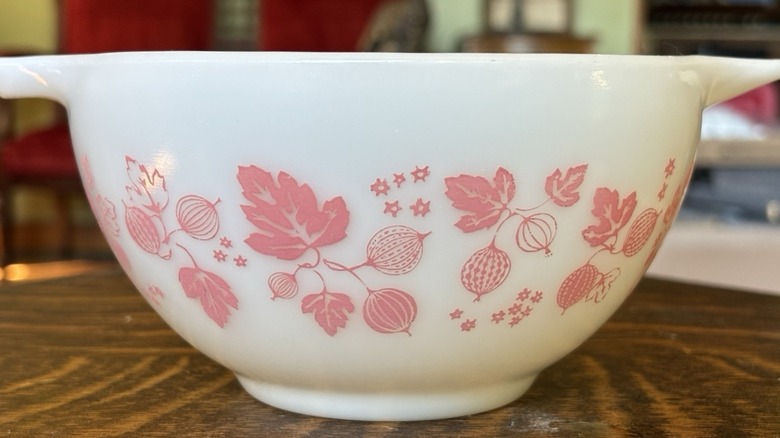
Gooseberry bowls were popular in the '60s and are now thrift store gems. Like Early American, this pattern had a long run. It was produced between 1957 and 1966, in white on pink, pink on white, and black on yellow or white. This design was printed on Cinderella bowls, which are Pyrex mixing bowls with a spout and handle on either side of the bowl. Secondhand shoppers can buy this discontinued pattern currently for less than $30 per bowl.
Mod Kitchen
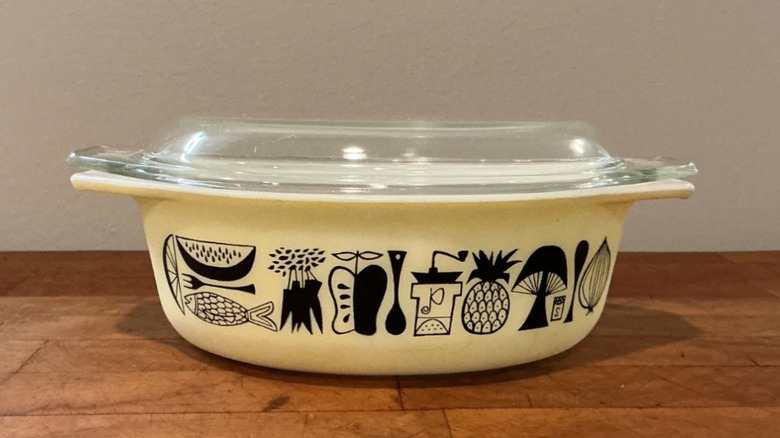
Mod Kitchen is a Pyrex pattern introduced in 1958 that has a strong vintage flair with its mod design. The pattern is cooking-themed, with a stylized array of foods including carrots, pineapple, fish, and a watermelon slice. Mod Kitchen was featured on an oval casserole dish that is pale yellow with a charcoal pattern. This Pyrex dish was only produced in 1958, and after that it was discontinued. If you're a fan of this '50s design, you can currently buy a complete set with lid and metal cradle secondhand for less than $100.
Old Town Blue
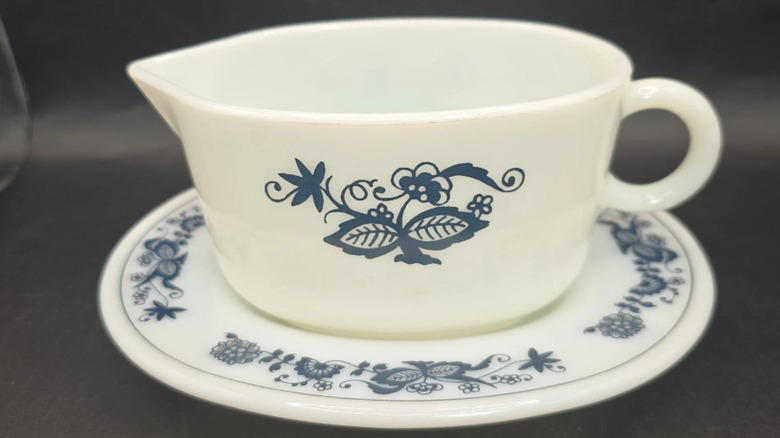
Fans of Pyrex table ware may be familiar with Old Town Blue, a pattern composed of navy floral elements and scrolls. This design is one of the rare Pyrex collections worth hunting for at thrift stores. You may find secondhand teacups, salt and pepper shakers, and butter dishes to buy with this discontinued print, which was produced between 1972 and 1982. There's also a baking dish with the Old Town Blue design, but it's hard to find.
Starburst
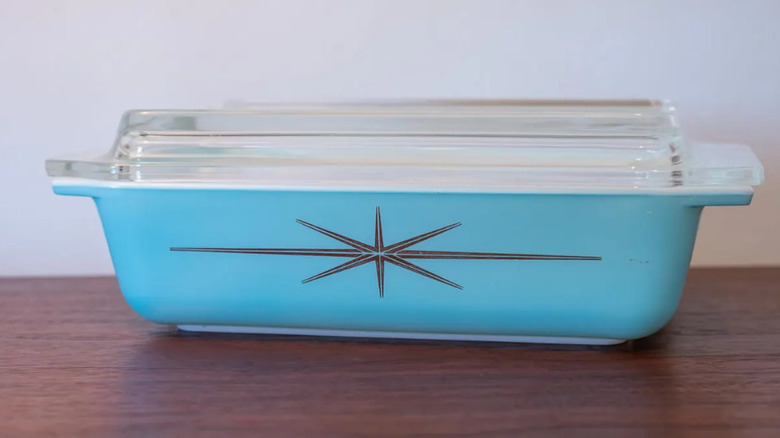
By now you know that some Pyrex dishes are quite sought after, and Starburst ranks towards the top of that list. This promotional pattern from the '60s consists of a large, gold-colored, 8-point star that's featured on a turquoise-colored rectangular casserole dish. It ran for only a year and was discontinued after 1960, making the Starburst pattern one of the most valuable vintage Pyrex pieces to keep an eye out for while thrifting. If you have your heart set on buying one, start saving up. Resellers offering these casserole dishes secondhand start their asking prices upwards of $700.
Terra
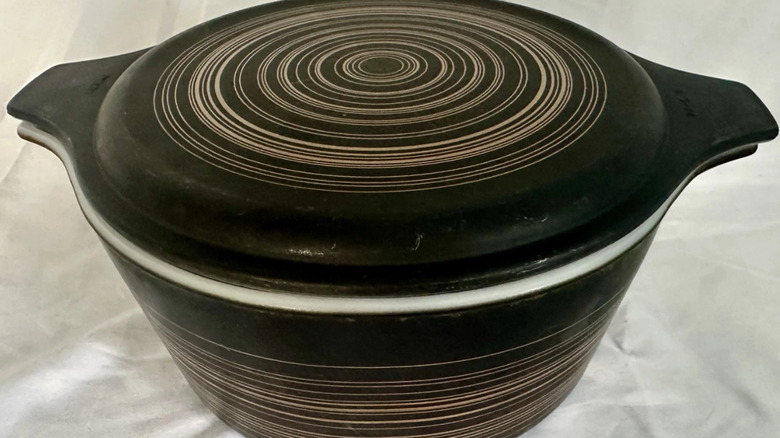
Not all Pyrex patterns were meant to look modern — Terra was a pattern that was meant to evoke earthenware. This design, manufactured between 1964 and 1965, featured brown lines of varying widths on a matte, charcoal background. Terra appeared on mixing bowls, casserole dishes, mugs, plates, soup bowls, and platters. This pattern ended up being too costly for the Corning company to produce, so it was discontinued after just a year. Nonetheless, enough of them were put into circulation to make them relatively inexpensive to purchase secondhand. You can buy these lidded casserole dishes currently for less than $15.
Town and Country
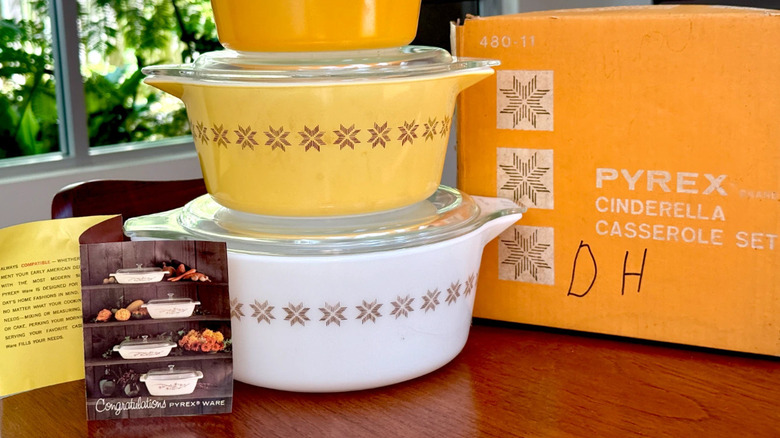
The Town and Country design features circles, Xs, and eight-point stars In a neat geometric design. It comes in six variations, with orange or brown motifs set against white, yellow, or orange backgrounds. The first one arrived on the cookware scene in 1963, and all six colorways were discontinued by 1967. The Town and Country pattern is easy and inexpensive to buy secondhand, with resellers sometimes offering bowls for less than $10 each. You'll find it featured on mixing bowls, refrigerator sets, casserole sets, and chip and dip sets.
Zodiac
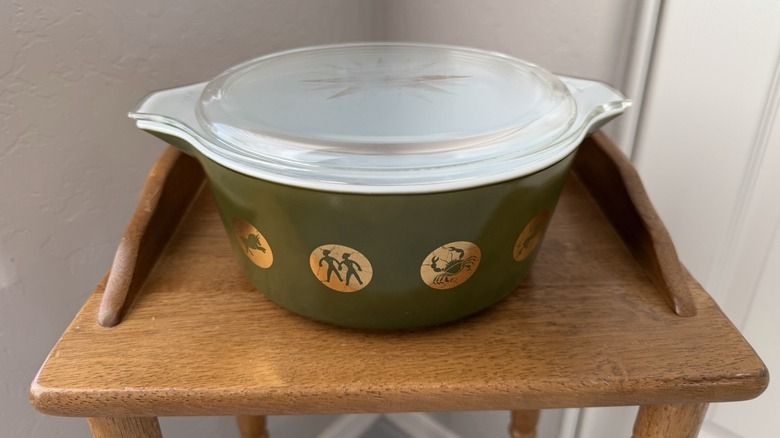
Pyrex and Astrology may seem like an unlikely pairing, but in 1961 the two met at an attractive crossroads — the Zodiac pattern casserole dish. Zodiac bowls are astrology-inspired dishes that collectors dream of finding at thrift stores. This round bakeware is a dark green color, adorned with the signs of the zodiac in gold. It was originally sold with a clear lid as well as a black and brass candle warmer, but was discontinued after 1961. Die-hard fans may want to spring for the complete set offered by resellers — a secondhand set can cost several hundred dollars.