

Vacuums Look Nothing Like They Used To
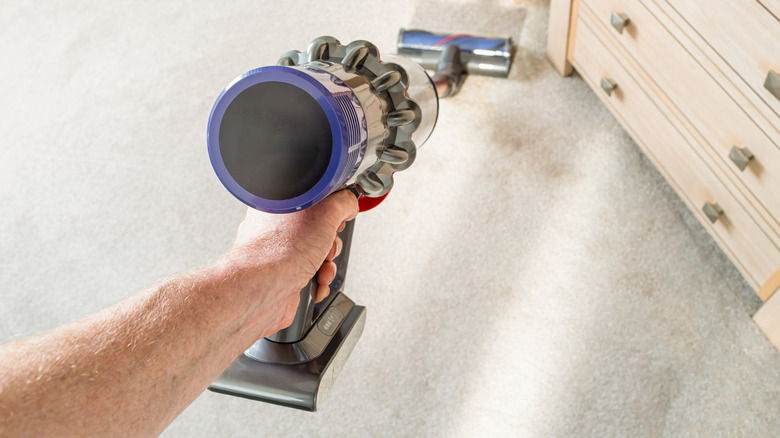
Start a sentence with "Back in the day..." and you'll likely cause whoever is listening to tune out. However, reminders of the "old days" can spark gratitude for the changes that have made our lives more convenient. One example is the evolution of vacuum cleaners over the centuries, from clunky hand-powered or horse-drawn machinery to compact hands-free appliances.
When it comes to cleaning, homeowners have seen immense growth in science and technology — both of which largely influenced the changes in vacuums. We now understand more about hygiene, as evidenced in the vast disinfectant options on the shelves. Being environmentally friendly has become a priority to ensure that cleaning products keep both people and the earth healthy and safe. And technology has undeniably transformed housecleaning, with the rise of robotic cleaners — like automated vacuums and self-cleaning litter boxes — and options to schedule your devices or turn them on remotely (which is helpful for vacuuming these things weekly).
But prior to the 1900s, homeowners were not so fortunate. Cleaning the floors meant sweeping with a broom or simply blowing debris, as was the case for previous iterations of the vacuum. Early inventions required people to use a hand crank to manually operate the device, which made cleaning a strenuous task. In the mid to late 1800s, entrepreneurs like Melville Bissell (a name we still recognize today) patented glorified brooms that used a rotating brush to push dirt across carpet and into a trash bin. It didn't involve as much muscle power, but it still wasn't as effective as today's vacuums.
The evolution of the modern-day vacuum
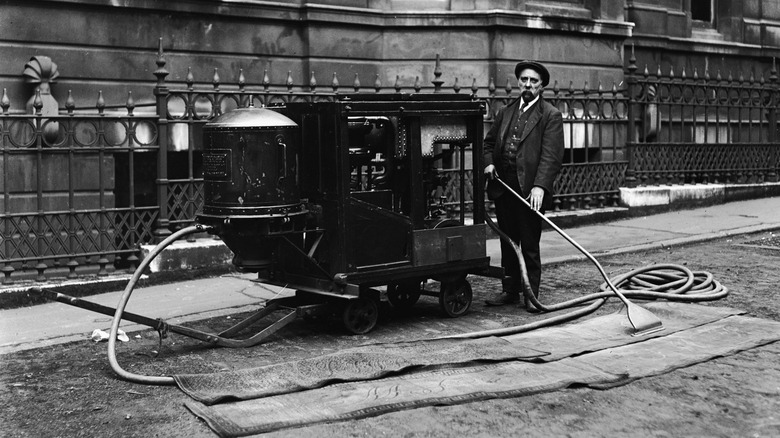
One of the more unusual vacuum variations came from British engineer Hubert Cecil Booth in 1901. He recognized the inefficiency of blowing dirt around and created a large horse-drawn, gas-powered model named Puffing Billy that sucked dirt from passing homes and stores with long hoses. However, the first resemblance of the modern-day vacuum came in 1907 when a janitor in Ohio named James Murray Spangler invented the first portable electric vacuum with a cloth filter bag, rotating brush, and suction pump. This model took off when William Hoover (another name we still associate with vacuums) bought the patents.
From there, vacuum cleaner models evolved, starting with canister vacuums in the 1910s and '20s, which featured a long hose fastened to a separate body, allowing for greater access for hard-to-reach spots. Upright vacuums continued to progress, with accessories like longer cords and disposable bags (versus reusable ones that needed periodic emptying) making them commonplace by the '40s. For those who hated cleaning under the bed, along came attachments for various surfaces and spaces.
Today, we have bagless and cordless models to optimize efficiency and convenience. Dyson, known for its bagless cyclone technology that sucks in and traps dust and debris, was the most popular vacuum brand for the eighth straight year in Lifestory Research's 2026 America's Most Trusted Vacuum Study. Some vacuums include embedded HEPA filters to catch microscopic airborne particles, decreasing allergens in your home. We also now have automated vacuum cleaners like the Roomba, which allow scheduling, prioritize the dirtiest spots, and adjust for flooring types. Indeed, we are no longer "back in the day."