

How To Repel Flies With A Fragrant Perennial They Can't Stand
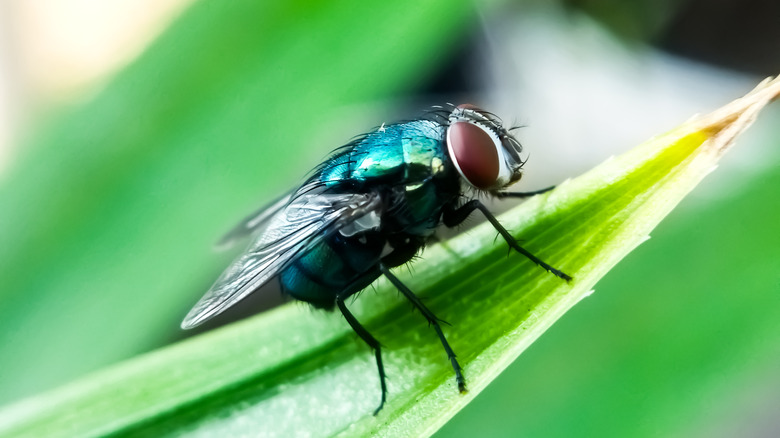
If you're looking for ways to repel flies naturally with garden plants this summer, then there's one perennial that could be exactly what you're looking for. Citronella grass (Cymbopogon nardus) is best known for having a beautifully fresh and almost lemony scent, and those aromatic oils also help mask the smells that attract insects in the first place. For that reason, this is a great plant to have growing around patios, decks, doorways, or outdoor seating areas.
Citronella comes from the same family as lemongrass, and it's the plant from which we derive citronella oil. You may know that ingredient from its role in candles and sprays sold to keep mosquitos away. The same principles work for many other insects, including flies, and you can bypass the candles altogether by simply planting the source. That way, the plant can release its fragrance naturally, either when it is brushed against or rustled in the wind — alternatively, you can crush a leaf between your fingers for a stronger effect. And it needn't just be there for a practical purpose, as citronella is also an attractive ornamental plant, and its arching green leaves will add texture to your flower beds and containers.
How to make citronella grass work for you
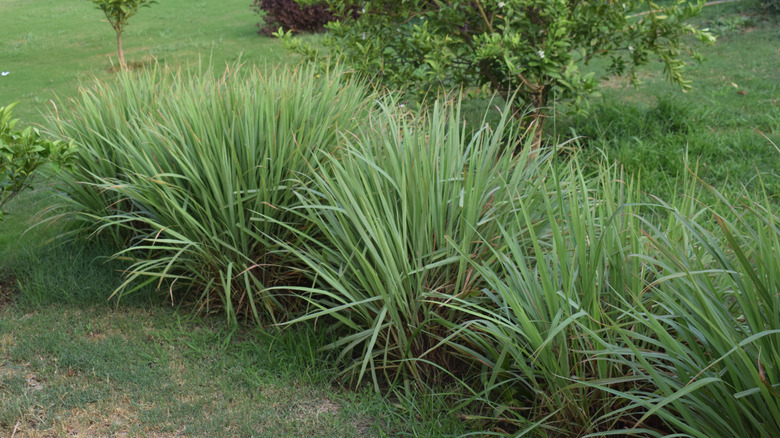
A single plant placed at the opposite end of the yard, far away from where people gather, is unlikely to have much effect on bothersome flies. Inevitably, the plant's fragrance will be stronger the closer you are to it, so keep placement in mind. You also need to consider that citronella thrives in full sun with well-drained soil, so it cannot be planted in the shade. It can be grown from seed, but it is easier to buy it young, and in that case it will need regular watering while becoming established. Once established, it can tolerate dry spells similar to many other ornamental grasses. In warmer climates, it will return year after year, but in cooler regions, you may wish to grow it in large pots so it can be moved indoors before the first frost. Citronella is hardy to USDA zones 10 to 12.
Like any hack like this, it's always worth keeping your expectations realistic, as citronella grass is best used as one part of a larger strategy against flies. Other steps — like covering food when outdoors, cleaning up spills, and keeping trash bins sealed as much as possible — will also do their part. With all of that in mind, this fragranced perennial can add some lush greenery to your garden, hopefully making your time outside that little bit more comfortable in the process.