

What Happens To Unsold Items At The Thrift Store?
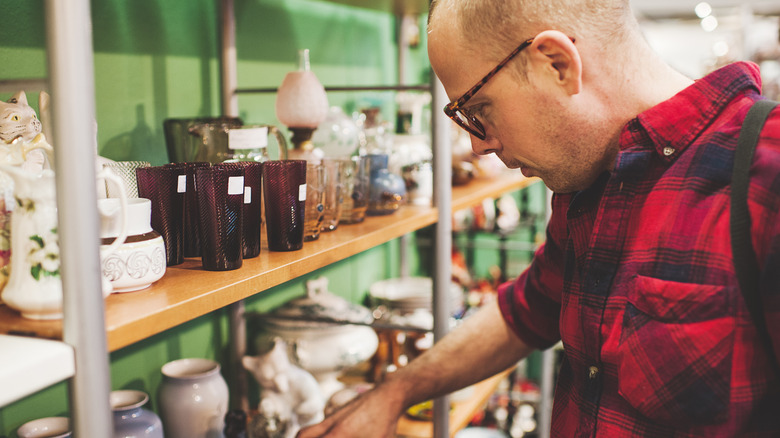
The thrift store can be the best place to find furniture, home goods, and decor, but have you ever wondered what happens to all of the excess donations that don't end up selling? Thrifting is a great way to shop more sustainably as it means less stuff will end up in a landfill. Or at least, that's the hope of not only donating to a secondhand store, but also shopping there. However, there is a finite amount of space for what is donated every day. At some point, thrift stores have to let go of things that are not selling. Depending on the thrift store, there are different ways they get rid of excess inventory.
Smaller, local thrift stores often take their unsold inventory and redistribute it to different thrift stores, homeless shelters, and other local organizations. Of course, if those items still don't sell or cannot be used by other organizations, these things can end up being sent to recycling centers if possible. Many small thrift stores do whatever they can to reduce how much ends up in a landfill.
One way that bigger thrift store chains like Goodwill and Salvation Army get rid of inventory that hasn't sold in their regular stores is to send it to their outlets. These outlets sell items by the pound, which can be a great way to save even more money on things you want and need. If you're trying to save money, the outlets can be a great place to go for items that are better bought at the thrift store than paying full price since they're considered a last chance before these pieces end up in a landfill, making them less expensive.
Unsold thrift store inventory can end up recycled or in landfills
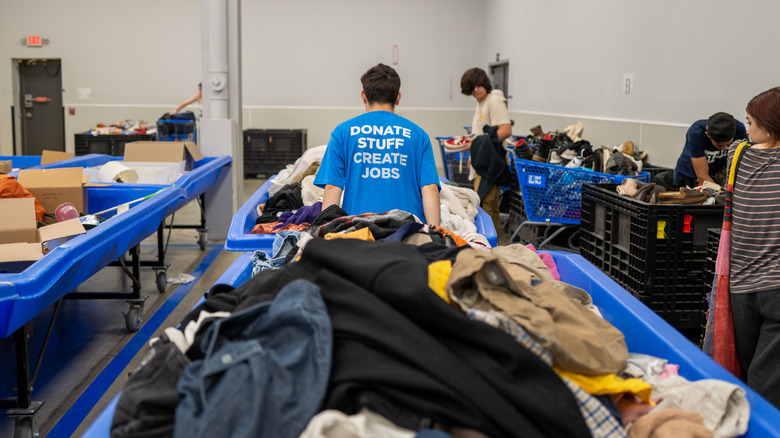
Even with older thrift store inventory ending up at outlet stores with a pay-by-the-pound model, there are always odds and ends left over that didn't end up selling. Once this happens, there are a few things that these organizations do. One option they try is auctioning off items in bulk for other people to try to sell, repurpose, or reuse in some way. There is also a service called BlueBox where thrift stores sell off items in good to new-with-tags condition in curated boxes or palettes. This service has sold everything from books and electronics to clothing and jewelry. If you're someone who upcycles thrift store finds and are building a craft supply stash, both the outlet stores and the BlueBox service are great ways to find bulk supplies for less than at the regular secondhand stores.
Leftover thrift store inventory can also end up being recycled if that is an option, but items that can't be recycled may end up in a landfill. However, there is another alternative that a number of thrift stores use to get rid of inventory — sending it overseas. There are different ways this might happen, including creating large bundles and donating them, or selling them to buyers in other countries. With many thrift stores, the goal is to keep things out of the landfill, and that means having as many options as possible when it comes to getting rid of inventory that didn't sell in their first run at the store.