

5 Reasons Your Garden Hose Is Leaking
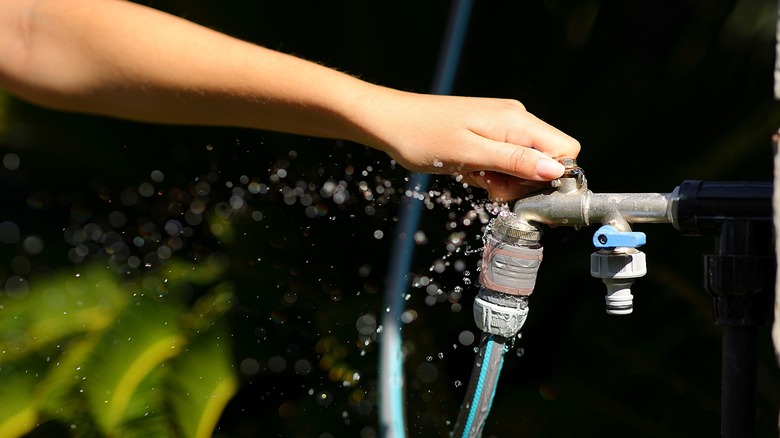
Do you know how often you should water your vegetable garden? While it can vary based on region and the exact plants you're growing, around three times a week is the average, for a total amount of 1 inch of water per week. That's three times a week you're dragging your garden hose around and relying on it to keep your prized plants hydrated, healthy, and thriving. As a result, the last thing you want is to unfurl your garden hose and discover that it has a leak. Before rushing to buy a new one, however, it's important to learn the various reasons your garden hose could be leaking.
Sometimes, a leak in your garden hose means a replacement is needed. Perhaps it's finally worn out with age or developed unrepairable damage. For newer hoses, you might have accidentally purchased the wrong one for your water pressure.
However, in many cases, when you know how to properly identify the reasons your garden hose is leaking, you can repair the problem and continue enjoying the ease that comes with using a garden hose to accomplish your garden's watering. While a leak may seem detrimental at first, it can often be fixed with something as simple as a patch or adjusting the hardware.
Punctures or cracks
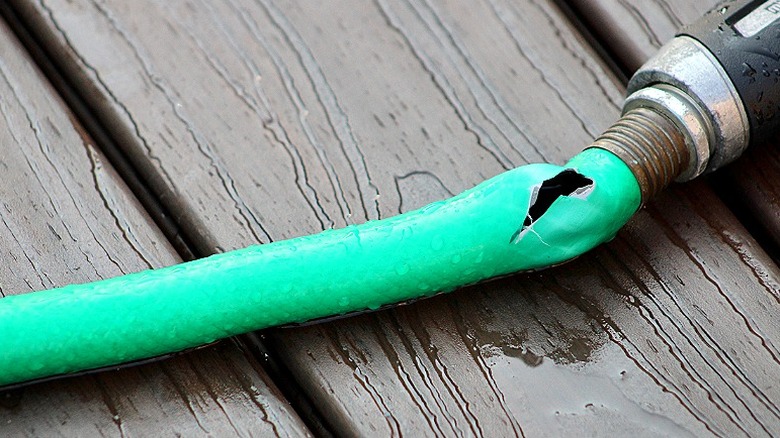
Whether you're dragging your hose across your yard or storing it with other tools or landscaping equipment, there's often a chance of damage to the hose's tubing. Maybe long-term abrasion from movement has worn down its exterior. Or, perhaps, a small gardening mishap led to a puncture or crack. Regardless of the cause, damage that penetrates the tubing of your hose can be one of the top reasons your garden hose is leaking.
On the bright side, discovering a small hole or tear in your garden hose doesn't always mean it's time for a replacement. Instead, depending on the location and severity of the damage, you may be able to fix your leaky garden hose.
For extensive damage, you may need to cut away the affected portion and reattach your hose using hardware. Smaller holes can often be patched to prevent leaking, such as through the use of specialty tape. When picking the right tape for this job, ensure you choose an option that's waterproof, since the adhesive will come into contact with water due to only patching the hole, not fully repairing it.
While punctures and cracks can occur over time, garden hose storage mistakes can increase the likelihood as well. Twisted hoses may be exposed to greater levels of abrasion; sunlight can weaken some materials, and storing your hose with sharp tools could lead to accidental holes.
Water pressure incompatibility
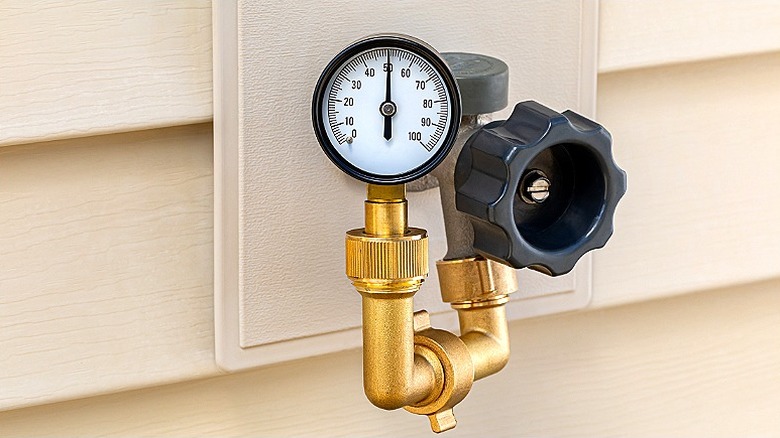
Did you know that not all hoses are made the same? When you're shopping, it may seem like the only difference between one hose and another is length or material. However, there's a third factor that affects how well a garden hose works in your yard: water pressure. Pressure in a garden hose is described using pounds per square inch, or psi. As a result, when you're looking at different garden hoses, you may see that they have a psi rating. This denotes how quickly water can pass through your chosen hose.
Choosing the right psi rating for your home's water pressure is essential. If you pick an option that isn't compatible with your water pressure, you may experience either poor flow or leaks, depending on if you choose too high or too low of a psi rating.
Don't worry if you're not sure what exactly your home's water pressure is; the process of determining connector psi is easy enough, even beginning DIYers and gardeners can complete it. You'll just need a water pressure gauge. While the process may vary based on the gauge you purchase, the overall task involves attaching the gauge, turning on your water, and then reading the pressure. Every home is different, but you can expect your water pressure to range between 40 and 80 psi, on average.
Blockages
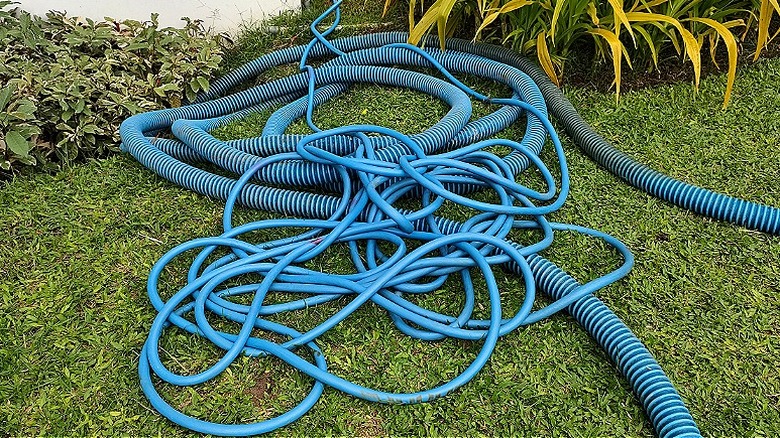
On the topic of psi and water pressure issues, it's also important to familiarize yourself with blockages, which are another common cause behind a malfunctioning garden hose. For those gardeners who use their hoses often, dragging them through the yard and around corners, you may be no stranger to bends or kinks that impede water flow. However, you can also have internal blockages from damage or debris that also prevent water from flowing properly.
Regardless of the cause of the blockage, when water isn't allowed to reach the end of your garden hose, it builds up within the hose itself. From there, the pressure causes the water to escape through weak points, be it punctures and cracks or at loose connections. This results in that tell-tale leakage that lets you know your garden hose has a problem.
Correcting the blockage quickly may be enough to restore your hose to its normal, non-leaking self. However, if the problem persists for a long period of time, it could damage the hose and lead to more expansive problems that require costly repairs or replacements. When a hose is routinely twisted or kinked, the increased pressure and abrasion can increase the likelihood of leaks due to physical damage rather than blocked water within the hose alone.
Loose connection
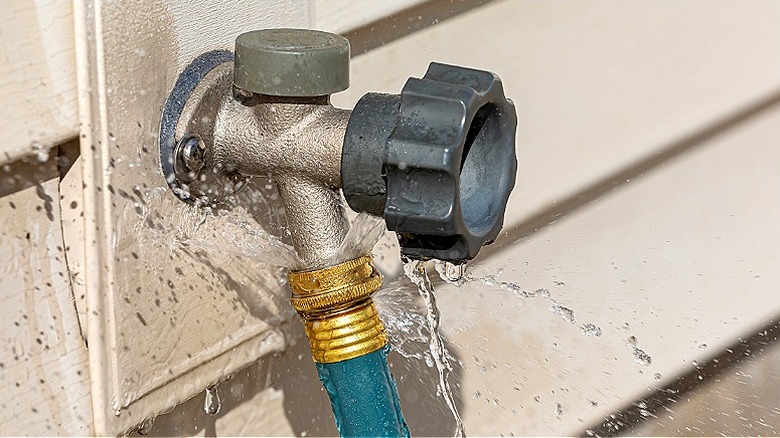
Looking at all the other common reasons your garden hose may be leaking, you may think that every drop of water calls for a replacement. Fortunately, sometimes the problem is as simple as a loose connection. If you've had your hose hooked up for some time, checking occasionally that it's still connected properly to your spigot can be beneficial. Time and usage have the potential to loosen it, which can cause leaks at the joint.
You could also need to conduct a simple repair. If your hose's washer has worn down or become damaged, then you're likely to experience some leaks at the spigot. You can identify this problem by paying attention to the success of adjustments. When adjusting your hose's connection, leaks that persist even after you tighten the connector may be a sign that the washer needs a little TLC to restore your hose's functionality.
For brand new hoses, the problem may be instead that you accidentally purchased a hose with incompatible hardware for your existing setup. The connector may not be the right size for your spigot, which could cause leaks during use. In this case, you may wish to return your hose if possible or search to see if you could potentially purchase an adapter to help your new hose work without leaks.
Age
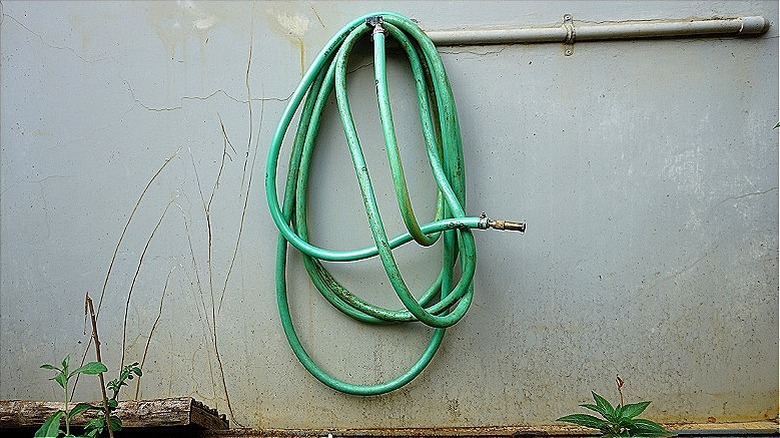
Sometimes, there may not be a single fixable reason your garden hose is leaking. Instead, you may be faced with a variety of different reasons all occurring as a result of one factor: Your hose may simply be old. Hoses undergo a large amount of wear and tear, especially if you use them often. When stored improperly, such as with kinks and twists or in heavy sunlight, those environments can speed up the aging process as well.
As your hose ages, it degrades like many other common pieces of yard equipment. The exterior may begin to fray, it could develop notable damage, or important hardware may become worn and start to break down. Because of this, if your garden hose is leaking and you've had it for several years, it may be worthwhile to consider a total replacement. Fortunately, you can use your garden hose for more than watering alone, and even damaged hoses can be useful for DIYs.
Of course, if the problem is as simple as patching a puncture, you could continue using it, but keep an eye out for accumulating problems afterward. After all, a leaky hose can waste tremendous amounts of water over time, and when that water ends up in your garden, your plants might not appreciate the extra hydration, especially if it leads to soggy or waterlogged conditions. If your hose is leaking around your home, this also has the potential to lead to significant structural problems, including foundation damage, mildew, and mold.