

You Don't Need Concrete: Upgrade Your Retaining Wall With A Basic Yard Staple
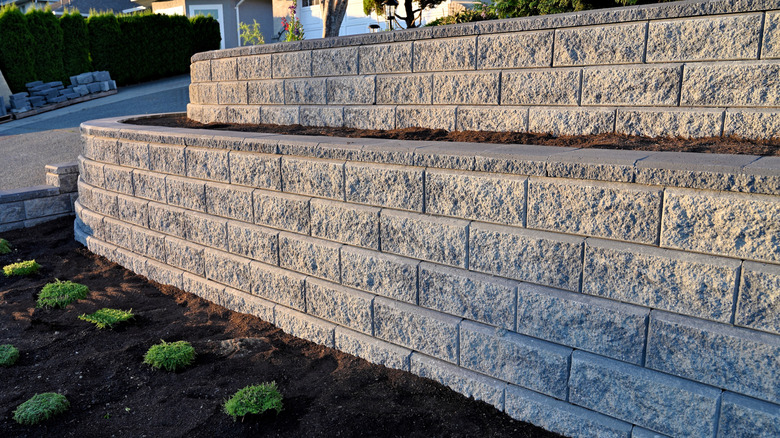
In a sloped yard, retaining walls have important roles to play. But some of the less expensive options aren't always the most aesthetically pleasing. This is how many yards end up with dull concrete block retaining walls, and garden beds behind them filled with similarly boring shrubs. If you're looking for something a little more interesting to give your retaining wall an upgrade, consider adding a charming picket fence and equally appealing colorful plants.
While a white picket fence is the classic choice, this type of fence describes any with vertical boards that are attached to rails. Most picket fences are about three to four feet tall, though you can make them shorter if you're building them on a taller retaining wall. In addition to wood, picket fences can be made of vinyl and composite materials in a variety of styles. By playing with your style, material, spacing, and fence height options, it's easy to achieve different aesthetics that suit your yard.
Installing a picket fence on top of a retaining wall doesn't just look good, either. Stacking materials for a dual fence solves problems and expands the usefulness of your retaining wall. It adds more privacy to your yard, and there's another practical bonus if your retaining wall is over 30 inches tall and creates a drop along a path or patio — since code requirements often require a guardrail at least 36 inches high in these instances, your picket fence pulls double duty.
Installing and styling a picket fence on a retaining wall
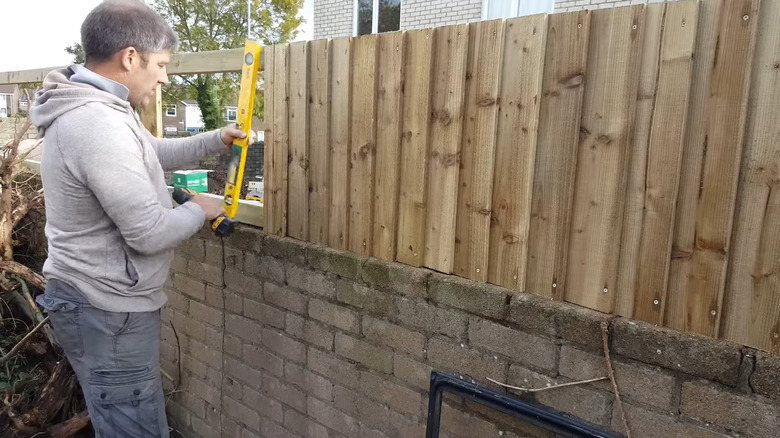
If you're looking to build the perfect fence, picket fences are fairly simple, consisting of vertical posts supported by horizontal rails. The steps you must take depend on the type of retaining wall you're starting with, but when you're working with a concrete or cinder block retaining wall, as long as it's at least 12 inches thick, the base plates for the posts can be surface-mounted directly to the top of the wall. For walls that can't bear a direct load, engineers sometimes use a cantilevered approach for the posts — in cases like these, it may make sense to leave installation to the pros. Regardless of what material you choose for the pickets, there's a case to be made for choosing vinyl or metal posts that won't rot.
After updating your retaining wall with a picket fence, consider adding a few plants to make it a beautiful addition to your landscape. Whether you're using wooden pickets for a rustic look or white vinyl pickets for a country cottage look, the plants you choose have a lot to say about the final result. The best plants for retaining walls includeannual and perennial flowers and small shrubs, since their more compact sizes mean their root systems are less likely to add pressure to your retaining wall. Cascading plants like petunias and trailing nasturtiums, or ground covers like creeping phlox, only add to the charm of a picket fence when they spill over the retaining wall beneath it. To get that classic cottage look, use plants that pair well with a picket fence's aesthetic, such as climbing roses and hydrangeas.