

The Centuries-Old Porcelain Plate That Collectors Would Be Thrilled To Find In Thrift Stores
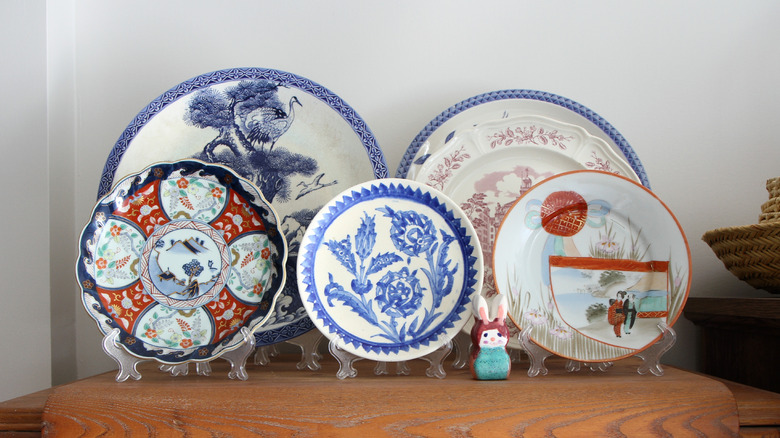
It's no secret that vintage Japanese stoneware can fetch a pretty penny. However, there's one traditional brand that is valued particularly highly among collectors. Kutani ware can be traced back to 1655, and was originally produced in the village of Kutani in the southern part of the Ishikawa Prefecture. During this early period, the plates had a distinct color palette made up of blue, green, yellow, purple, and red. The vibrant designs appeared like oil paintings, conceptual and flowing. After the initial period, there was a revival in the 19th century of Kutani glazed porcelain. You can spot the difference between the 17th and 19th century Kutani ware because the second wave focused more on delicate brushstrokes and a wider color palette.
There are important motifs that can be found across Kutani ware pieces. As with many Japanese porcelain dishes, nature is a major theme. Designs featuring flora and fauna, as well as people, are common. Flowers like cherry blossoms and plum blossoms are especially popular subjects, as these plants are steeped with spiritual meaning. Kutani ware is undoubtedly a valuable kitchen item you should never overlook at estate sales or thrift stores.
How to find and identify Kutani ware
Artist signatures on Kutani ware can reveal important details about a piece and play a major role in determining its approximate resale value. Lots of items are marked on the base with the artist's name or other information that can help identify when the piece was made. You can always consult an expert to help you better understand the signature on your prospective piece. There are several different ways to authenticate your latest thrifting find.
Authenticity depends on more than just the signature. Genuine Kutani ware typically has crisp, carefully painted designs, vivid colors, and a high-quality glaze with a smooth finish. Thrift stores can sometimes be excellent places to find Kutani ware at a bargain, although low prices may also indicate reproductions or counterfeits. Purchasing from reputable galleries or specialty dealers reduces that risk, but usually costs more. Even so, a well-priced thrift store find can be worth taking a chance on, especially since authentic Kutani ware often increases in value over time. If you want to keep the time-honored Kutani ware for yourself, don't forget the secret to using vintage ceramics as decor.