

Fertilizer Doesn't Change The Color Of Your Hydrangea Blooms
We may receive a commission on purchases made from links.
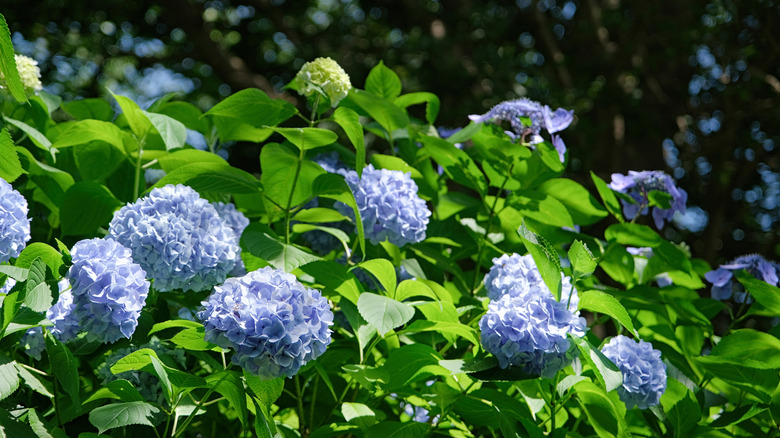
For those of us with a love for at-home science projects, part of the appeal of hydrangeas is that you can change the color of the flowers. Honestly, who isn't excited by a little chemistry in the garden? But if you don't understand what turns the flowers from soft pink to vibrant blue, you may not get the results you want. The color change is commonly attributed entirely to soil pH, with gardeners often advised to use acidic or alkaline fertilizers and soil amendments. While not a lie, it's not the complete story either. The real magic ingredient for blue hydrangeas is aluminum.
There is no shortage of products promising glamorous azure blooms. Hany of these products work by lowering soil pH, supplying aluminum, or doing both. For example, the well-known garden brand Espoma sells a Organic Soil Acidifier, which features an image of a blue hydrangea and a tag like that says, "turns hydrangeas blue." It's easy to conclude that acidity alone creates the color, but a lower pH works indirectly by making aluminum easier for the plant to absorb.
A lower pH makes aluminum that is already present in the soil more available to the plant. So even though aluminum is one of the most abundant minerals in the soil, it's usually in a physical state that can be right up against the roots and still not be absorbed. Once the soil pH drops below 5, though, the aluminum is much more soluble. Luckily, hydrangeas are more resistant to aluminum toxicity than other plants. The resulting blue blooms are a lovely side effect!
There are a few steps to turning hydrangea blooms vibrant blue
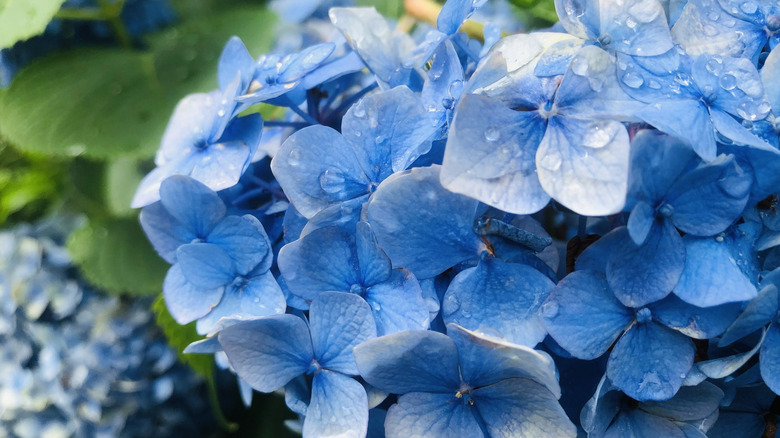
It's almost as simple as sprinkling on a product and waiting for the results, but there are a few factors to consider. First, there are dozens of gorgeous hydrangea varieties, but not all of them can change their flower color. You'll want to pick up a bigleaf species (hydrangea macrophylla). Some mountain hydrangeas may also be manipulated, but bigleaf hydrangeas that are blue or pink are very common. You can start off with blue, or you can choose a pink variety to watch the magic transformation. Avoid white-flowering varieties, though, because their blooms generally won't turn pink or blue.
Before you run out to your local nursery for a bag of aluminum sulfate, you may want to get a soil test done. Just in general, it's a great practice to know what minerals exist and what the current pH is. More immediately, don't forget to consider how to grow and take care of hydrangeas before you invest too much. Depending on your soil test results, you can lower the pH with an appropriate granular amendment or liquid treatment. Following the product directions, apply elemental sulfur or aluminum sulfate to the soil around the shrub and water it thoroughly.
While there isn't a deadline to add some, it does take about a year in some cases to actually see the color change. If time is a factor for you, choose a liquid soil drench of aluminum sulfate in spring to get slightly faster results. With proper care, some tips and tricks for successful hydrangea blooms, and a little bit of science, you'll get to enjoy vibrant blue flowers in your own garden!