

The Simple Way To Prevent Poison Ivy And Oak From Creeping Into Your Yard
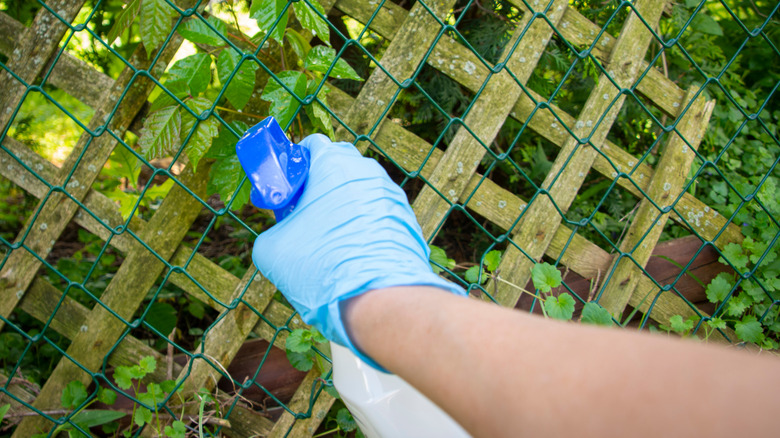
Most people think of poison ivy or poison oak as issues they'll only face out in the wilderness if they wander off a trail. But the truth is, these vigorous plants can creep into your own backyard. Plus, according to a study from the Proceedings of the National Academy of Sciences, poison ivy thrives under elevated levels of atmospheric carbon dioxide. That means that this pesky weed might start popping up in your yard more and more as greenhouse gas emissions continue to rise.
But all hope isn't lost. There is one simple task that can help discourage poison ivy or poison oak from creeping into your yard. By maintaining the edges of your yard, not only is it easier to see any threatening growth of these dangerous plants but it also creates a barrier for them to spread. In addition, maintaining a healthy, dense lawn can leave less open space for poison ivy, poison oak, and other unwanted plants to establish.
Basic lawn care tasks that help control poison ivy and oak
If these noxious weeds have already entered your yard, you'll have to start by removing them. In the early spring or early fall, pull the weeds out or use a shovel to dig them out at the roots. An herbicide labeled for poison ivy or poison oak may also be an option.
When removing poison ivy or oak, wear long sleeves, long pants, closed shoes, and protective gloves to cover exposed skin. Properly clean your clothes after dealing with poison ivy by washing them separately, and clean any tools or shoes that may have touched the plants. Urushiol can remain on anything the plants touch, including clothing, tools, shoes, pets, and hair. You'll also want to avoid dangerous mistakes when dealing with poison ivy, such as burning the plants or adding cuttings to your compost pile.
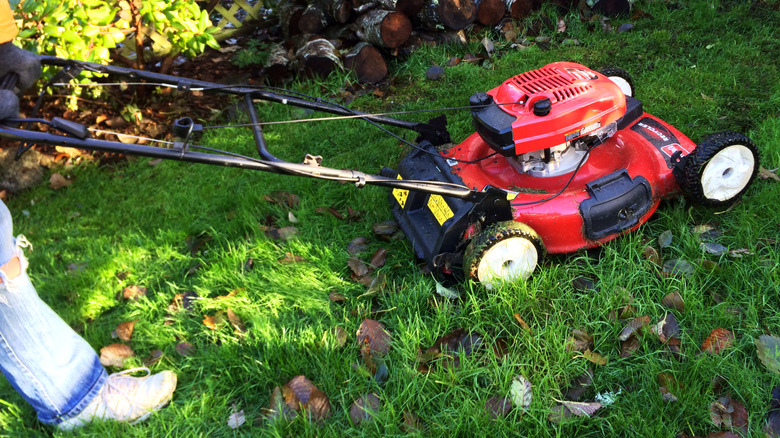
Once any current growth is addressed, regular lawn maintenance can help make poison ivy or poison oak less likely to return unnoticed. Start by ensuring your grass creates a healthy, dense covering for your lawn. Healthy grass with dense coverage can make it more difficult for many weeds to establish in open areas of the lawn. Regular mowing may suppress young growth in maintained turf, but it usually won't eliminate established poison ivy or poison oak roots on its own. Around the edges, trim the grass neatly so you can quickly spot and address any vines or shoots moving toward the lawn. You can also add mulch to the edges to help choke out any new or existing weed roots. With those simple steps and regular inspections, you'll be better prepared to catch poison ivy or poison oak before it spreads across your yard.