

Not Orchid Or Bee Balm: The Tuberous Perennial Flower That Hummingbirds Can't Resist
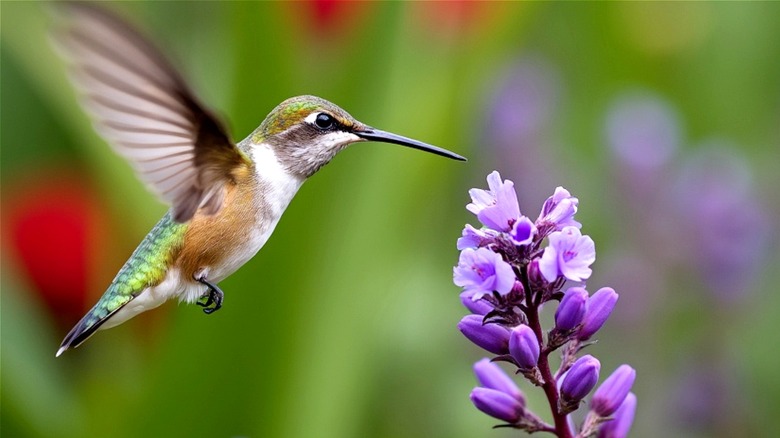
Roscoea, a slightly exotic offering for your hummingbird garden. Rather than one species of plant, roscoeas (Roscoea sp.) actually comprise a genus of plants under Zingiberaceae, the ginger family.
These plants are native to western China and the Himalayas, which means they're home in areas that have cooler climates. All members of this genus, often called hardy ginger, are perennials that grow from tubers. However, don't confuse them with another genus in the same family, and also commonly known as hardy ginger, Hedychium.
In addition to their unique growth, roscoea plants may also draw hummingbirds to your garden. If you're looking for beautiful perennials that hummingbirds will love, consider this woodland favorite. (In their native higher altitudes, the plants grow in open pine forests and alpine meadows.)
In appearance, roscoeas have been compared to orchids, while their leaves, longer than wide, are similar to that of corn. Despite having tuberous roots, you can grow roscoea ginger plants at home from seeds. However, be ready to wait several years before the plant matures enough to begin flowering.
The right roscoea ginger for your garden
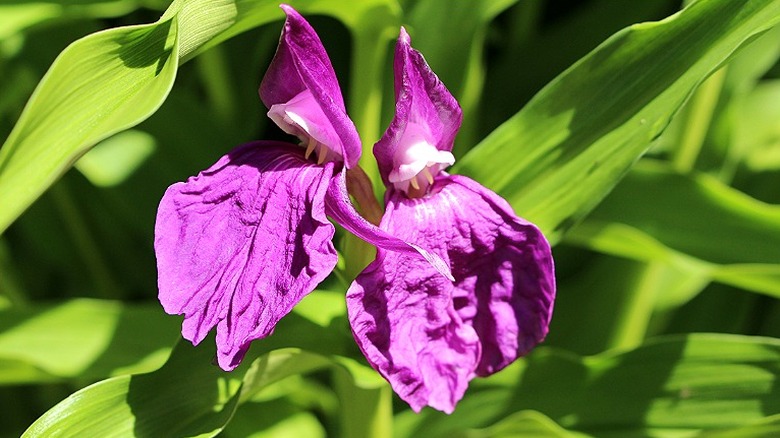
The roscoea gingers can bring vibrant color and interest to your garden space all summer long. For example, eared roscoea (Roscoea auriculata) displays dark purple flowers starting in July and lasts until early fall, while Hume roscoea (Roscoea humeana) is a bit lighter (but still showy) and blooms briefly in June and July. Yet another pretty species, Roscoea purpurea, grows to about 12 inches wide and 18 inches tall, and features the group's signature hooded flowers (similar to an orchid).
Typically, whichever roscoea ginger(s) you choose, you will have similar growing conditions to think about. For one, you can count these species among those that will thrive in a gorgeous, healthy shade garden. When planning where to grow them, select an area with bright shade. Hardy in zones 6 through 8, they won't do well in warmer, southern climes.
This nonnative can be an interesting addition, meanwhile, to a woodland garden scene, where it should fit well with false Solomons's seal (Maianthemum racemosum) as well as Virginia bluebells (Mertensia virginica). While false Solomon's seal attracts small bees and beetles, you can plant Virginia bluebells to bring hummingbirds and other beauties to your yard – just like hardy ginger.