

Why Does Your Oven Have A 'Proof' Setting?
We may receive a commission on purchases made from links.
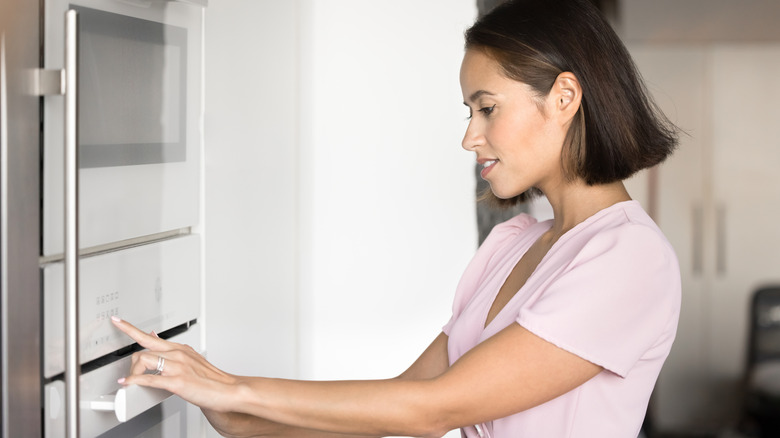
There are a lot of settings and symbols on your oven that you may not understand. For example, the proof or "bread proof" setting is one you've possibly found yourself curious about, especially if you're not much of a baker (or have never watched "The Great British Baking Show"). This setting is meant to aid bakers by giving them a warm and safe place to proof dough before baking, allowing yeast to do its thing and let the dough rise. Every proof setting is a little different. But in general, it will turn on your oven light raising the inside temperature to somewhere between 80 and 95 degrees Fahrenheit. Some ovens may also turn on the convection setting, or include customizable humidity options to prevent dough from drying out.
It's a great solution for kitchens that tend to run a little too cold, or to help your bread rise faster when you are in a rush. Even if your home is warm enough to proof dough anywhere in your kitchen, having an oven setting comes in handy. It helps to keep the temperature consistent the entire time and gives your bread a safe place to rest (no risk of it getting knocked off a counter).
If your oven has a humidity setting, you can just set your dough inside its proofing container, put it in the oven, and you're good to go. Without this, you will have to take extra steps to ensure it doesn't dry out. Putting a clean, damp towel over the top or using plastic wrap can help hold in moisture. You can also place a small container of water into the oven next to your dough.
How to make your oven proofing function work for your bakes
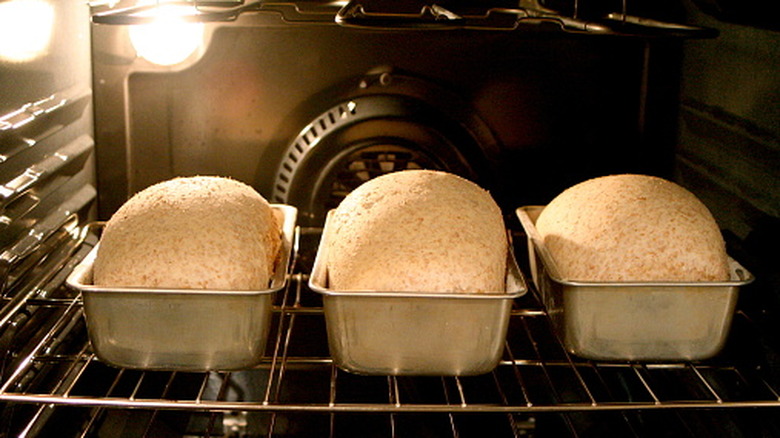
You probably won't be able to just hit "proof" and walk away, especially the first few times. As with the popcorn feature on a microwave, it may take some getting used to. Some people who have tried their proof setting mentioned that the temperature gets too hot for good proofing sometimes, and that it works better for yeast doughs than for sourdoughs. Before using this setting to proof anything, turn it on and measure what the temperature gets to. Something like the Pecula stainless steel oven thermometer makes this easier. They are handy tools that help ensure everything is working correctly. If your oven temperature seems to be inaccurate and messing up your bakes, you can easily tell with this little gadget. If it is regularly several degrees off, it could be a sign that you need to calibrate your oven.
You may also have to play around with how you use the proof setting. Although you can proof dough at up to 100 degrees F, most home bakers suggest somewhere between 78 and 82 degrees to get the best balance of rise and flavor. For example, some people turn their proof setting on for a while, but turn it off before putting in their dough. Once you find the sweet spot for proofing in the oven, it can be a game changer. However, if you make bread regularly, you don't want to take up your cooking space all the time with proofing. In these situations, a double oven might be right for your kitchen.