

How To Prevent Ants From Climbing Your Trees With A Simple But Overlooked Solution
We may receive a commission on purchases made from links.
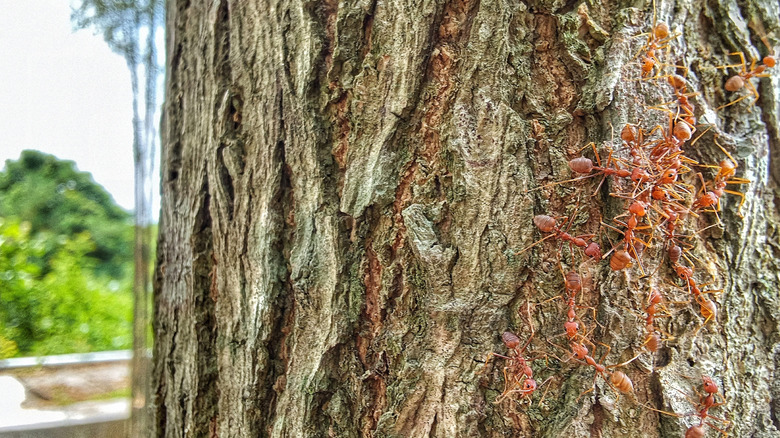
Who doesn't like the thought of having fruit trees that can grow fruit for over 100 years in your backyard? But these plans can be in jeopardy if your trees become infested with ants. Fortunately, you don't have to let go of your dreams. Just try one simple but overlooked solution to solve the ant problem: the installation of sticky trunk barriers. Since they prevent the pesky six-legged insects from climbing any higher, they can keep your trees healthy.
The ironic part is that ants don't directly damage your trees or make for the fruit. Instead, they're problematic because they protect the pests that harm your plants. Some of the most common garden pests, like aphids, whiteflies, soft scales, mealybugs, and psyllids, excrete honeydew. As ants are interested in carrying this sugary excretion away to their colonies, they take it upon themselves to guard these bad bugs. Worse, they compound the problem by moving these honeydew producers from one plant to another to keep the supplies running. Ants may even kill beneficial insects, such as parasitic wasps, lady beetles, lacewings, pirate bugs, and spiders that target these bad guys. So, deterring them through sticky barriers not only protects your trees but also improves the overall ecosystem by restoring the population of natural enemies.
How to use sticky trunk barriers to discourage ants
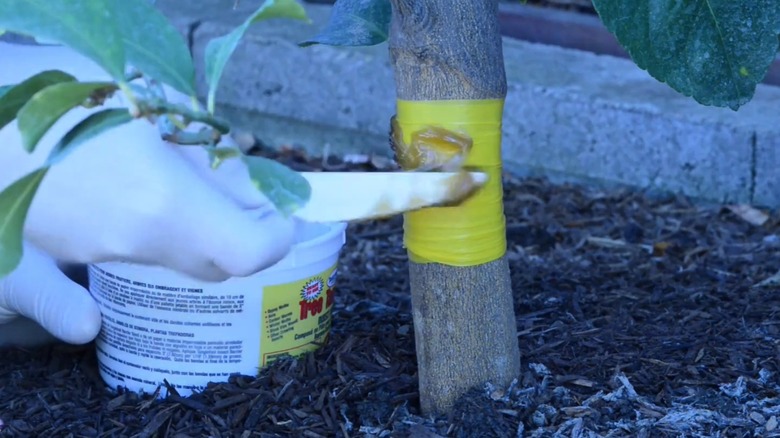
To deter or remove ants without killing your garden plants, you'll require a non-toxic sticky substance, such as Tanglefoot. A 15-pound pack currently retails for less than $13 at Home Depot. Made from natural resins and vegetable oils, it's a gooey mixture that stalls further movement. It may even deter other non-flying, climbing insects, including cutworms, cankerworms, gypsy moths, and weevils.
However, direct contact with tanglefoot can stain the tree bark or worse, soften it, especially if it's a thin-barked or juvenile tree. So, to minimize damage, apply it over a banding product first, such as duct or masking tape, a plastic or fabric tree wrap, heavy-duty paper, or cardboard. Then, create a 4-inch-wide collar around the tree with the banding material, making sure there are no gaps or folds that the ants may use to slip through. You may create this barrier at the tree's base or about 4 feet above ground if it's in a lawn where it's likely to catch grass clippings and debris.
Using a flat, disposable spatula or a knife, smear a fine layer of tanglefoot on the banded material, covering about two-thirds of the total area. Be sure to wear gloves, as this material can be hard to take off, and keep the layer extremely thin, as it can turn runny after exposure to extreme heat.
Maintaining sticky trunk barriers for deterrence
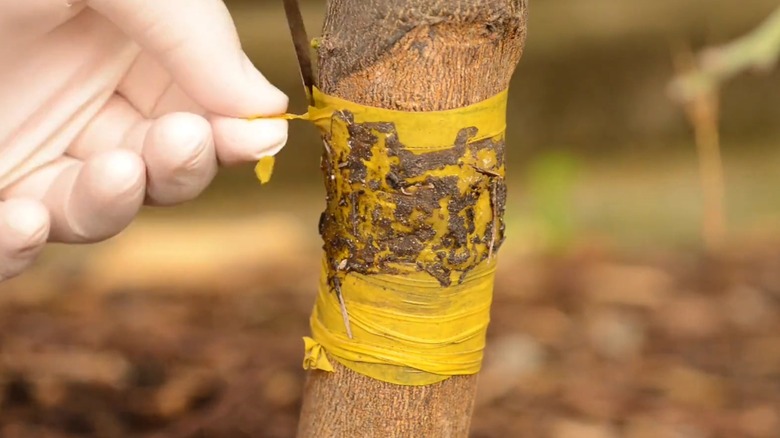
Sticky trunk barriers aren't a once-and-done affair. If they're indeed successful in blocking the ants, they're likely collecting several dead carcasses of insects that do choose to brave the odds. If not the ants, they'll surely get grubby from all the dust, dirt, debris, pollen, and mud flying about. This may cause them to lose their tackiness. In fact, ants, being highly practical, may use the piling up of corpses as a mini bridge to get to honeydew.
To prevent building an accidental bridge for ants, check on the sticky barrier weekly and turn the glue around to bring out the sticky side. Also, replace it every month or sooner when it gets clogged to keep the deterrence up. Another thing that you must do to retain the effectiveness of sticky barriers is to deny ants access from elsewhere. So, if any twigs, branches, or leaves are touching the ground, fences, walls, or hardscapes that these tiny-but-fierce insects may use as an entryway, trim them to a height above the sticky barrier. You must similarly be careful about any tree canopies touching each other, or ants can jump in from other trees for access (they're incredibly resourceful!). That being said, be sure to take off the sticky trunk barriers before winter arrives.