

How To Remove Years Of Stuck-On Grease From Kitchen Sink Drains
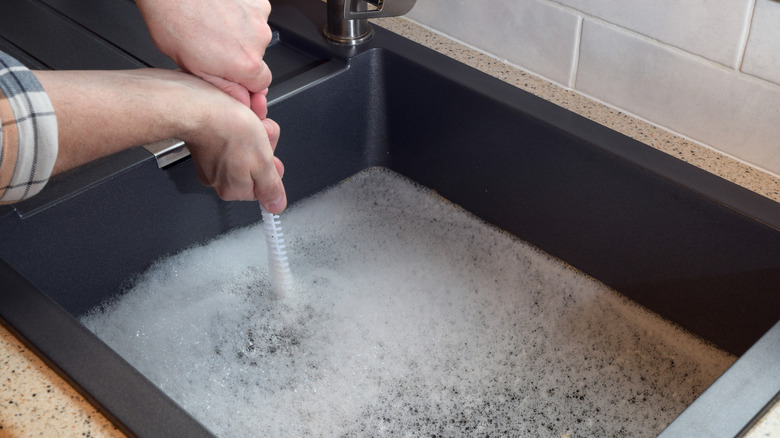
If you understand the importance of a quick-draining kitchen sink, you might have invested in a strainer and made it a habit to avoid dumping leftovers in your garbage disposal. You might also follow the right way to dispose of cooking oil: in the trash, not in the sink. However, it still doesn't take much for grease to start clinging to the inside of your pipes. Scraps like leftover cheese, tiny drops of oil, and meat fats can all congeal together to back up your drain over a short period. Consequently, your sink will start smelling awful, and water will drain more slowly. Sometimes, you may be rewarded with strange gurgling noises and the dirty water flowing into your sink instead of draining away.
The good news is there are multiple genius tips to help you unclog the kitchen sink. For instance, if you don't cook or do dishes often, some hot water and salt can take care of mild issues in a jiffy; if that doesn't work, grab one of the best dish detergents to dissolve the waxy globs. If your sink sees heavier use and it's been a while since you gave your drain some TLC, you might have to opt for a baking soda and vinegar combo or use a plunger or drain snake to clear out stubborn blockages. But before you try out any method, know that these will all take a bit of time to clear out years' worth of stuck-on grease. So, exercise patience — and don't reach for a chemical degreaser. Though fast-acting, they're known to eat away at pipes with time. In other words, even if they clear out the blockage today within minutes, your future self will have to deal with other unwanted plumbing problems.
How to clear mildly greasy kitchen sink drains
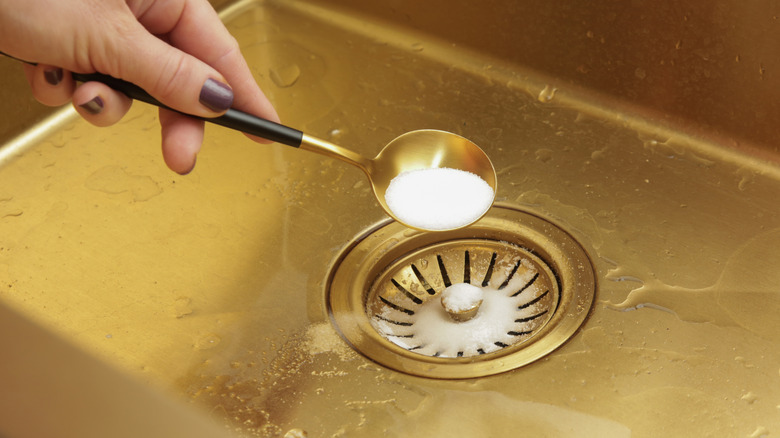
The first thing you want to do is determine whether the problem is mild or dire. If the water just drains slowly, you likely belong in the first category, whereas a backed-up sink that smells something fierce is generally indicative of the latter. To clear out a mildly greasy drain, use ½ cup of salt to evenly coat your sink's drain, slowly pouring it down. Carefully follow this up with some hot water (ensure it's not boiling since PVC pipes can't handle such high temperatures without losing their shape). Wait for about 15 to 20 minutes before pouring more hot water. The abrasiveness of the mixture will help soften the solidified greasy chunks and force them down to clear the path. However, don't go this route too often if you have metal pipes, as it can lead to corrosion. Also, don't go overboard with the salt, or the undissolved particles will worsen the blockage.
In case this doesn't quite solve the issue, rely on liquid dish soap. Since it's formulated to break down oil and fat molecules on your dishware, it can take care of your greasy drain as well. All you have to do is dump a sizeable amount down the drain. Then, pour in 1 gallon of hot (not boiling) water to help dissolve the grease clinging to your pipe. Give the mixture a few minutes to slide through stuck particles and loosen them on its way down. Finally, pour in a bit more hot water to clean out the soap and residue. Keep in mind that both these methods will only work on mildly clogged drains. You'll have to resort to other methods for deep-set grease and complete clogs.
How to remove stubborn greasy residue from a kitchen sink drain
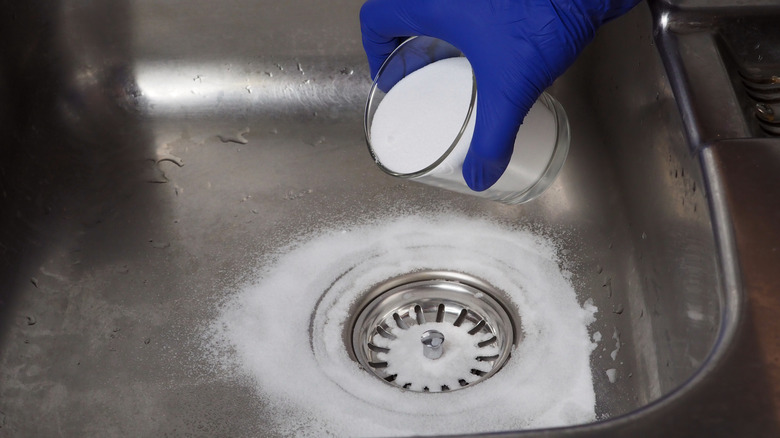
Before you can begin fixing a clogged-up drain, you'll have to remove the pooled water in your sink. So, don a pair of rubber gloves, grab a cup you're no longer attached to, and start scooping out dirty water (keep an old bucket handy). When you're done, dump in ½ to 1 cup of baking soda. Follow this up with the same amount of distilled white vinegar. As soon as you're done, you'll notice a fizzy reaction between these items.
Basically, the acetic acid in the vinegar will react with the sodium bicarbonate in the baking soda to immediately produce carbonic acid. But since the resultant compound isn't stable enough, it eventually dissolves into water, acetate and sodium ions, and carbon dioxide (the gas behind the dramatic bubbling). These bubbles, in turn, can dissolve greasy gunks and eliminate stomach-churning smells. Sadly, baking soda and vinegar can't do all the heavy-lifting by themselves. So, give them 15 to 30 minutes to fizz away, then pour in some hot water to break down the stubborn globs.
If even this duo doesn't work to clear out your pipes, grab a plunger. Turn on your tap and fill about 1 inch of the sink with water. Next, seal the plunger over the mouth of the drain and move it up and down to build pressure on the clog hiding within. Alternatively, you can insert a snake into the drain to manually break up the clog. If this doesn't work or seems like too much effort, contact a certified plumber and let them handle the greasy situation. Be prepared to shell out anywhere between $110 and $215.