

Why Does The Homeowner's Association Exist?

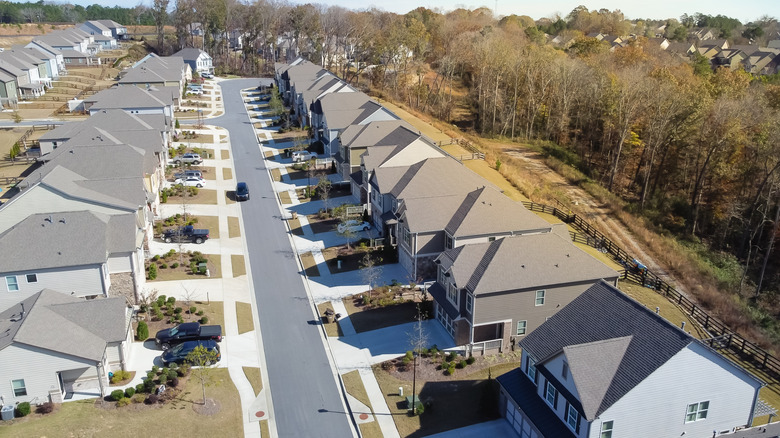
First-time homeowners may not be aware, but there's more to property ownership than just maintaining and managing their own residence. In certain communities, homeowners are also tasked with caring for their neighborhood. This is where the homeowner's association (HOA) comes in. An HOA in real estate, particularly in planned communities, subdivisions, or condominiums, has the important role of maintaining shared spaces, preserving property values, and ensuring that residents remain well-managed long after developers complete construction. Such an organization may also have the authority over what residents can or cannot do with certain parts of their property. For instance, the HOA can affect homeowners' backyard design and dictate what is allowed in the community's outdoor space.
The HOA exists to help those buying a home in a gated community or a townhouse complex understand the duties and responsibilities as well as the benefits that come with membership. Historically, while similar neighborhood associations existed much earlier, it wasn't until the 1900s that the first HOAs became the official authority for homeowners in Los Angeles, California. The first one was the Los Feliz Improvement Association, founded in 1916, to oversee the upkeep of common areas in their community, such as parks, landscaping, playgrounds, sidewalks, and more. Instead of relying on the local government, developers formed HOAs so homeowners could privately fund the community upkeep and security through regular membership dues. This became the blueprint of modern suburban living in private communities.
Who comprise the leading body of the HOA?
Like any organized governing body, HOAs have a leadership team to supervise and make decisions for the community and its residents. Most HOAs are headed by a board of directors composed of homeowners who their fellow members elect to represent the community. The members of the board ensure that the neighborhood is managed in accordance with the HOA's rules and regulations and that the homeowners' best interests are at heart. That said, the board serves as the biggest decision-making authority within the association, setting policies, approving budgets, collecting HOA fees, resolving disputes, and overseeing maintenance and repairs. So, for instance, when the street lights outside your home go out, the HOA may be responsible for their repair and replacement under the directive of the board.
There are also specific leadership roles within the board, with the usual positions being president, vice president, secretary, and treasurer. Each officer has distinct duties and responsibilities, with the president acting as the public face of the HOA while the vice president takes on a more prominent role when the president is not available. The secretary documents meeting minutes and handles important correspondence between the board and the community members, among other things. Meanwhile, the treasurer oversees the finances of the association, including budgeting, monitoring, and auditing of monthly and annual expenses. Together, the board and the officers maintain and secure the overall quality of life within the community.