

Pea Gravel Vs River Rock: What's The Difference?
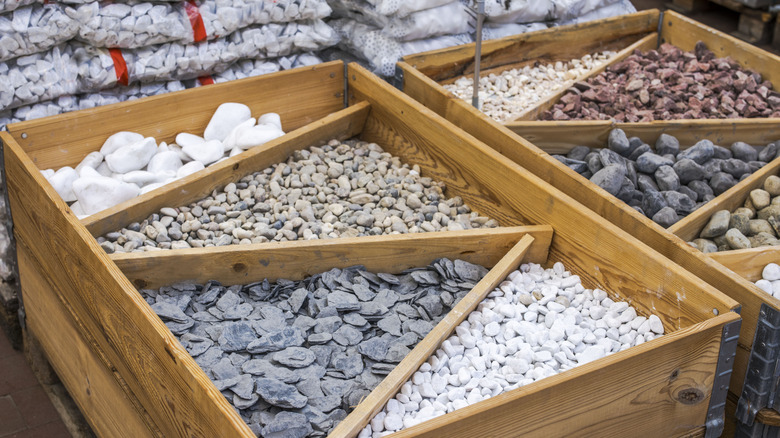
If you're finding it difficult to get started on new home improvement projects, it may be because you're operating under budget constraints or simply don't have the skills. But another thing that could delay your project is not knowing what materials you need to get the job done right. It's easy to get terms confused, and if you're looking for different types of rock to use in landscaping, you may not know whether to ask for pea gravel or river rock. To make it even more confusing, pea gravel is technically a type of river rock, and they have a lot of similarities, but they are different size grades.
Pea gravel is smaller, with each pebble generally ranging from ¼-inch to ¾-inch wide. When the stones are larger than this, they're usually called river rock. However, river rock can also be ordered in varying sizes, anywhere between ¾-inch to 14 inches wide. Companies use a screening process to sift rocks into the appropriate size categories, which can affect how they're named. Pea gravel usually sells for around $15 to $75 per cubic yard, while river rock costs $60 to $240 per cubic yard, depending on size.
Both pea gravel and river rock are either artificially tumbled or collected from old streams, glacial deposits, and ancient river beds, where they where once polished smooth by moving water. This makes them different from crushed stone or gravel, which has angular edges that interlock together. Pea gravel and river rock can both have a lot of color variation between the stones, and those colors tend to look most dramatic when wet. Despite these similarities, they can have very different uses, so it's important to know what size pea gravel or river rock you need before placing an order.
Pea gravel and river rock's different sizes have different purposes
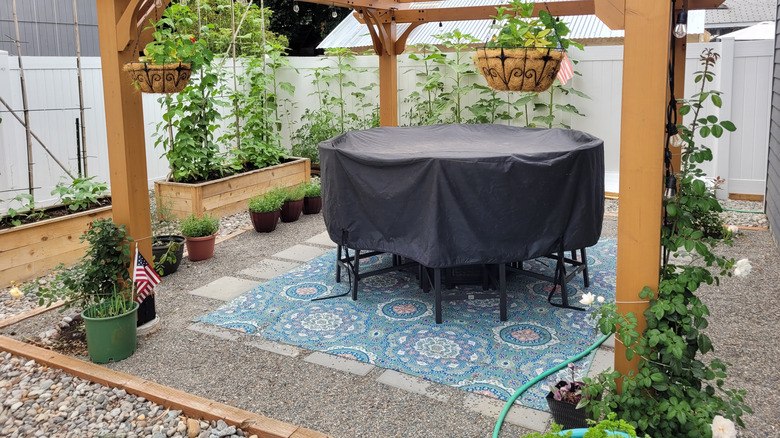
Even after you understand the difference between pea gravel and river rock, you still need to know which one to use for your project. Pea gravel is ideal for walkways and garden paths, even though it has a tendency to disperse. Small pea gravel under ½ inch makes a good mulch alternative in garden beds and containers. It's also used as an affordable material when creating a backyard patio, especially combined with stepping stones and pavers. Pea gravel improves water infiltration into the soil while making it less hospitable to weeds, so it's effective for suppressing their growth. Pea gravel is frequently used in children's play areas, since it can help absorb shocks from tumbles and rough play. If you want to keep it from sinking into the soil, use landscape fabric. But if you're using it as mulch, skip the material.
River rock has several uses for landscaping. It's often used for edging along driveways and walkways, and it also makes an ideal decorative material, adding texture, color, and drainage to your backyard projects. If you're trying to protect a sloped area, river rock is a good choice for a dry stream bed and can prevent erosion in your yard from overflowing storm water. However, it's not as comfortable to walk on, so it doesn't work as well for a playground or patio base. It's not ideal for mulch either, since it can compact the soil and raise its temperature. You're not limited to one or the other; a pea gravel path with river rock edging is one way to use them together for a uniform and cohesive look.