

Not Chemicals Or Salts: This Common Material Is Concrete's Biggest Enemy
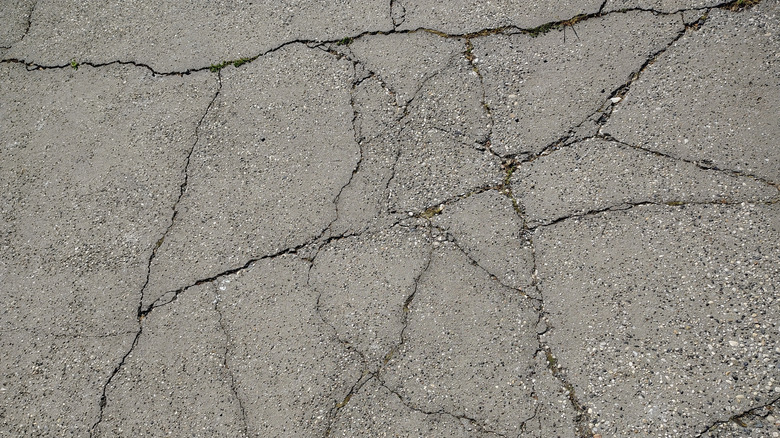
When concrete starts crumbling, staining, or spalling, most homeowners presume the usual suspects: de-icing salts eating away at the surface, or harsh chemicals from a spilled cleaner. In reality, the actual potential culprit is something that touches nearly every slab, driveway, and foundation on the planet daily, and it rarely gets blamed for the damage it causes. It doesn't announce itself with a strong odor or a visible stain. It simply works its way in, invisibly, and over the years, quietly breaks concrete down from the inside out. This hidden perpetrator is water, and the reason behind water's problematic role is a bit mind-boggling.
The underlying substance responsible for water's potential to damage concrete is... water. Concrete is made from three ingredients — cement and aggregate mixed with water, which takes up space in the mix. As water evaporates from the concrete, the pores it occupied are left behind, leaving tiny holes. Concrete is thus surprisingly porous. As rain, snow, irrigation, cleaning, flooding, and even humidity hit your concrete, guess what fills those water-made holes? Water, of course, which gradually deteriorates the concrete.
This water incursion can cause flaking in your concrete, also known as spalling. Discoloration, mold, and paint peeling off concrete can indicate water damage. Materials like rebar that support the concrete can corrode from water exposure. Extreme water penetration can weaken or wash away concrete's base layer in a driveway. Freeze-thaw damage like cracking can occur when water within the concrete freezes and expands. If your concrete driveway is crumbling, water could be the cause.
Water is the enemy that can damage your concrete
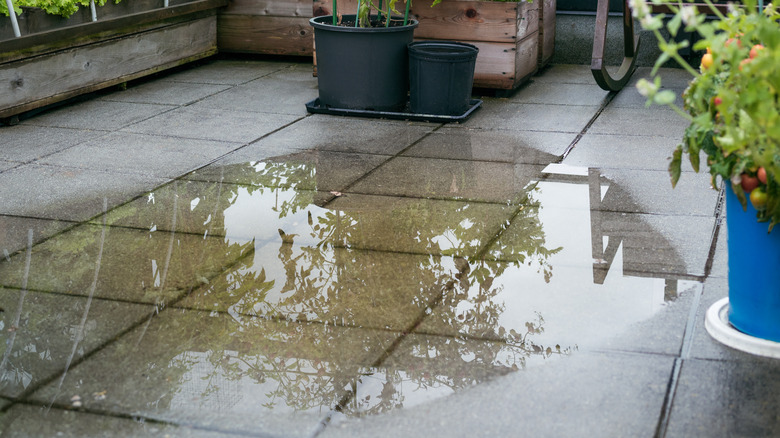
As you might imagine, regular sealing can prevent water damage, and you may be wondering how often concrete needs to be sealed. Though several variables can affect sealing frequency, the general rule is every two to five years. The best choice for preventing water damage is a penetrating sealant that blends silane and siloxane,as opposed to a topical acrylic-based sealant that forms a film on the concrete rather than penetrating. It pays to repair cracks in concrete as they happen, before they start expanding. You can likely handle minor repairs like small cracks yourself, but for major water damage to concrete, consider consulting a professional.
If you haven't yet started your concrete project, you can take preventive steps toward keeping water from damaging the concrete. Be sure base materials are well-compacted to provide drainage; you may even want to install a drainage system. Grading should move water away from the concrete.