

The Ancient Herb Gardeners Rarely Grow Anymore
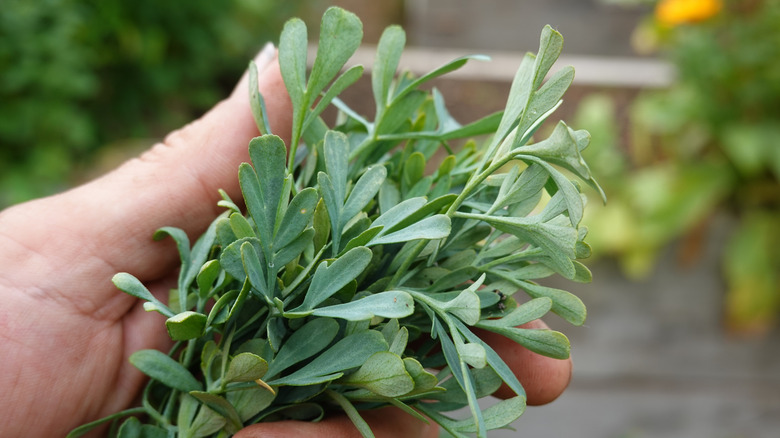
Although I don't use rue (Ruta graveolens) in the kitchen or as a remedy, I still grow it for its value to pollinators. Because I'm a master gardener, master herbalist, and history geek, growing a plant that's so old it was referenced in the Bible and was widely used in ancient Rome and other ancient civilizations brings me a great deal of pleasure. In ancient times, rue was a pretty standard kitchen seasoning. It was also used medicinally as both a curative and a preventative. Today it's not really used in the kitchen anymore, largely because it can blister your skin if you are sensitive and don't handle it with enough caution. It is also remarkably bitter.
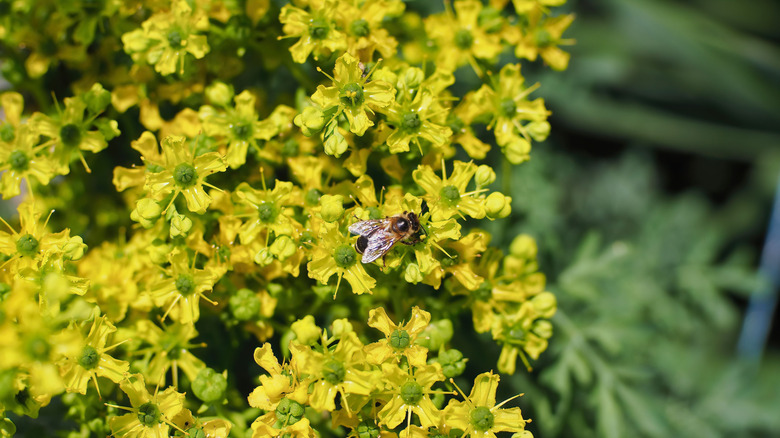
Interestingly, rue is a member of the citrus family, which you would never guess from the smell, the taste, or the soft green plant itself, with its abundance of little yellow flowers that pollinators love. It's also an important host plant for black, anise, and giant swallowtail caterpillars, and is a fast-growing herb that will turn your yard into a butterfly paradise. While it provides food for these immature butterflies, it is also a herb that keeps other insects away because of its strong scent. If you've got an old cottage garden or slightly wild meadow garden or you're having a go at rewilding part of your yard, then add rue to your borders. Just set it back a little where you won't accidentally brush against it and get irritated by its foliage.
Rue's ancient history
Rue has a fascinating heritage, and it appears multiple times in 'Apicius,' which is a collection of Roman recipes or a Roman cookbook, which really is quite remarkable. In the collection, it was used as a pantry staple, with recipes calling for it to be incorporated into gravy or sauce to accompany hare or fish and even in more exotic dishes like flamingo. In spite of its bitterness, King Mithridates VI incorporated rue into his own personal anti-poison formula, the renowned Antidotum Mithridaticum. This king was so intensely paranoid about being assassinated by poison that he reportedly spent many years dosing himself with small amounts of poison and large quantities of antidotes to build up his immunity, and rue was included in his universal remedy.
Long after the end of the ancient Roman Empire, rue was still being used for everything from poison to the plague, with medieval gardeners recommending tucking rue in plantings with other herbs, partly for its color and partly because the bitterness was thought to keep venomous creatures out of the garden. In more recent history, rue came to America with early colonists and was grown as a medicinal herb. Those early colonists believed that eating rue was good for preserving eyesight and considered it an important herb for anybody whose job involved close work. It was even included in Thomas Jefferson's 'Objects for the Garden This Year' in 1794. But over the next couple of hundred years, rue fell out of favor and was no longer commonly used in the kitchen. You will, however, still find it in gardens like mine across the world, used mostly to attract pollinators and because of how easily and quickly it grows and fills a bare border.
How to grow rue
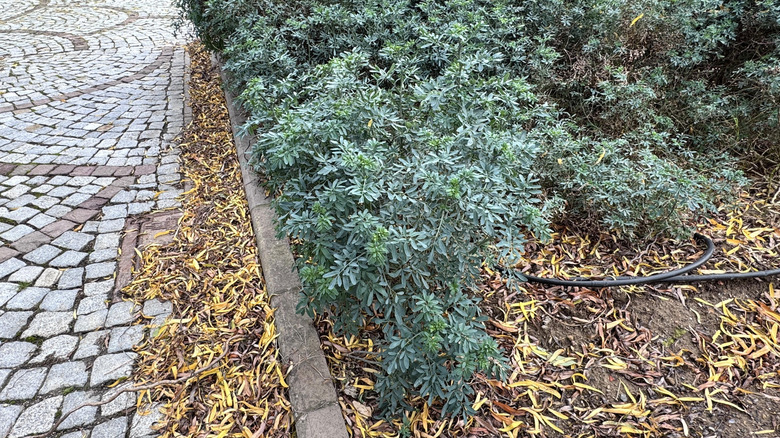
One of the biggest benefits of growing rue is that it just is not fussy. It's a brilliant filler plant for places where you're struggling to get anything else to grow. You can pop it in full sun or partial shade and, as long as the soil is free-draining, it copes beautifully with dry, rocky ground and thin lean soils where most other plants struggle to grow. It's hardy in zones 4 to 10 and it even stays evergreen where winters are fairly mild. Elsewhere, it dies back to the ground once frosts arrive but comes back the following spring.
Once it gets going, it's a drought-tolerant herb, but it does not like being overwatered or constantly wet. Rue prefers rough conditions so you shouldn't even bother with fertilizing. It does get quite large as it matures though, reaching up to 3 feet tall and wide, so it's a good idea to place it toward the back of a bed. I also plant rue under my apple trees, in an area that I've let run fairly wild with stinging nettles, cleavers, and other plants that grow well in dappled sun or partial shade but aren't particularly welcome in most people's gardens. The easiest way to grow rue is to take it as a cutting or a division from an established plant. During the first couple of years it doesn't flower much but once it's established, it'll give you two flushes of blooms if you deadhead before the seeds mature. Just remember that you should always wear gloves, as handling rue bare-handed can leave you with a nasty rash that blisters and hurts.