

Lawn Mower Blades: When To Sharpen Vs When To Replace
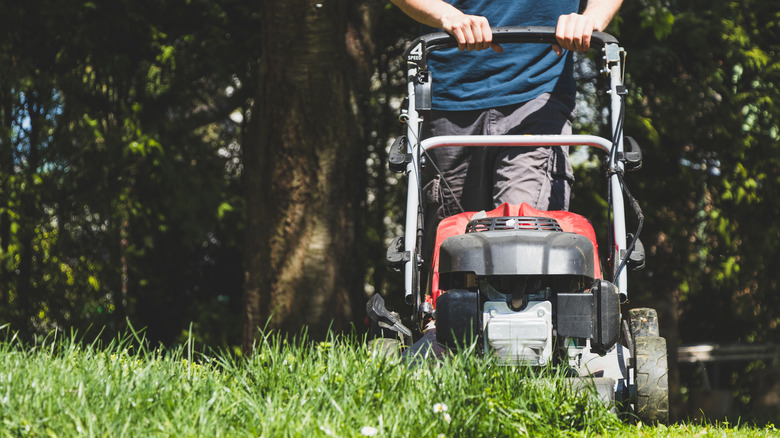
Maintaining the blade is essential to preventing damage to your lawn mower engine. For instance, if a blade strikes a piece of rebar sticking out of the ground, part of the blade can chip off, causing the blade to wobble as it turns. This wobbling can put great strain on the crankshaft, which connects to the engine and turns the blade, and this hindered performance can damage other components of the mower. That's why it's important to sharpen your blade periodically. But sometimes sharpening won't solve the problem, and you'll have to replace the blade instead. It's important to understand when either option is needed.
A dull blade isn't only bad for your mower's performance — it can also harm your lawn. Dull blades hack through the grass rather than slicing. This damages the grass and makes it more susceptible to moisture loss and disease. A sharp blade will also put less strain on your mower's engine (or battery on electric models) and save you time by allowing you to finish the lawn without making multiple passes over the same stretch of land.
To replace or sharpen a mower blade, you'll first have to have an understanding of how to remove the blade. This is not as simple as just unscrewing it. You'll have to turn the push mower on its side without letting fluids leak into the air filter. Then you'll need to assess the blade's health, and, if you choose to sharpen it, you'll have to correctly use a file and grinder to avoid removing too much metal.
When to sharpen a lawn mower blade and how to do it
Dried out, frayed grass is a warning sign that indicates your lawn mower's blade might need sharpening. Also, if grass is bunching up under the mower deck, that might be because your blade is having trouble slicing through. Your mower also might shake or burn gasoline faster than usual when you're running on a dull blade. A blade can typically keep its edge for about 20 to 25 hours of use, so time how long it takes you to cut your grass and keep track of the number of cuts.
Protect your hands with gloves, and then turn the mower on its side. First disconnect the spark plug wire, and then tilt the mower on its muffler side (consult your owner's manual if you're unsure). This prevents oil and gas from running into the air filter and carburetor. Finally you can remove the blade by unscrewing the bolt in the center, counterclockwise, with a socket wrench. You may have to wedge a wooden block against the blade to keep it from turning.
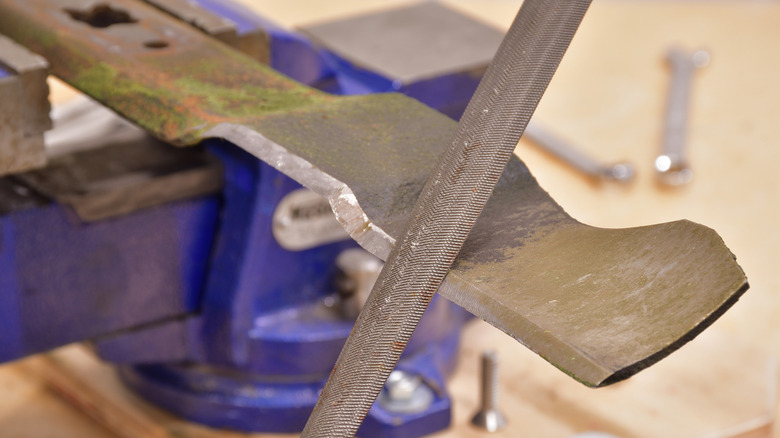
Once you've removed the blade, you can check for any obvious nicks. You should be able to file down small abrasions. Next, you'll need to measure the blade for evenness. By tightening a vise around a nail and hanging the blade (using the hole in its center) from the nail, you can tell which side is heavier. Then you can secure the blade in the vise, and sharpen it with your file. Turn the file at roughly a 30-degree angle and pull it along the blade. You can also plug in an angle grinder and sharpen the blade that way. Finally, hang the blade again and see if it settles horizontally.
When to replace a lawn mower blade and how to pick a new one

You should replace your lawn mower blade every year or two, but this isn't a hard rule. The lifespan of your blade is entirely based on use. This can be related to the type of yard you have. Blades won't last as long in yards with a lot of roots sticking out of the ground, uneven areas where the blade can chop into the dirt, or bits of gravel or larger rocks. If you have a larger yard, and spend more time cutting, this can also shorten your blade's lifespan.
Many of the signs that indicate it's time to sharpen your mower blade could also reveal that it's time to replace it — the symptoms will just be exacerbated. You'll find that the cut is uneven; the mower may shake and have trouble running straight; and grass will likely bunch up under the deck. But to truly know for sure, you have to inspect the blade. You should remove the blade exactly as described in the previous section. If there are simply a few nicks and abrasions, you can probably keep the blade. But if the blade is bent or cracked, you should replace it.
Unfortunately, lawn mower blades are not universal. When you select a blade, it must either have center holes or side holes to match your mower. Next, you'll have to assess the center hole to find a blade that matches the old one. There are various types of center holes, but they are often round, 5-pointed, 6-pointed, and S-shaped. Next you should measure the length of the old blade or the width of the mower deck to find a new one that fits inside it.