

The DIY Weed Wacker Idea That Seems Genius, But Is Actually A Waste Of Time
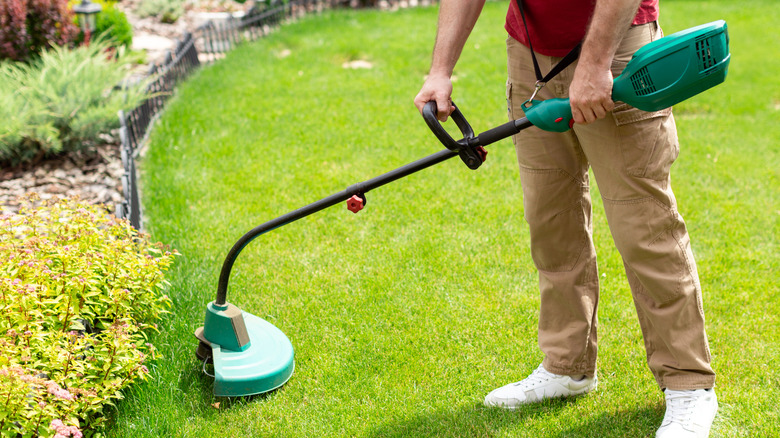
A good weed wacker is indispensable when it comes time to cut tall grass, clear out weeds, tidy up around trees, and edge your driveway. Once you have the essential gardening tools to get you started, it will probably be high on your wishlist. But what if, instead of spending your hard-earned money, you could DIY one instead? That seems like a genius idea, and over on YouTube, a guy who goes by Bill Of All Trades shows how it's done. I don't want to be harsh, but having seen it in action, I think it's a complete waste of time. Let me explain why.
I've been a professional carpenter and remodeler for over 20 years. Without blowing my own horn, I know a thing or two about power tools. The video is confusing right from the get-go, because Bill calls it a 'DIY Drill Powered Weed Trimmer,' whereas in fact he uses an impact driver, not a drill. More on why that's important in a minute.
The accessories he uses (an arbor, a drill chuck, wrenches, and some weed wacker string) are readily available and affordable. The gadget is easy to put together, and I can see that it will function, in as much as it will spin the weed wacker string. I do have major issues with both its practicality and its safety, though.
What makes the DIY weed wacker so impractical?
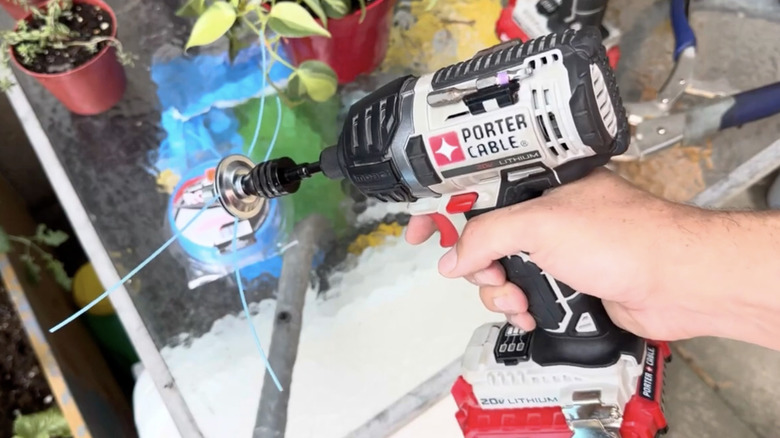
Let's deal with which tool is actually used. A cordless drill is on of the must-buy power tools for homeowners, and many people own one. Unfortunately, they don't have the speed or torque (turning force) required to be effective here. So Bill uses a more powerful impact driver. These are designed for driving heavy-duty fixings, like if you were building a deck, for example. A useful tool for the serious DIYer, but much less common than a drill. Bill's version costs around $160, but let's assume you have one, and you put the DIY weed wacker together.
Unfortunately, it's just not practical. There's a reason why proper weed wackers have a long telescopic handle. It's so you can work comfortably. With this tool, you need to bend over in order to get close to the weeds. How is your back going to feel after ten minutes working with it at 90 degrees to your legs? Maybe you could crawl around on your hands and knees instead.
There's a string issue too. A store-bought weed wacker has a spool that might contain 20 feet or more. It either feeds automatically or you bump the spool on the ground to get more as it wears out. How much does Bill's gadget hold? A foot? Mounting a spool on the impact driver isn't practical, so you'll be back and forth to the shed every few minutes cutting and fitting new bits.
There are also some serious safety issues
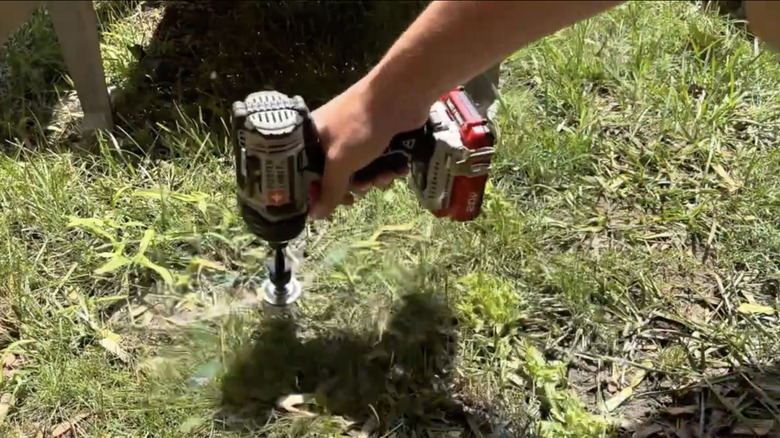
Once he's got the DIY weed wacker in use, Bill comments: "I'd say that's pretty good." Really? Looks kind of scruffy to me. However, it's not the poor performance I take exception to, it's how dangerous the tool can be. It might mangle a bit of grass or dandelion without causing any problems, but what about stinging nettles or thistles? Torn-up pieces of those are going to be thrown at your hands at speed. So some thick gloves will be necessary, and you'll want to cover your arms, too.
There is potential for more serious injury. Plant matter might not be the only debris launched at you. What if the tool picks up a stone or a piece of broken glass? Your face is, quite literally, just an arm's length away. A real weed wacker has a plastic cover to protect you, but that's not the case here. If you don't own a full face shield, you'll need to add that to the list of accessories.
Sometimes people make videos to see if a thing can be done, and I'm sure Bill doesn't mean any harm. Unfortunately, the DIY weed wacker is neither useful nor safe. There are plenty of battery-powered weed wackers that can elevate your lawn without eating your budget. Ryobi, for example, has a cordless model that's currently around $79 at Home Depot. I'm all for DIY options when they're worth the time and effort. This one isn't.