

The Fragrant, Old-Fashioned Shrub Gardeners Rarely Grow Anymore
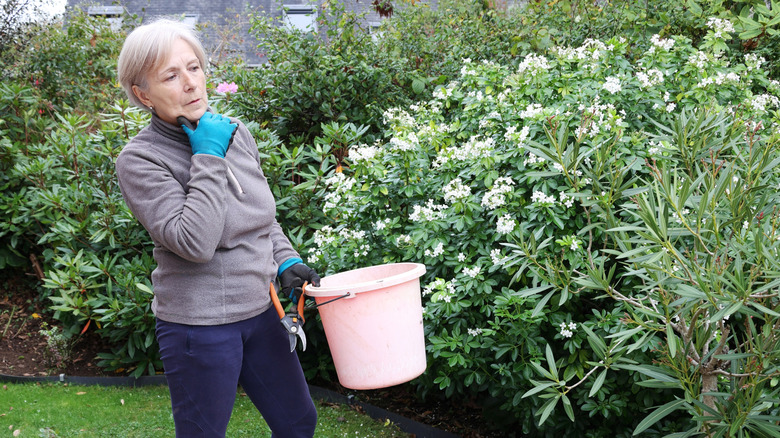
I love mock orange (Philadelphus coronarius). The scent of that fabulous plant when it's in flower in spring takes me right back to my childhood. It's true that it only flowers for a couple of weeks in June. But that two-week period of intense orange blossom scent and the fantastically beautiful four-petaled white flowers are 100% worth the space it requires in the garden. Mock orange used to be really very common. Everybody grew it. Even Thomas Jefferson had nine of them placed around the corners of the house at Monticello in the spring of 1807. But sadly, this shrub has fallen out of favor, even though it's one of the most fragrant perennials that will make your garden smell amazing.
One of the main reasons that mock orange is less popular nowadays is that we expect much more from our plants. We demand that they produce flowers and beautiful scent for many weeks and perhaps are followed by berries or interesting autumn color. But mock orange is a nondescript green bush, or bare, for most of the year, and it requires intense pruning or it'll get leggy. It's only truly interesting for two weeks. However, as a master gardener with two decades of experience, a love of history, and a weakness for nostalgia, I enjoy interplanting older specimens that may have a short bloom window with others that bloom at different times. My garden is always changing, but always colorful, and always alive with pollinators and other wildlife — and mock orange plays its part. I'd encourage anybody with a bit of space at the back of a border to grow it too.
Where to plant mock orange and what to plant it with
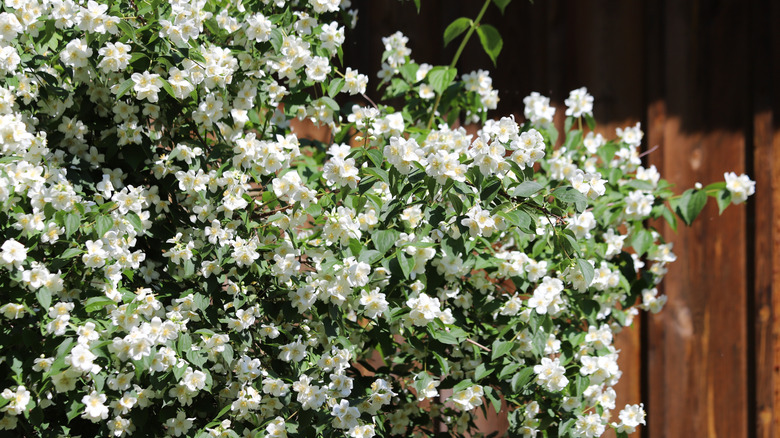
Aside from its fragrant and beautiful show of blossoms in June, mock orange is a useful filler that, depending on its cultivar, will grow between 2 and 10 feet tall and wide and is hardy as far north as USDA Zone 3. The best way for you to plant mock orange is as part of a group toward the back of a bed. Because of its limited bloom window, it's not the best focal point. Use it as a fragrant filler in a mixed shrubbery setting. Because this plant is so wonderfully fragrant, you want to be able to enjoy the scent, so planting it within sniffing distance of your patio is a good move, especially if you spend your summer evenings outdoors when the scent is strongest.
Make sure you choose a cultivar that's well suited to your space. You don't want to plant something large like 'Beauclerk', which gets to around 8 feet, in a tiny space, because then you'll spend a huge amount of time trying to prune it into submission. Similarly, if you are planting in a huge space, avoid something like 'Manteau d'Hermine', which tops out at only 30 inches, as it will simply get lost. A good middle ground for most gardens is 'Belle Etoile', which grows to around 5 feet. You want to pair this plant with other perennials that take over the showy flower work as soon as the mock orange flowers finish. Things like hardy geraniums and lady's mantle (alchemilla) do well at the ground level to cover the bare lower stems. Asters or Japanese anemones (Anemone × hybrida) are good choices for autumn color in front of a mock orange.
How to grow mock orange
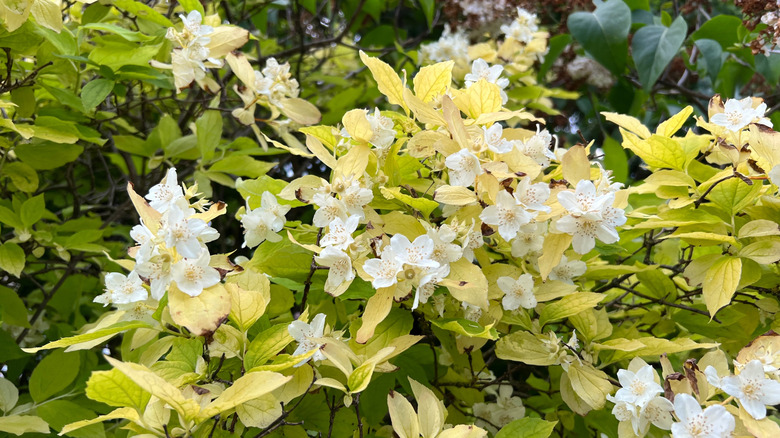
Mock orange does best in full sun to get the most flowers. It also needs a soil that drains well. If, however, you have a golden leaf mock orange (Philadelphus coronarius 'Aureus'), it may suffer in strong direct sunlight. For the least traumatic transplanting, do it in autumn or spring. This lets the plant get established before the intense heat of summer or the bitter cold of winter. The planting hole should be roughly double the width of the root ball to give the plant a good head start. I like to add well-rotted compost to the hole when I fill it in, too. Water and then mulch, remembering to leave a 2-inch gap between the mulch and the mock orange's stem.
You will need to keep watering for the first year or two when the weather is dry as this plant is not drought tolerant until it's well established. On the plus side, you don't need to deadhead it and you don't need to feed mock orange unless the soil is particularly poor. You will, however, need to prune it. Mock orange flowers on the previous year's wood, so prune it right after the flowers fade. This will make sure you don't inadvertently cut wood that would have blossomed the following year. Pruning this plant in October through March will rob you of flowers the following spring. Cut out the oldest stems as low to the ground as you can. My general rule is to take no more than a third from any plant. You'll also need to give the remainder of the plant a bit of a haircut, pruning the whole thing back to a strong new shoot so it doesn't get leggy and unwieldy.