

She Transformed A Boring Lawn Into A Multi-Layered Garden Path
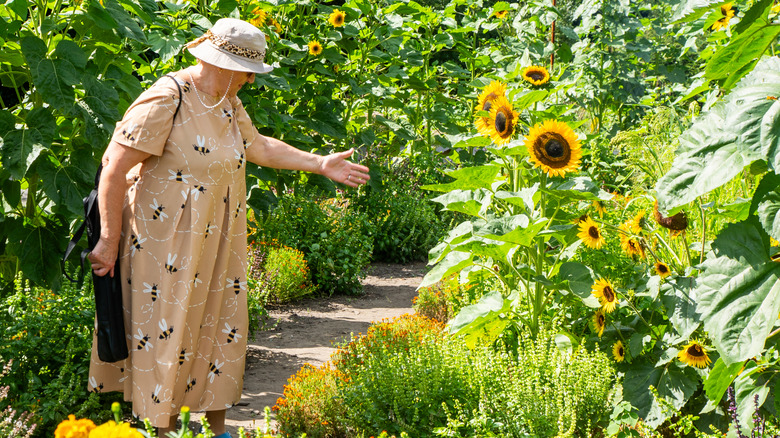
If you've been feeling like your garden is looking a little plain and boring lately, then you may be immediately tempted to liven it up with some color. However, you might find that — even after filling your yard with color in the form of wildflowers or fun furniture — something still feels a little off. Well, believe it or not, playing with levels is actually a super effective way to give your garden a more interesting feel.
Content creator @Gardenary on YouTube has shown a great example of how to do this in their own garden. Starting with a flat, plain lawn surrounded by low bushes and a simple brick wall, they transformed the space into a cozy, visually interesting retreat by adding in raised garden beds and even a high, arched trellis. By layering in these items of different heights, the creator could more effectively draw the eye around the garden for a pleasing, varied look. And it wasn't just the garden beds and the arch which helped to really emphasize this feeling of variation.
Inside the plant boxes themselves, the gardeners behind @Gardenary used a mix of trailing vines, bushy flowers, and tall shrubs. This helped the garden boxes look less geometric and more alive, bursting at the seams with plants at every height. By lining the path with these full garden boxes and the trellis, the walk down the garden was suddenly transformed into a dreamy oasis perfect for retreating to at the end of the day. If you're interested in taking notes from this example for your own garden, let's take a look at some key ways to utilize a multi-layered design on your property.
Designing a multi-layered garden
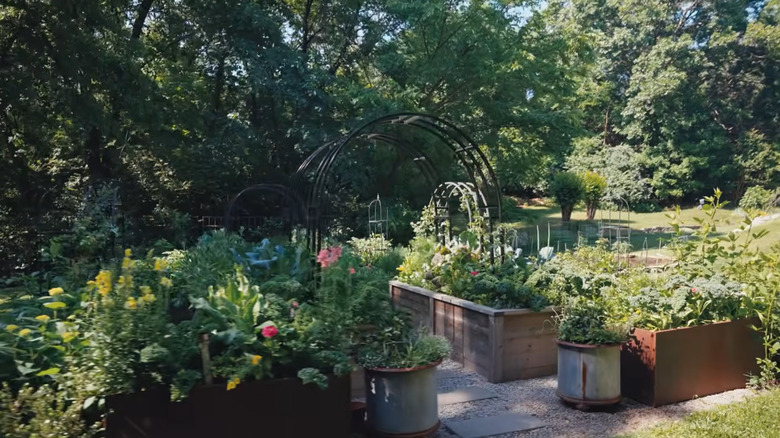
One classic way to add more layers to a garden and increase visual appeal is with platforms, decks, and lawns of different heights. This can be quite an overwhelming project; instead, you can follow the example of the above video and add in a few key features to enhance the feeling of variety without having to change the actual landscape. To start, consider where you like to spend the most time in your garden. This will help you figure out what areas you will be looking at most of the time and therefore where it is most important to create that layered visual effect.
Then, start with your structures. Pick out some trellises, raised garden beds, sculptures, and other fixed pieces that have interesting shapes and come in different heights. After that, you can start looking into plants. It can be helpful to grab a mix of flowers, herbs, and shrubs to ensure that you will have a rich, varied landscape featuring lots of differing heights.
When choosing your plants, make sure to consider how it will look throughout the year. Having at least a few different evergreen plants, for example, can be important for brightening up your yard, even in the colder months. Finally, make a note of when different plants bloom. If you have a perennial blooming in July, for example, you don't necessarily want it to be blocked by another flower right in front of it which is blooming at the same time. Choosing plants that bloom at different times can help to keep the layered effect looking satisfying at different times of the year.