

The Way To Remove Mildew Stains Is Hiding In The Pantry, Not Cleaning Cabinet
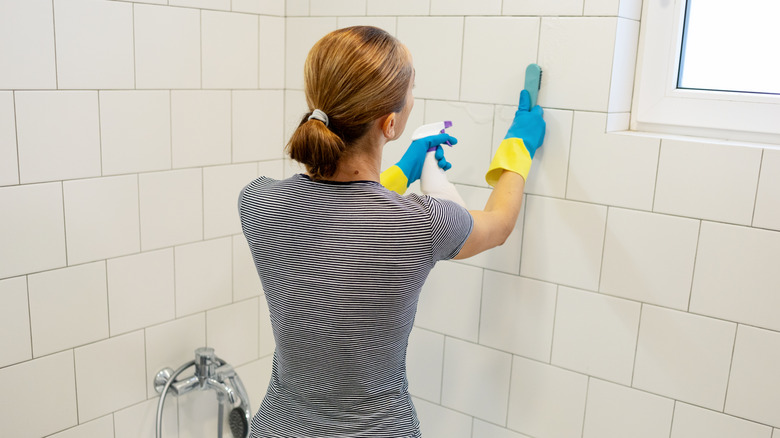
As much as we'd like to stay on top of cleaning our homes, life happens. Dust collects on cabinets, debris gathers on the floor, and grime builds around faucets. Most of the time, delaying our housekeeping schedule is harmless. But when we see powdery growth popping up, it's time to get out the cleaning supplies ASAP. The next time you clean, try using vinegar, a versatile cleaning tool that can tackle mildew.
Mildew stains are never welcome, yet many areas of our house are susceptible to it. The fungi can show up on clothes that haven't been worn in a while, on bathroom grout or shower curtains, and under the kitchen sink, to name a few. Mildew loves warm, moist spaces with poor airflow, so any spot in your house that is poorly ventilated and humid is a mildew party waiting to happen.
If you're wondering if there's a difference between mildew and mold, the short answer is yes, but the two are closely related. The U.S. Environmental Protection Agency defines mildew as a type of mold or fungus. Mildew is typically white, gray, or light brown and grows flat, distinguishing it from mold, which is raised, often fuzzy, and can be green, yellow, orange, or black. Because mildew grows on the surface rather than penetrating, it is less harmful than mold. Even so, exposure to mildew still can lead to respiratory issues, allergic reactions, skin and nail infections, and aggravated asthma.
Using vinegar to clean mildew
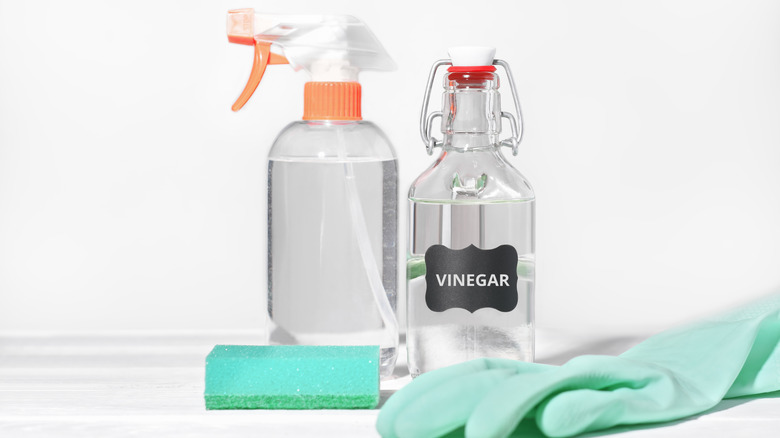
Vinegar contains acetic acid (typically between 4% and 8%) and a pH between 2 and 3.5, making it effective at killing many fungi and bacteria. However, its efficacy varies depending on the type of mildew you're dealing with, as well as the surface it's growing on. Hard surfaces — like stainless steel, hard plastic, and vinyl — keep mildew and mold at the surface and are easy to wipe down. However, be aware that the acid in vinegar can corrode some metals or damage hardwood floors if left on for too long.
If you're trying to get rid of mildew on clothes, wash the fabric in hot water with detergent and 1-2 cups of white vinegar. You can also pretreat the fabric by gently scrubbing it with a paste of equal parts baking soda and vinegar. Let the paste sit for at least 30 minutes before washing. Drying the laundered fabric in the sun can kill any spores that might remain after being washed.
To clean non-fabric surfaces, drench the infected area with undiluted white vinegar (5% acetic acid). After letting it sit for an hour, scrub the mildew off with a soft brush, and then wipe the area dry. Clean the brush by soaking it in bleach for an hour, then rinsing and letting it dry before storing. Also launder used rags in the washing machine. Always work in a well-ventilated area, and wear a face mask, rubber gloves, and goggles to protect yourself against airborne mildew spores.