

The Best Way To Keep Your Lawn From Turning Brown During A Heatwave
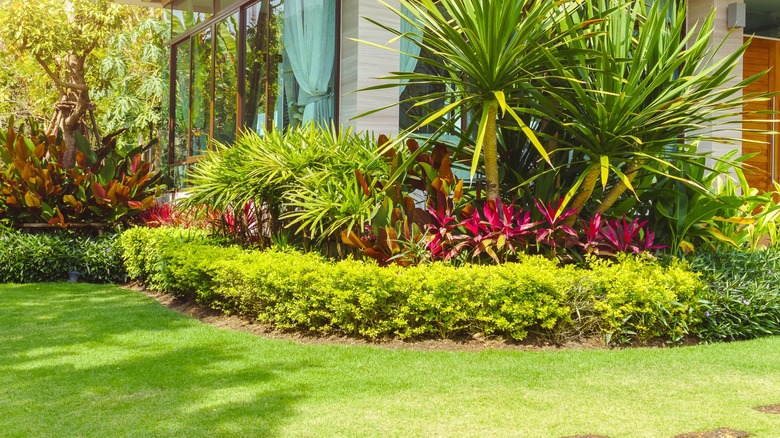
There's nothing like a healthy, vibrant green lawn. But as the summer sun continues to beat down and temperatures escalate, the harder it becomes to keep your grass from losing its color — especially with record heat waves heating up across the United States. And while watering your lawn is one way to protect your grass from burning up in the summer heat, perhaps the best way to keep your grass from turning brown is by avoiding heavy lawn maintenance.
As your grass grows, it helps provide shade for the soil and smaller plants. When you trim it, you're reducing that much-needed shade that helps retain moisture and protect blade collars against the summer sun. Additionally, trimming your grass shorter adds increased stress on the blades while reducing the surface area available on each blade to conduct healthy photosynthesis. Recently cut grass also loses precious moisture faster. All of these factors lead to grass turning brown faster than if it's left alone and watered well.
To minimize the impact of heat wave damage to your grass, start by mowing less frequently. While it's best to avoid mowing during a heat wave altogether, this can be unavoidable if you want to remain on good terms with your neighbors. If you must mow, adjust your deck higher than normal. Ideally try to avoid cutting grass less than four inches in height, and don't mow during the hottest parts of the day.
Symptoms of lawn heat stress to watch out for in a heat wave
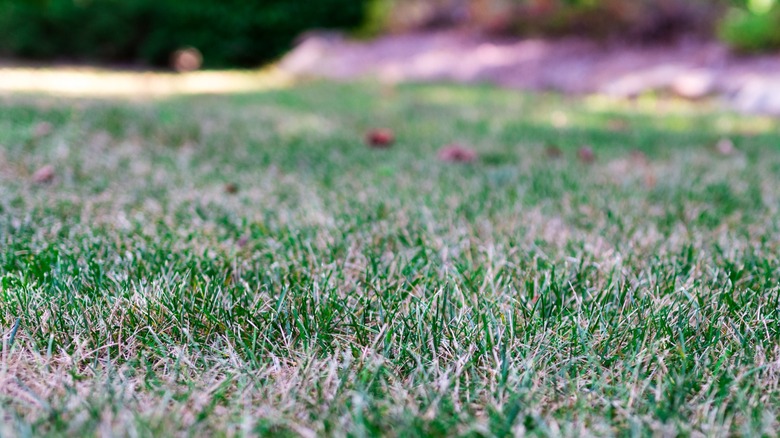
Late summer invariably brings dying grass with or without an oppressive heat dome. Grass that loses its green isn't necessarily dead, though. It's typical for grass, especially cool-season grasses, to become dormant during late summer. When this happens, the grass blade may appear dead while the plant itself remains alive. They can even end up turning green again as things cool down and the soil retains more water. But when an enduring heat wave causes grass to dry out for an extended period of time, that's another story.
One of the key signs your lawn is suffering from serious heat stress during an extended heat wave is patchiness and discoloration indicative of dryness. You may also notice your grass appears to be thinning, the soil is cracking, or your grass doesn't easily spring back into place when it's damaged due to walking or something like a child's bicycle tires. If you notice any of these signs, remember to avoid over-mowing and give your lawn plenty of deep watering, early in the mornings, to prevent committing one of the most common mistakes everyone makes when watering their lawn — a light soaking in the middle of a hot day. That will only contribute to your lawn turning brown.