

Can You Trim A Neighbor's Bush Growing Through A Fence? Here's What To Know
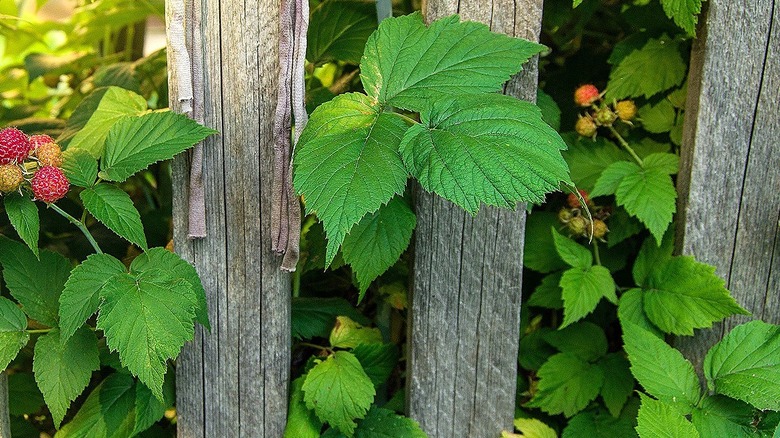
One of the key characteristics of an attractive neighborhood is having good neighbors: ones who are friendly, are considerate, and strike a balance of watching out for each other while also offering and respecting privacy. However, at times, even the best neighbor can unknowingly act unneighborly. For example, the neighbor whose bush has grown through the shared fence and is now growing partly on your side, leaving you to wonder how much you can intervene. Can you trim it back yourself? The short answer to this is, "Yes," but with some caveats.
When it comes to dealing with bushes or trees that are encroaching on your yard — whether through the fence or over a boundary wall — you have the legal right to trim the invading branches, but only up to the property line, and only if you stay on your side of the boundary, which includes not reaching over the fence. Compare this with other situations, like the neighbor whose unsightly yard is ruining the visual appeal of the neighborhood or the one with 10 cars parked around the block. While you can complain all you want, you can't (or shouldn't) clean up their yard, and you can't move their cars.
That said, if you're dealing with a neighbor you don't know well or who tends to be ornery, you may want to put in the legwork to determine the exact placement of the property line, just in case the fence is slightly off. Also, if the pruning will be significant, consider getting written permission from your neighbor and taking photos before you begin. We also recommend confirming local regulations beforehand.
Best practices for pruning a neighbor's bush
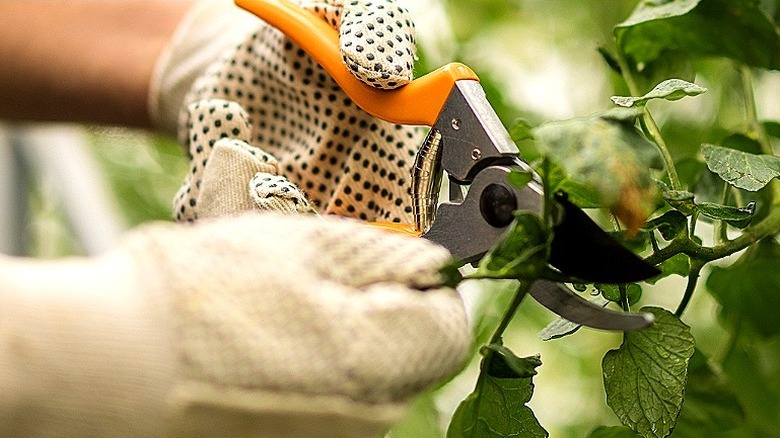
As mentioned earlier, getting permission from your neighbor is a wise precaution, especially if the work will be significant. Regardless of the extent of the work, though, giving your neighbor a heads up offers them an opportunity to remedy the situation themselves. The solution could be as simple as pulling the offending branches through the slats of the fence back into their yard. Or, perhaps, they weren't even aware of how overgrown the bush was, and now they could prune it exactly as they'd like.
If, however, you have the go-ahead to trim the branches yourself, be sure to use effective pruning techniques as much as possible, like cutting near a bud or considering the all-around appearance of your neighbor's shrub. Further, unless there's urgency to get rid of encroaching branches, be mindful of the type of plant you're dealing with, along with its preferred timing for pruning. For example, pruning an azalea shrub in the winter will decrease its spring blooms.
That said, do your best with what you've got, and make clean cuts so that the branch will heal quickly and properly. You'll be responsible for disposing of any cut branches; don't toss them back over the fence. As always, use sharp and sterilized tools to avoid potentially infecting your neighbor's shrub with harmful pathogens. Afterward, even if you just made a single cut, carefully clean the tool to minimize infecting any of your plants the next time you do any pruning.