

How Long Do Owners Say A KitchenAid Dishwasher Lasts?

As far as modern conveniences go, dishwashers are pretty high on the list. Handling much of the grunt work associated with maintaining a clean kitchen, it can be worth investing in dishwashers that have a positive reputation, such as those manufactured by KitchenAid. When properly cared for, owners report that these dishwashers can last for more than a decade, with some reaching closer to 14 years before needing to be replaced.
While KitchenAid dishwashers are far from the most affordable option, they tend to be well liked by customers thanks to their longer-than-average lifespan (the average of most dishwasher brands sits around 10 years before they need to be replaced). While budget dishwashers may start as low as $300, these cheaper appliances also come with a significantly abbreviated lifespan, with some lasting only five years. KitchenAid dishwashers, on the other hand, fall into the mid-range to affordable-luxury tier of appliances, with a price tag that matches. You can expect to pay $1,000 to $1,400 for a KitchenAid dishwasher, although retailers like Home Depot routinely mark them down, slashing several hundred dollars from the ticket price.
Despite the steep price, however, a KitchenAid is one of the most reliable dishwasher brands on the market, thanks to the quality of components that make up the appliance. Stainless steel tubs are standard on many models of KitchenAid dishwashers, resulting in better drying, increased longevity, and better protection against lingering odors. Additionally, the dishwasher racks on KitchenAid models are known to be highly durable, which matters when relying on the appliance for everyday cleaning.
How to get the best performance from your KitchenAid dishwasher
If you have purchased a KitchenAid dishwasher and are hoping that it lasts for more than a decade, there are some steps you can take to ensure it keeps on ticking. Firstly, if you live in an area with hard water, maintaining your water softener system is imperative. Minerals from hard water will rapidly adhere to the inner components of your dishwasher, especially when coupled with the hot water and drying cycles of your appliance, making daily cleaning less effective. If you don't have a water softener, you can utilize a dishwasher cleaner that specifically targets hard water deposits or use this vinegar hack to clean and descale your dishwasher the right way.
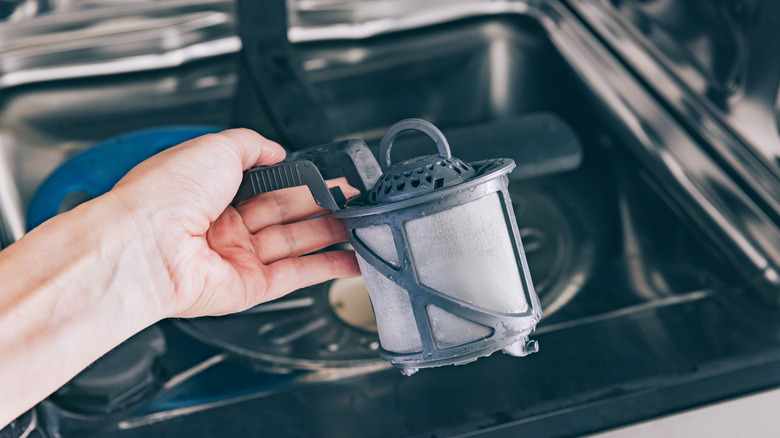
Another important bit of maintenance to stay on top of is routinely cleaning out the dishwasher's filter. While your dishwasher is meant to clean your dishes and leave them sparkling, food residue can quickly clog the filter, leading to poor performance and an overworked appliance. Additionally, it's wise to not overload your dishwasher, with this blunder potentially resulting in damaged spray arms or leaks from an appliance that's working overtime to clean a massive load. Lastly, as boring as it may be, routinely wiping down the door's gasket is another way to keep it operating well for the long run. If you're still running into problems, check out these troubleshoot tips for a dishwasher that's not cleaning well.