

Start A Vegetable Garden Quickly With Easy-To-Assemble Beds

We may receive a commission on purchases made from links.
Have you been dreaming of creating your very own vegetable garden but feel daunted by all the steps it takes to set one up properly? One of the most intimidating parts can be building the actual vegetable beds themselves. However, these days, there are some really clever, easy-to-assemble options which can help you form your own beds and get a flourishing vegetable garden in no time.
For example, these Tegarbed galvanized raised garden beds are specifically designed to be easy to install, and according to past customers, are good for growing a variety of different vegetables and herbs. However, these beds arrive disassembled as a pile of flat metal panels and rounded panels — alongside some nuts, bolts, and a wrench to help customers assemble the beds. So, while many reviewers mention that assembly is relatively straightforward, there are some key tips for making the process as smooth as possible.
First of all, it is important to make sure the panels are securely tightened, as any gaps can mean that the soil is likely to spill out the sides. So, while the package does come with a wrench, some reviewers mention that it can be more effective to use a normal, full-size wrench and a Philip's head screwdriver in order to ensure that the panels are perfectly flush with each other. This process can be made even quicker by using an impact drill, just make sure to apply steady pressure when drilling to avoid damaging the bolts or the panels themselves, and wear gloves to protect your hands from sharp edges. Once your beds are assembled, take a look at some of the best easy-to-grow vegetables to plant inside them.
What to grow in these garden beds
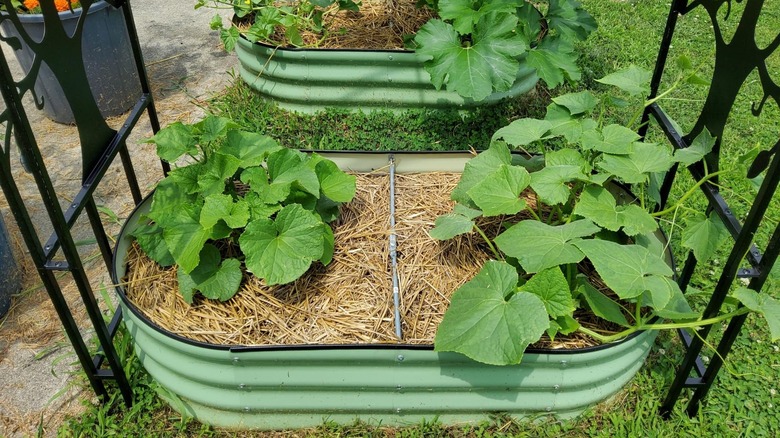
As these garden beds are relatively limited on space compared to some other options, customers have commented that they are not best suited for growing larger plants. So, it is a good idea to explore some of the best space-saving vegetables to plant in these galvanized beds in order to ensure they can grow well. Due to the open-bottomed design of these beds, one great option is to focus on vegetables that grow underground. These include root vegetables such as radish, carrot, onion, and potato. These plants grow down rather than out, meaning you are less likely to run out of space horizontally in the garden beds.
Alternatively, if you want to grow more than just root vegetables, you could look into the dwarf varieties of other plants. From dwarf tomatoes to melons, there is a range of miniature plants which can thrive in smaller garden beds such as these. Baby broccoli (Aspabroc Baby) is a particularly good choice, for example, because it can grow in hardiness zones 7 to 11, is compact, and produces multiple rounds of edible broccoli. It even produces charming edible flowers for a vegetable box that is not only productive but also visually appealing, too. Just remember that it can be helpful to start these seeds off growing indoors for a few weeks before planting them out in your new galvanized garden beds in order to ensure that they are strong enough to thrive in your vegetable garden.