

Wood Vs Timber Vs Lumber: What's The Difference?
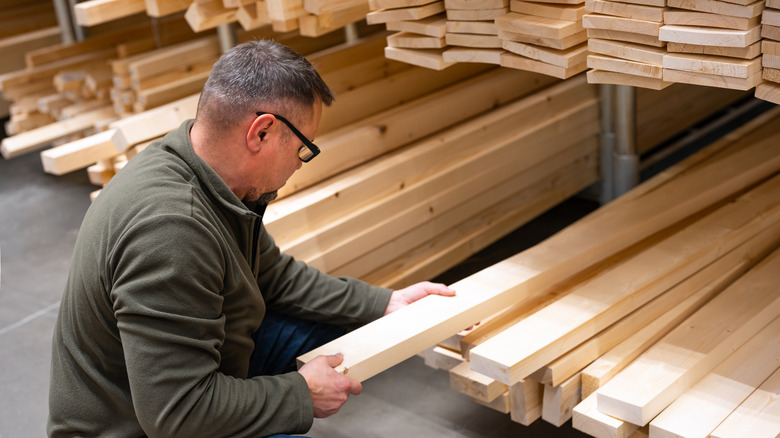
There's a wide variety of types of wood that are easy to build with. But "wood" is not the only term used to describe the material that comes together to form decks, sheds, birdhouses, and more. Many people interchangeably use the terms wood, timber, and lumber to mean the same thing. For example, wood is often used in place of timber or lumber, but that is not fully accurate. Wood, such as oak or pine, is the material that makes up trees. Timber includes trees or logs intended for construction, including standing timber in forests and felled logs that still have their bark. Finally, lumber refers to all processed, ready-to-use boards. When you understand these distinctions, you can communicate more accurately when shopping for materials, reading project plans, or discussing woodworking and construction.
Wood is often used as a catchall term for trees, unprocessed timber, and processed lumber. But many people also try to interchange timber and lumber. Timber is wood specifically from trees that can or will be used for building materials. When wood is referred to as timber, it generally has not yet been processed. You may hear people refer to stands of trees as timber before they're harvested. But you will also hear timber used for cut trees that have not been milled. That leaves lumber. Lumber is what you can use to refer to timber that has been processed into planks for building and construction projects. Lumber mills process timber into usable boards and planks that can then be sold to consumers. This process involves sawing, trimming, and edging the wood.
Real world applications of wood, timber, and lumber
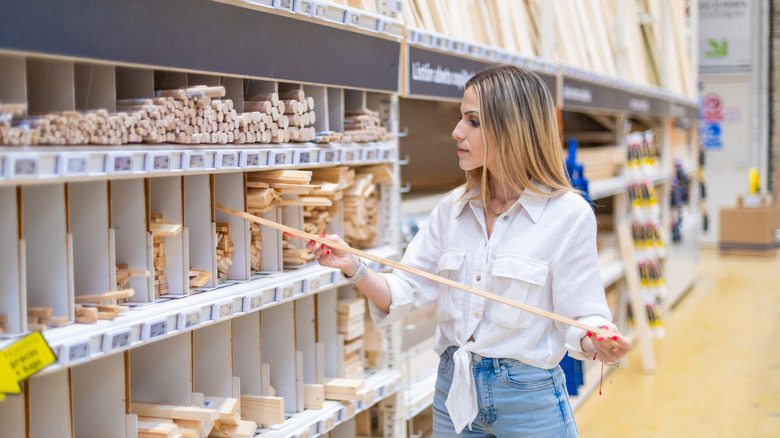
The next time you are in a hardware store thinking about what to consider when choosing wood for your next DIY project, you might need help making a selection. It can be helpful to know the difference between wood, timber, and lumber when speaking with a professional. For example, when you purchase lumber for a project, you often need to specify softwood or hardwood lumber. It will make the process simpler if you know what you need before talking to someone. And once you are aware of the proper terms to use, you have a better starting point to research the best types of wood for a DIY dining table or other fun projects.
Don't worry too much about making a mistake when purchasing materials for your next DIY project. Nobody is likely to get caught up in the nuances between wood, timber, and lumber if you use the wrong term. Plus, it's also easy to forget that these terms only matter when working in the United States and Canada. Outside of North America, lumber is not a term used with any frequency. Instead, timber is most often used to mean all types of processed wood. Be aware of these regional differences when accessing materials about woodworking or construction from other countries.