

The Organic Fertilizer That Can Be Used To Give Your Tomatoes A Boost

Some gardeners grow all types of tomatoes, including beefsteak tomatoes, heirloom tomatoes, cherry tomatoes, and more. One thing that brings all these types of tomatoes together is their great need for nutrient-rich soil. All tomatoes feed heavily, especially on nitrogen and potassium. Using natural, organic fertilizers can help give your tomato crop a boost, no matter which type you choose to grow in your garden. One great organic fertilizer option is corn gluten meal, a special byproduct of the corn wet-milling process. Along with being used as animal feed, corn gluten meal has benefits as a fertilizer.
Funnily enough, corn gluten meal contains no actual gluten. When corn is processed into different components, you are left with cornstarch, corn oil, plus a carbohydrate portion and a protein portion. Cornmeal is the product made from the carbohydrate portion, while corn gluten meal is from the protein portion. These corn proteins are labeled as gluten, but that does not mean the same thing as wheat gluten. Because it's derived from protein, corn gluten meal usually contains around 10% nitrogen by volume, making it good as a fertilizer for many plants, including tomatoes. But it's also a way you can say goodbye to weeds without killing your grass with one simple, natural solution. That means you should always be mindful of your application of corn gluten meal in the garden to avoid inhibiting growth.
Using corn gluten meal successfully as a fertilizer
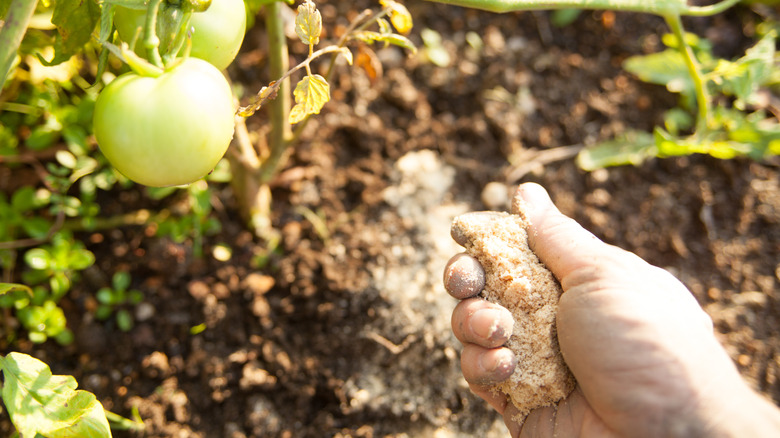
There is a right way and a wrong way to use corn gluten meal in the garden. To learn how to use corn gluten meal to fertilize your garden, including your tomatoes, pay attention to the instructions on the product when you buy it. Usually, you should limit application to 0.9 pounds of nitrogen per 1000 square feet. One of the great aspects of using corn gluten meal as a fertilizer remains its ability to slowly release over time naturally. Apply this product once in the season when planting as a fertilizer to ensure high tomato yields. Tomatoes require nitrogen to help with growth, but avoid too much or else you may see little fruit. Too much corn gluten meal could be detrimental.
Depending on the product, ensure about 1 to 4 months for the corn gluten meal to sit in your garden before you attempt direct seeding. However, you can transplant tomato plants without worry, as corn gluten meal does no harm to established plants. It's also necessary to know exactly how often you should fertilize tomato plants to avoid harming them instead of helping them thrive. Tomatoes do not need fertilizer more often than every month or month and a half, so a slow release fertilizer like corn gluten meal helps boost nitrogen over time instead of all at once.