

The Blue Drought-Tolerant Shrub You Should Plant In August Before It's Too Late
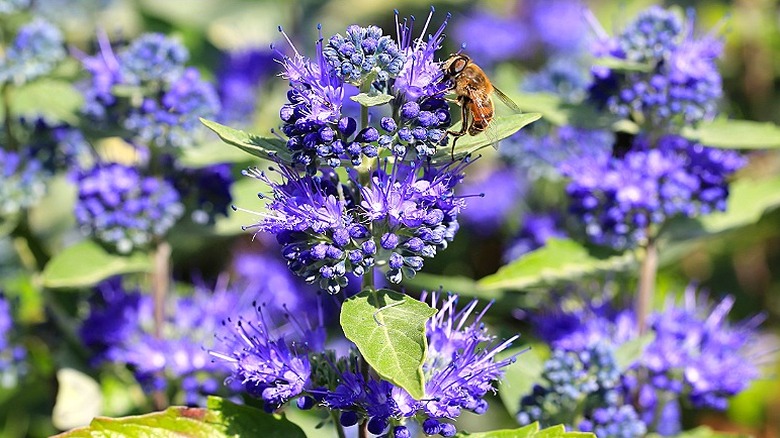
It may be the heat of summer but there's still time to get some planting in. If you're in search of a stunning shrub with lovely blooms, bluebeard (Caryopteris spp.) might just be the plant for you. And, yes, even in August, you can still establish it in your yard. While a good rule of thumb is to plant new shrubs in the spring or early fall, this plant is tough. With its drought- and heat-resistant qualities, it's a bit more resilient against summer conditions.
Bluebeard is originally from East Asia but it grows perennially in USDA zones 5 to 9. In areas with colder winters, note that the plant may die back completely. These beautiful flowering shrubs, at 2 to 4 feet tall and wide, tend to maintain a tight, mounded appearance.
As its name would suggest, one of the most alluring characteristics of bluebeard is its clusters of blue flowers, yet its foliage is nothing to scoff at either. Throughout the shrub's growing season, you'll also get to enjoy its silvery-green leaves. Not only is this a beautiful plant, but it also offers other benefits to your garden, including attracting birds and a host of other pollinators.
How to grow and care for a bluebeard shrub
Bluebeard is an easy plant to grow and care for. It will bloom best in full sun but it can tolerate partial shade. For soil, bluebeards prefer sandy to loamy soil types, and they don't like wet feet so another requirement is good drainage.
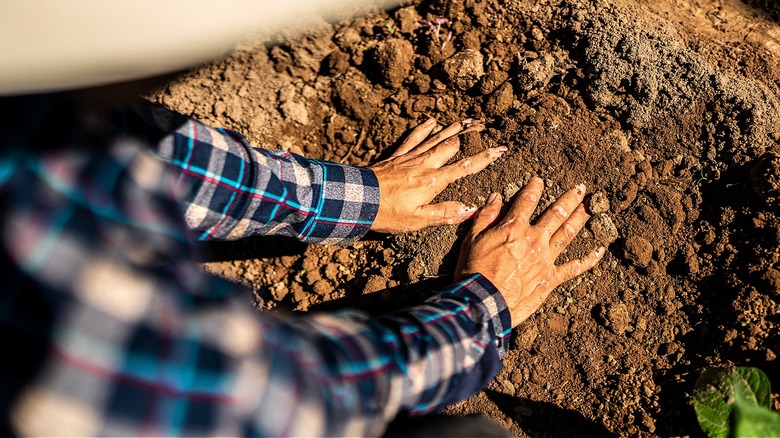
To plant bluebeard, dig a hole using the nursery pot's dimensions as a guide: double the pot's width and a depth to match its height. From there, add in organic material such as compost. Before you place the plant in the hole, though, first check if its roots are root-bound. If so, gently help loosen the roots. Once done, place your plant in the hole. Backfill and water generously, then add in a layer of mulch to help your new shrub adjust more smoothly. Since it's usually still hot in August, it's vital to keep your plant moist as it acclimates to its new environment.
Since this shrub is drought-tolerant, it only requires regular waterings as it's getting established. That said, you should provide supplemental water if it's unseasonably dry for long periods of time. As for summer temperatures, this blue beauty won't sweat the heat, staying resilient even through heat waves.
You only need to fertilize your bluebeard once a year with a balanced, slow-release fertilizer during the spring, so for an August planting, look to the following year. Spring is also a great time to cut the plant down to the ground to encourage new growth. A final note: Bluebeards can self-seed. If you notice little sprouts near your plant in the spring, feel free to lift and transplant them to enjoy more of this beautiful plant.