

How The Typical American Garden Of The '50s Compares To Modern Trends
We may receive a commission on purchases made from links.
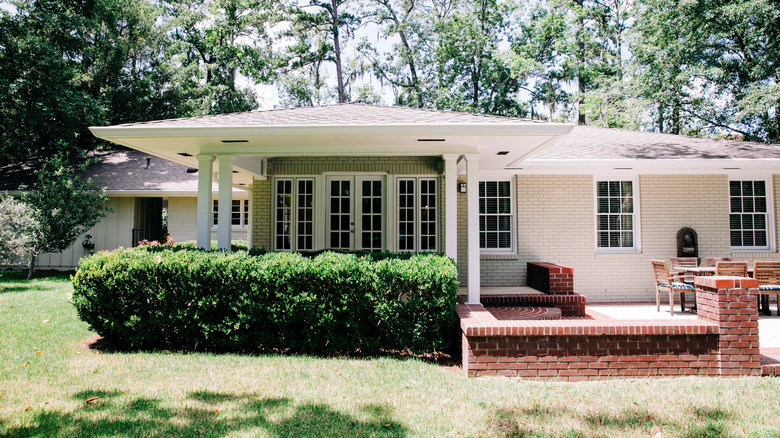
Landscaping and gardening trends have come a long way over the years. The popular garden ideas of today look quite different than they did in the last century. Even if you're comfortable working within modern trends, it's still helpful to understand the history you're knowingly or unknowingly pulling from. The 1950s were a defining time for American landscaping. Many of the trends of this era are still echoing through our yard and garden designs today.
This time period was an age of post-war optimism with a heavy emphasis on domestic life. Many families were enjoying steady income and more time for leisure. Paired with the Baby Boom, there was a push towards more readily available housing. A key feature of many 1950s homes was a big back yard. This was a huge tipping point for landscaping and how we approach designing our outdoor spaces. Families were spending more time outside and treating their outdoor space like a living room. This era brought us a slew of retro front yard and garden trends. Many of the trends from this era stood the test of time and are still quite popular to this day. The classic manicured lawn and flower border is a holdover from this time period.
However, there is a growing rift between traditional gardening trends from the 1950s and the direction of modern landscaping is heading. The mission to cultivate a picture-perfect, resort-like backyard is waning — especially when that means leaning heavily on less-than-eco-friendly chemicals. There's more of a push for naturalistic gardens filled with native plants. Furthermore, there are many more homeowners embracing food gardens in modern gardening than in the 1950s. Growing your own food became less popular in the 1950s with the convenience of buying prepared meals from grocery stores.
Drawing inspiration from the past and embracing the present
The landscaping trends of the 1950s and today's modern gardening trends have one major philosophical difference — working against nature versus working with the natural landscape of a region. Many 1950s homeowners relished the manicured white picket fence look and actively fought against their natural ecosystem to achieve the perfect green lawn. A rise in consumerism encouraged suburban dwellers to aim for a picture-perfect yard worthy of a feature in a home and garden magazine. Overall, these outdoor spaces weren't necessarily showy or ornate like gardens of eras past. They simply featured large lawns and pristine, vibrant flowers. But in that, there wasn't much thought into native plant life.
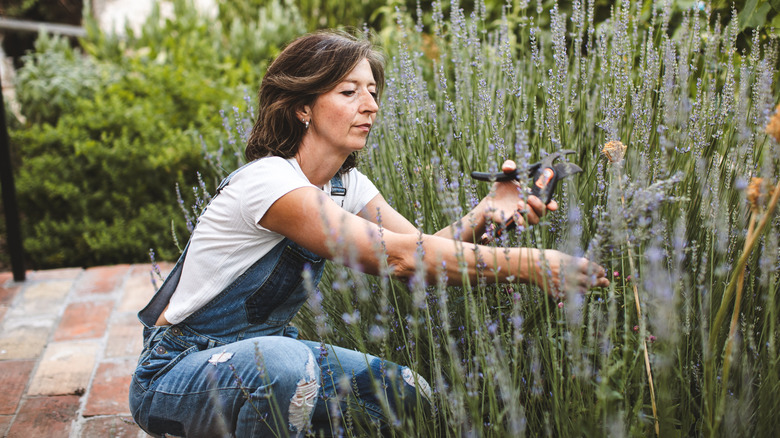
As more and more Americans are shifting to a sustainable way of life, our home and garden trends are moving in that direction too. Roughly 40% of North America was originally prairie land. The rest of the continental US is a tapestry of temperate rainforests, deserts, plains, and other distinct ecosystems. There isn't as much of a cookie-cutter garden style across the entire country anymore. Modern landscaping is much more dependent on where you live and what plants grow best there.
However, there are plenty of trends from the 1950s you can absolutely carry on if you're hoping to embrace natural landscaping while also making your garden feel more sentimental. Perhaps you decide to design your garden around native plants and more sustainable features like hardscaping. You can still embrace a sense of nostalgic whimsy by incorporating some stylistic elements from the 1950s. For instance, you can weave "flamingo pink" into your yard with native plants such as Muhlenbergia 'Pink Flamingo' grass or even just a kitsch lawn flamingos (invented in 1957). Or, consider installing picket fence-style garden edging, like this plastic lawn border from Walmart, as an homage to that 1950s manicured look.